In a nutshell
- ✨ A tiny dab of olive oil lays a thin hydrophobic film that deepens grain and reduces micro-scratches; it is not a curing finish, so apply sparingly and buff until dry to the touch.
- 🧪 Safe method: dust first, perform a 24‑hour spot test, then use 2–3 drops on a cloth with the grain; for light grime, a 2:1 olive oil–vinegar mix refreshes and cleans.
- 📋 Finish fit: oil- or wax-finished wood benefits most; varnish/lacquer see limited gains; raw or outdoor wood should be avoided due to staining and rancidity risk.
- 🛠️ Quick fixes: micro-drops can blend scratches; gentle heat plus oil helps white water rings; dark rings usually need oxalic acid or refinishing—not olive oil.
- 🚫 Know when to switch: avoid flooding joints or hot surfaces; choose mineral oil for boards, or durable Danish oil/shellac and microcrystalline wax for longer-lasting protection.
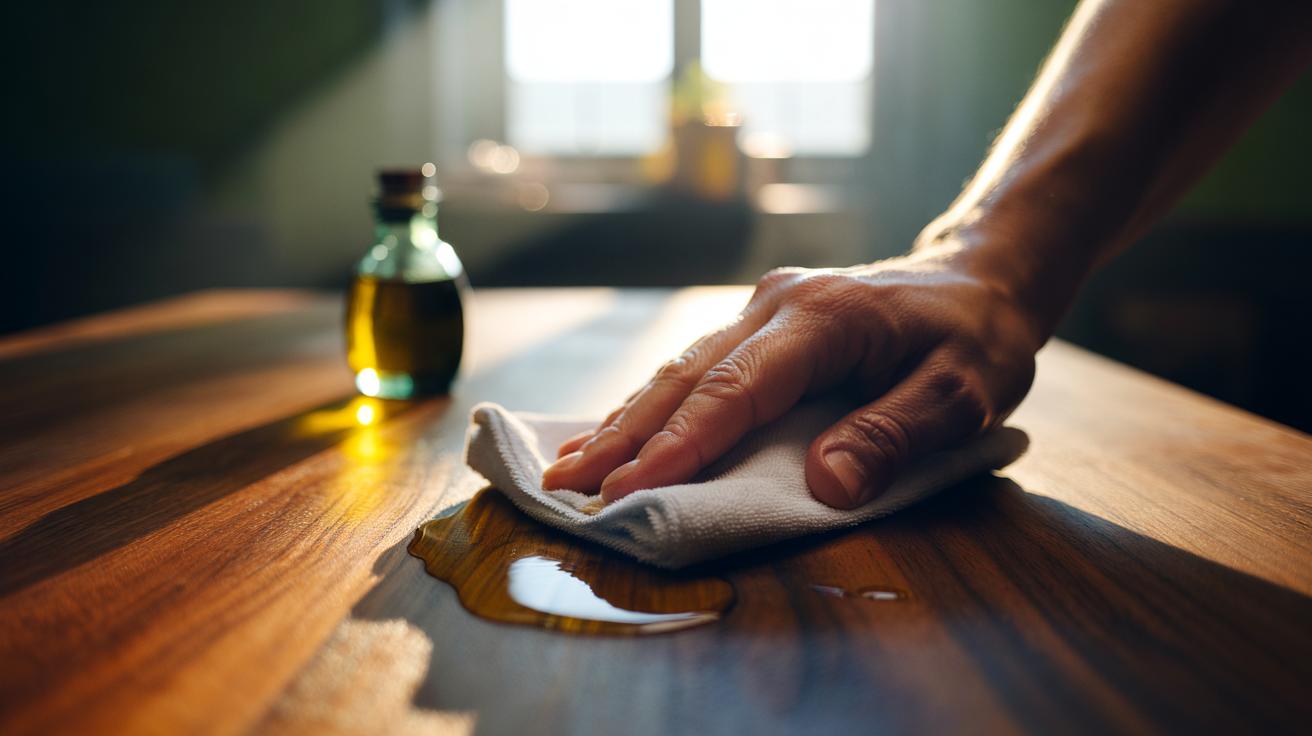
It’s the home hack whispered between generations: a tiny dab of olive oil can revive tired timber and coax back a soft, natural glow. Used judiciously, the kitchen staple can rehydrate a parched surface, disguise light scratches, and restore depth to dulled finishes without resorting to harsh chemicals. The trick is restraint and technique. Always test first and apply sparingly. As with any shortcut, there are limits: olive oil is not a curing finish, and it won’t mend severe damage. Yet for routine spruce-ups, especially on oiled or waxed furniture, it can be a quiet miracle—cost-effective, fast, and satisfying to buff to a gleam.
Why Olive Oil Works on Wood
Wood loves oil because dry fibres reflect light poorly. A whisper of olive oil lays down a thin, hydrophobic film that reduces micro-scratches and evens out the surface, making it appear richer and more uniform. The effect is optical and tactile: colour looks deeper, grain pops, and dust doesn’t cling as readily once the surface has been buffed. The key distinction is that olive oil does not harden like a traditional drying oil. Unlike boiled linseed or tung oil, it won’t polymerise into a hard film; it simply lubricates and darkens the topmost layer, which is why a well-buffed, minimal application is essential.
In practical terms, that “revival” is a careful blend of cleaning and conditioning. A soft cloth picks up residue as the oil loosens grime, while the remaining trace enhances sheen. Use less than you think—two or three drops on a microfibre cloth will treat a small side table. Work along the grain to prevent streaks and leave the piece with a mellow, natural-looking lustre rather than a greasy shine. If you can see oil, you’ve used too much.
How to Test and Apply Safely
Start by dusting with a dry microfibre cloth; grit scratches. Perform a spot test on the back or underside: add a single drop of oil to a cotton bud, wipe on, then buff off. Wait 24 hours to ensure there’s no dull film or tackiness. For the main application, place two drops of oil on a clean cloth, spread it thinly with your fingers, then glide with the grain. Use light circular motions first to loosen residue, then long strokes to finish. Wait five minutes, buff vigorously with a separate dry cloth until the surface feels dry and silky. Always finish by buffing more than you think is necessary.
For lightly soiled pieces, a 2:1 mix of olive oil and white vinegar can lift haze while refreshing the finish; the vinegar cuts minor grease, the oil restores sheen. Avoid edges and end-grain, which absorb quickly. Do not flood carvings or joints, as oil can wick into glue lines. If the surface remains tacky, you have over-applied—wipe with a vinegar-dampened cloth and buff dry. Never apply oil to a hot or sun-warmed surface, which accelerates absorption and uneven results.
| Finish/Surface | Olive Oil Use | Notes |
|---|---|---|
| Oil-finished (linseed/tung) | Suitable in tiny amounts | Refreshes sheen; buff thoroughly |
| Waxed wood | Suitable lightly | Apply over wax sparingly; re-buff |
| Varnish/lacquer/polyurethane | Limited benefit | Sits on top; may smear if overused |
| Unfinished/raw wood | Not recommended | Can stain and turn rancid in pores |
| Veneer/engineered | Caution | Test carefully; thin surface layer |
| Outdoor furniture | Avoid | Weathering and UV make it unstable |
Dealing with Scratches, Water Rings, and Dullness
Light surface scratches often appear worse than they are. A micro-drop of olive oil can darken the abraded fibres to blend a minor mark with surrounding grain. For slightly deeper scratches, tint the oil by touching the cloth to spent coffee grounds or a walnut, then buff immediately. Always work progressively and stop as soon as the scratch visually softens. For a general haze, try the 2:1 oil–vinegar solution and buff until the cloth slides freely; that slip is your cue the surface is clean and conditioned.
White water rings—those cloudy halos from mugs—are moisture trapped in a finish. A drop of oil can help, though heat often works better: pass a hairdryer on low over the ring, moving constantly, then wipe with an oiled cloth and buff. Dark rings indicate deeper staining and won’t be solved by olive oil; they typically need oxalic acid treatment or refinishing. If a mark doesn’t change after a minute of careful work, change tactics.
When to Avoid Olive Oil and What to Use Instead
There are moments when olive oil is the wrong tool. On raw timber, it can migrate into end-grain, oxidise, and develop an odour. On thickly sealed polyurethane or high-gloss lacquer, it adds little and may smear. In hot rooms or kitchens, residue can attract dust. If you cannot fully buff to a dry touch, don’t use it. For food-contact items such as chopping boards, switch to food-grade mineral oil, which is non-drying but stable. Where you need durable protection and renewed depth, a proper Danish oil or a thin coat of shellac is more appropriate.
For maintenance sheen without risk of rancidity, choose a high-quality microcrystalline wax; apply thinly, allow to haze, then buff. If surfaces feel sticky from past home remedies, clean with a mild solution of washing-up liquid and warm water, barely damp, then dry immediately. Reserve olive oil for occasional revivals on compatible finishes. Good furniture care is about the right product, the right amount, and patient buffing.
Used thoughtfully, a tiny dab of olive oil can make wood furniture look newly cherished, bringing back grain contrast and a soft, tactile gleam without expensive polishes. The secret is to apply less, buff more, and know your finish. Keep the bottle in the kitchen, not the workshop, and treat it as a quick spruce-up rather than a cure-all. If you respect those boundaries, the results are impressively elegant for such a humble ingredient. What piece in your home could be transformed by five careful minutes and a drop or two of oil—and what technique will you try first?
Did you like it?4.5/5 (20)