In a nutshell
- 🪵 A boiled-flaxseed (linseed) oil rinse penetrates wood and polymerises, restoring natural shine and smoothness without a plastic film, enriching grain and colour.
- 🧰 Practical method: clean and degrease, thin oil 1:1 with white spirit or citrus solvent, apply with the grain, wait 10–15 minutes, then wipe off all excess and buff; repeat lightly if needed.
- ⚠️ Safety and compatibility: thin coats cure stronger; watch for metallic driers and allow proper drying/curing times; avoid applying over polyurethane films; dispose of oily rags safely to prevent spontaneous combustion.
- 🪚 Finish choices: compare linseed (warmth, ease), tung oil (higher water resistance), and blends/hardwax (tougher, faster) to match room and use.
- 💷 Sustainable and cost-smart: UK sourcing is accessible, with typical prices from £6–£35 and reliable brands (e.g., Rustins, Liberon, Osmo); maintaining existing furniture reduces waste.
Strip back the years with a simple, time-honoured remedy: a boiled-flaxseed rinse. This approach harnesses the chemistry of natural oils to rehydrate tired fibres, coaxing out colour and coherence in dull timber without smothering its character. When thinned and wiped, boiled flaxseed oil slides into pores, bonding as it cures to leave a subtle, tactile glow rather than a plastic sheen. Used with care, it restores shine and smoothness, stitches tiny checks, and helps repel everyday moisture. For household pieces whose finishes have chalked or dried, the method is gentle, affordable, and forgiving—ideal when you want to refresh a tabletop, banister, or bureau without sanding to bare wood.
How Boiled Flaxseed Oil Revives Tired Timber
Boiled flaxseed oil—better known to DIYers as boiled linseed oil—penetrates deeply, then polymerises as oxygen links its molecules into a resilient network. That microscopic change matters: it firms friable fibres, gives a soft lustre, and enriches the grain’s contrast. Unlike film-forming varnishes, it leaves the surface “open”, so a hand-rubbed feel remains. The result is not a high-gloss disguise but a renewed clarity that celebrates patina. On oak, ash, and pine, it warms tone and tightens the visual weave. On walnut or mahogany, the effect is richer, tipping toward chocolate and ember hues.
The “rinse” aspect is key. Thinned oil moves fast, levelling quickly and carrying out grime as you wipe. It can bridge hairline checks and reduce raised nibs, especially when followed by a brisk buff. The cured film is modestly moisture resistant, so rings and splashes are less likely to bite. Think of it as nourishment and protection in one pass, provided the excess is removed.
Step-By-Step Rinse Method for Home Restorers
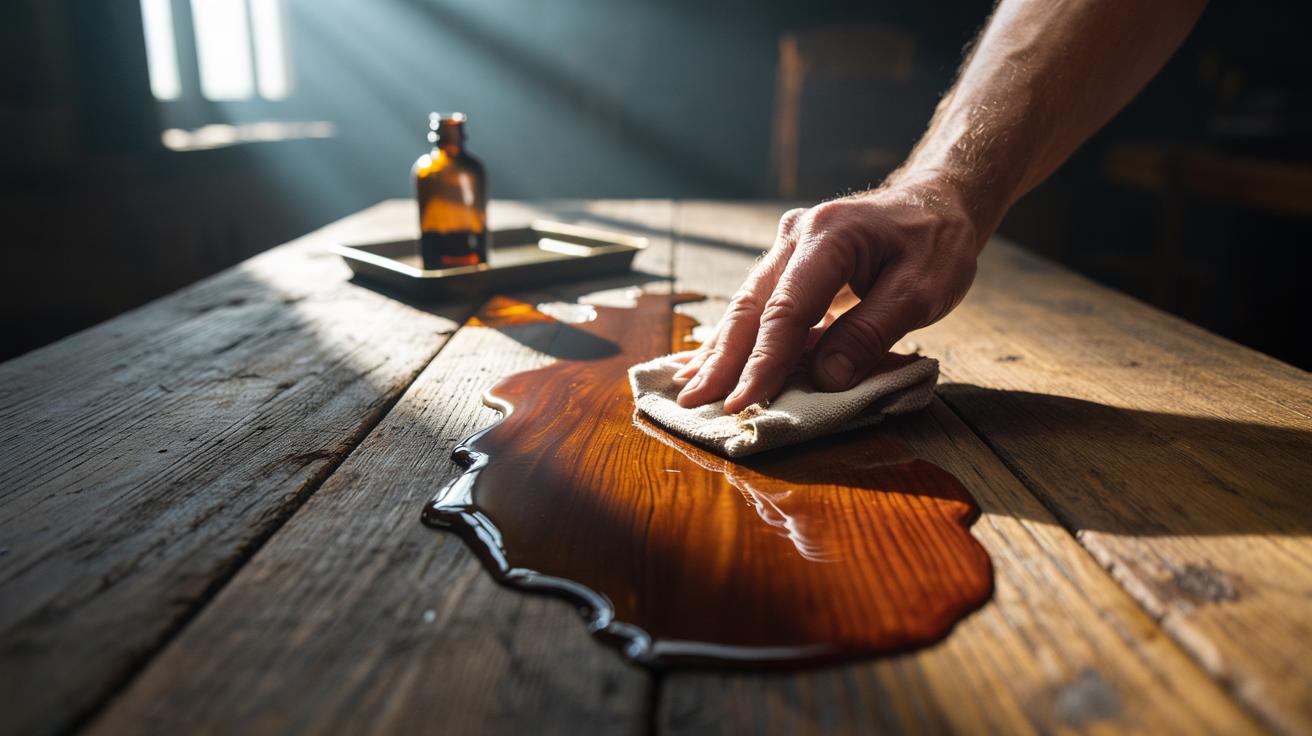
Start with a clean, dry surface. Dust thoroughly, then degrease with a little diluted white spirit or a citrus-based solvent on a soft cloth; let it flash off. Mix boiled flaxseed oil 1:1 with your chosen solvent. For delicate veneers, go lighter—about 1:2 oil to solvent—to reduce saturation. Warm the bottle in hand-hot water to improve flow, then decant a small working amount into a tray. Always test on an inconspicuous area to confirm colour and compatibility.
Flood a lint-free cloth lightly and wipe with the grain, working in manageable sections. Allow 10–15 minutes for penetration, then wipe back to remove every trace of wet sheen. Never leave puddles; thick residues wrinkle and stay tacky. Stubborn greyness or dryness? Repeat once more after two hours. For a silkier touch on bare wood, denib between passes with a worn 320–400 grit or brown paper, then buff vigorously.
Allow 8–24 hours before light use, depending on temperature and ventilation. Dispose of oily rags safely: spread flat to dry outdoors or submerge in water inside a sealed metal tin. Do not bunch oil-soaked cloths—spontaneous combustion is a real risk. Once cured, a whisper of wax can add glide, but it’s optional.
Safety, Drying Times, and Finish Compatibility
Modern UK-boiled flaxseed oils use metallic driers (often cobalt/manganese) for speed; they reduce weeks of curing to days. Typical touch-dry times run 6–12 hours, recoating at 24, full cure in 7–14 days. Cooler rooms or heavy applications extend these figures markedly. Thin coats cure stronger and clearer than thick coats, which can wrinkle or attract dust.
Compatibility hinges on what’s already on the timber. A tired oil or wax finish responds well to a rinse, as does bare wood and old shellac once cleaned. Factory polyurethane films, however, block penetration; the oil will skate and smear. On oily exotics such as teak or iroko, wipe with solvent first to lift natural oils, then apply sparingly and wipe dry. When in doubt, perform a small patch and observe for tackiness within 24 hours.
Ventilation matters. Choose low-aromatic thinners if odours are a concern and keep ignition sources away. Gloves help avoid skin sensitivity. Label jars and do not mix brands indiscriminately in bulk; subtle additive differences can alter drying. Patience is a safety measure—rushing curing times risks a soft, print-prone surface.
Comparing Natural Oils: Linseed, Tung, and Blends
Boiled flaxseed oil gives warmth and ease of use; tung oil offers superior water resistance; blended finishes trade purity for speed and hardness. Selecting the right option depends on the room, the species, and your maintenance appetite. Kitchen tables benefit from tougher, tung-based blends, while hallway consoles often thrive on the classic glow of boiled linseed oil.
| Oil/Finish | Look | Water Resistance | Drying/Cure | Best For |
|---|---|---|---|---|
| Boiled Flaxseed (Linseed) | Warm, amber, soft sheen | Moderate | 6–24h / 7–14 days | General furniture, antiques |
| Tung Oil (Polymerised) | Neutral-amber, higher sheen | High | 4–12h / 5–10 days | Tabletops, kitchen use |
| Danish/Blend | Adjustable sheen, faster build | Moderate–High | 2–8h / 3–7 days | Quick refurbishments |
| Hardwax Oil | Natural satin, tough feel | High | 4–10h / 5–7 days | Floors, heavy-use surfaces |
Purists may favour single oils for reparability: future touch-ups simply melt into the previous coat. Blends and hardwax oils add abrasion resistance but can be harder to spot-repair invisibly. Choose the lightest intervention that meets the demands of the piece and room.
Cost, Sustainability, and Sourcing in the UK
For UK buyers, the economics are kind. A litre of boiled linseed oil typically ranges £6–£12, quality tung oil £15–£25, and hardwax oil £20–£35. Coverage sits around 10–15 m² per coat on furniture, making a small tin go a long way. Look for reliable names—Rustins, Liberon, Barrettine, Osmo (for hardwax)—and check the VOC content of thinners. Odourless mineral spirits and citrus solvents improve comfort without sacrificing performance.
Flax is a European crop, so linseed scores well on transport miles; tung is largely imported from Asia, though its durability reduces reapplication. Rejuvenating existing furniture is itself a sustainable act, keeping characterful pieces in service. Keep a log of coats and dates, and store tightly capped containers away from heat. A seasonal light rinse and buff often sustains lustre for years, sidestepping aggressive sanding and waste.
Handled with respect, a boiled-flaxseed rinse can lift a jaded surface from lifeless to lively in an afternoon, preserving dents and stories while smoothing scratchy grain. The method is tactile and calm, a small ritual that pays back each time light skims across the revived timber. If you’re tempted, assemble a test kit, work small, and let the wood tell you when it’s had enough oil. Which tired piece in your home is ready for a gentle rinse and a second life under your fingertips?
Did you like it?4.6/5 (20)