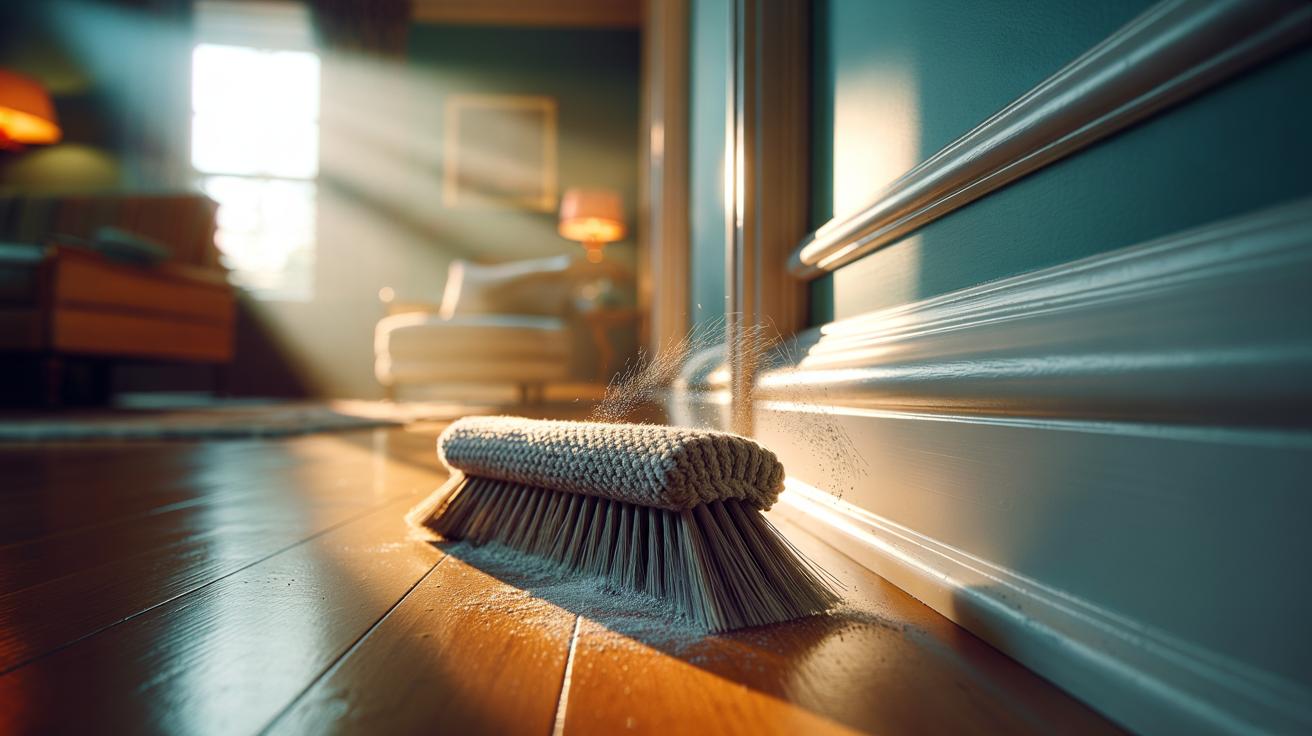
In a nutshell
- 🧹 The broom-and-sock hack uses static fibres to pull dust from baseboards in seconds—no sprays, bending, or streaks, leaving a crisp, dry finish.
- ⚡ It’s grounded in the triboelectric effect: friction charges fibres to attract lint and pet hair; microfibre and polyester excel, and dry contact with lower humidity boosts results.
- 🧦 Setup is simple: a standard broom plus a microfibre/polyester sock secured with an elastic; angle for maximum contact and use a light-coloured sock to monitor build-up.
- 🚀 Technique matters: use swift, continuous strokes, rotate for corners and mouldings, shake the sock between walls, and optionally finish with a barely damp cloth or dryer sheet.
- 🌿 Safety and sustainability: test delicate finishes, keep rough seams off paint, never wet the sock for the static pass, and enjoy allergy-friendly, low-waste cleaning you can wash and reuse.
Britain’s skirting boards, or baseboards if you prefer, are magnets for lint and pet hair. The latest domestic hack making the rounds is disarmingly simple: slide a clean sock over a broom head and let static fibres do the heavy lifting. No spray, no bending, no scratched paintwork—just a charged sweep that corrals fluff in seconds. The principle is solid science and the payoff is speed. Because there’s no wet residue, the surface stays crisp and streak-free, ideal for fast pre-guest blitzes or allergy-friendly cleans. Here’s how the trick works, what to use, and how to get pro-level results.
How the Static Trick Works
When you pull a dry sock across paint, timber, or MDF, the friction creates a static charge. This is the triboelectric effect: different materials swap electrons, leaving the fabric and surface with opposing charges that attract dust. Lint, skin flakes, and pet hair carry enough charge or polarisation to leap onto the fibres. That’s why a modest sweep can gather weeks of debris in one pass. Polyester, nylon, and microfibre excel here; pure cotton works, but blends often build and hold charge longer, making them ideal for skirting runs.
Conditions matter. High humidity in British homes can dampen static, so pick a dry day or run a quick burst of heating to nudge moisture down. Avoid cleaning immediately after mopping floors—the raised humidity will blunt results. Static thrives on smooth, dry surfaces, which is why satin, eggshell, and gloss-painted boards respond brilliantly. Dry contact is key: skip polishes until after the dust is removed, and keep movements swift to keep the charge alive.
What You Need and the Quick Setup
You only need a standard broom, a clean sock, and a small clip or elastic band. Push the sock over the broom head like a sleeve, seams facing inward so they don’t rub your paint. If your sock is loose, secure it with the band. Choose fibres that build charge fast—microfibre, polyester, or a sports sock with synthetic content. A lighter-coloured sock helps you see what you’re collecting, reminding you to shake or swap it before you smear dust back onto your boards.
The aim is to maximise contact without gouging corners. Angle the broom so the sock’s side, not the stiff bristles, touches the board. For deep profiles, press lightly into grooves, then finish with a long, uninterrupted sweep. The kit below keeps choices simple and cost-effective.
| Item | Why It Works | Alternatives |
|---|---|---|
| Microfibre sock | High static build, fine split fibres trap dust | Polyester blend sports sock |
| Broom with flat head | Even pressure along skirting boards | Soft dustpan brush for tight alcoves |
| Elastic band/clip | Keeps fabric taut to enhance friction | Hair tie or reusable Velcro strap |
Step-by-Step: Cleaning Baseboards in Seconds
Start by pulling furniture a hand’s width from the wall. Work clockwise around the room so you don’t miss sections. Hold the broom at hip height with the socked head kissing the board. Use swift, continuous strokes, letting the static gather debris rather than pushing hard. For mouldings and quarter-round trims, tip the head slightly and glide along the contours. In corners, rotate the broom so the sock’s edge slips into the angle, then draw dust out with a short pull.
Shake the sock outdoors or into a bin bag after each wall to avoid redepositing fluff. Stubborn specks on caulk lines respond to a light fingertip pinch through the sock. If you want dust resistance afterwards, do a second pass with a barely damp microfibre cloth or a dryer sheet—this reduces future cling without undoing your first static sweep. Most rooms take five minutes, with hall skirting often under two. Minimal effort, maximum payoff.
Safety, Surfaces, and Eco-Friendly Wins
Modern emulsions and gloss paints tolerate the sock’s glide well, but test a hidden spot if your skirting is varnished timber or very old paint. Keep zips, rivets, and rough seams away from fragile finishes. Never wet the sock for the static pass—moisture kills charge and drags grime. Near radiators, let metal cool before contact. If you live in a period property, check for flaking paint and treat any lead risks with proper guidance before any friction-based cleaning.
The hack shines for allergy management. Because microfibre captures microscopic particles mechanically, you avoid aerosolising dust with frantic brushing. Wash the sock on a cool cycle to protect fibres and skip fabric softener if you want stronger static next time. No aerosols, no single-use wipes, and no harsh polishes means a smaller footprint. Pet owners will appreciate how hair leaps off hard-to-reach bevels. For daily upkeep, a 60-second sweep along high-traffic skirting keeps build-up at bay.
As quick fixes go, the broom-and-sock method respects science and saves backs. Static fibres do the unglamorous work, sweeping up lint hidden in grooves and along carpet edges, then releasing it neatly into the bin. Your boards stay dry, tidy, and free of the fog left by sprays. With a single sock and a basic broom, you get cleaner lines and fewer sneezes. It’s a small habit with a big return. Where else in your home could a little controlled static turn a fiddly clean into a one-minute job?
Did you like it?4.6/5 (28)