In a nutshell
- ☕️ Use coffee filters with tightly bonded cellulose fibres to polish glass streak-free, avoiding lint and additives that smear.
- 🧼 Practical method: lightly spritz the filter (not the mirror) with distilled water + vinegar or isopropyl alcohol, wipe in overlapping S-patterns, then buff dry.
- 🔬 Science insight: filters absorb films via capillary action and create a uniform thin layer that dries cleanly, limiting static and redeposition.
- 💷 Value and eco: low cost per use (about £0.02–£0.04); unbleached filters with vinegar can be composted, while solvent-used filters go to general waste.
- 🔄 Smart alternatives: microfibre cloths excel for larger jobs and reusability; avoid paper towels on glass due to lint and higher streak risk.
It sounds like a life hack, but it’s grounded in materials science: humble coffee filters can leave bathroom mirrors gleaming without streaks. Their cellulose fibres are tightly bonded, creating a smooth, lint-free web that skims oils, toothpaste flecks, and steam haze without shedding. Unlike paper towels, there are no lotions or softening additives to smear residues. Used dry for a final buff, a coffee filter can polish glass to a squeak. As households search for quick, low-cost fixes that actually work, this café staple doubles as a reliable glass polisher. Here’s why the fibres excel, how to use them, and when microfibre or other tools still earn their place.
Why Coffee Filter Fibres Beat Paper Towels
At the heart of a coffee filter is a mat of long, interlocking cellulose fibres engineered for wet strength and fine filtration. That construction matters on glass. Paper towels often contain binders, lotions or softening agents that can streak, and their shorter fibres shed lint that catches the light. Filters, by contrast, are pressed into a low-lint weave that grabs film yet resists tearing when damp. The result is a controlled, even contact patch across the mirror, which helps remove skin oils and toothpaste surfactants without leaving a cloudy trail. Less lint and fewer additives mean fewer streaks.
There’s also a subtle static advantage. Paper towels can build static, which clings dust back onto the surface. Coffee filters exhibit a smoother glide with fewer fibres snagging on tiny glass defects, reducing redeposition. Their microtexture provides a mild, non-scratching polish, wicking away residue through capillary action instead of smearing it thin. For everyday splashes and fog marks, that combination delivers a streak-free finish with surprising consistency.
How to Clean a Mirror with a Coffee Filter
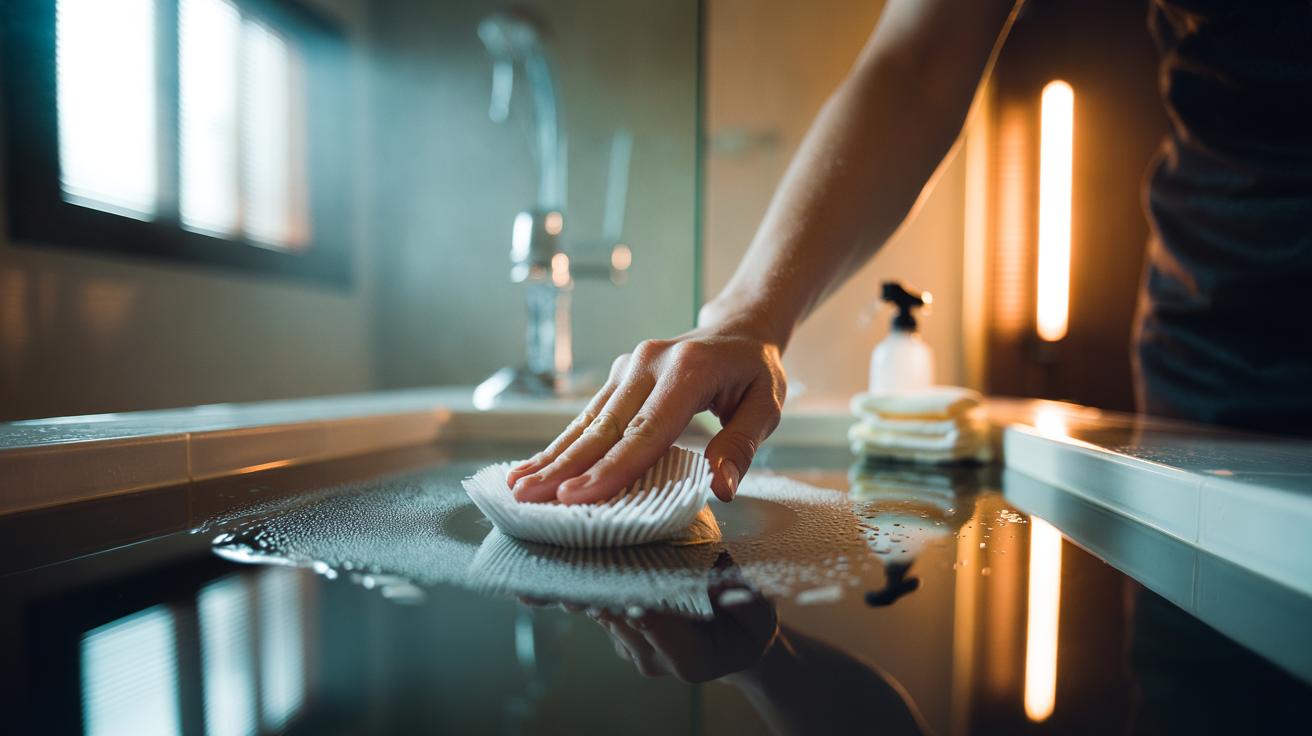
Start with a light solution: mix equal parts distilled or deionised water and white vinegar, or use 70% isopropyl alcohol for speedy evaporation. Always spritz the filter, not the mirror—overspray can creep into frame edges and damage backing. Fold one filter into quarters for a cushioned pad, then wipe in slow, overlapping S-curves from top to bottom. This pattern pushes residue in one direction rather than swirling it around. Refresh the dampness sparingly; too much liquid leaves thick films that dry patchy.
Switch to a second, dry filter for the final pass. Buff until you hear a faint squeak; that sound often marks a clean, thin film with little left to smear. For corners and the frame line, pinch a dry filter edge and trace the perimeter. Difficult lipstick or hair-product smears respond to a brief pre-wipe with isopropyl on a filter, followed by the routine finish. Keep a torch or phone light at a shallow angle to spot halos you might miss head-on.
The Science Behind Streaks and Smears
Streaks aren’t just about dirt; they’re about residue distribution and drying dynamics. Surfactants from soaps and aerosols reduce surface tension, forming ultra-thin films that dry irregularly. If your cloth leaves lint or additives, you create a patchwork of different evaporation rates—hence ghostly lines. Coffee filters limit new contaminants and absorb the film into their fibre network via capillary action, thinning what remains to a uniform layer that evaporates cleanly. A uniform, thin film is the real secret to a streak-free mirror.
Polishing matters too. The microtexture of filter paper provides gentle, non-abrasive friction that breaks the bond between oils and glass without scoring the surface. An S-pattern keeps the leading edge clean and reduces redeposition. Humidity plays a role: in damp bathrooms, alcohol-based cleaners flash off faster, minimising tide marks. Vinegar excels at mineral haze, but if your tap water is hard, stick to distilled water to avoid fresh deposits as droplets dry.
Cost, Sustainability, and Smart Alternatives
Used sparingly, coffee filters are a cost-friendly, low-fuss option. A pack of 100 typically costs £2–£4 in the UK, with one or two filters sufficient for a large household mirror. That said, microfibre cloths remain the gold standard for reusability and deep cleaning—especially when laundered without fabric softener, which can impair performance. As for sustainability, unbleached filters used with vinegar can be composted in many council schemes; if you’ve used strong solvents, dispose of them in general waste. Choose the tool that fits the task, not the trend.
| Material | Lint | Streak Risk | Cost per Use (approx.) | Reusability | Best For |
|---|---|---|---|---|---|
| Coffee filters | Very low | Low | £0.02–£0.04 | Single use | Quick mirror touch-ups |
| Microfibre cloth | Low | Very low | £0.00–£0.01 | 100+ washes | Regular cleaning, larger panes |
| Paper towels | Moderate | Moderate–High | £0.03–£0.06 | Single use | Spills, non-glass tasks |
Glass loves consistency, and that’s what coffee filters deliver: clean fibres, even pressure, and a finish that passes the side-light test. Keep a small stack under the sink and you’ll stop battling smears with half a roll of towel. For deep grime or architectural glass, pair filters with microfibre and distilled water for belt-and-braces results. Small changes to tools and technique pay big dividends on reflective surfaces. Will you try filters on your next mirror clean, or do you have a go-to method that outshines them in your bathroom’s daily routine?
Did you like it?4.4/5 (22)