In a nutshell
- 🧠 Mint’s volatile oils (menthol, menthone) mask ant pheromone trails, disrupting navigation and deterring entry without killing.
- 🧪 Simple crushed mint spray recipe: fresh mint infusion + carrier (vodka/vinegar) + mild emulsifier, optional peppermint oil; spray thresholds and skirting; reapply every 2–3 days and refrigerate.
- 🛡️ Safety first: stick to a 1–2% dilution, patch-test surfaces, ventilate, keep off food-prep areas, and use pet-aware practices—especially with cats.
- 🧰 Layered strategy: combine scent barriers with tidy storage, sealed gaps, and bin hygiene to reduce attractants and prevent trail re-establishment.
- ⚖️ Compare options: natural repellents suit light-to-moderate activity; escalate to bait stations for nests and reserve aerosols as a last resort under UK label guidance.
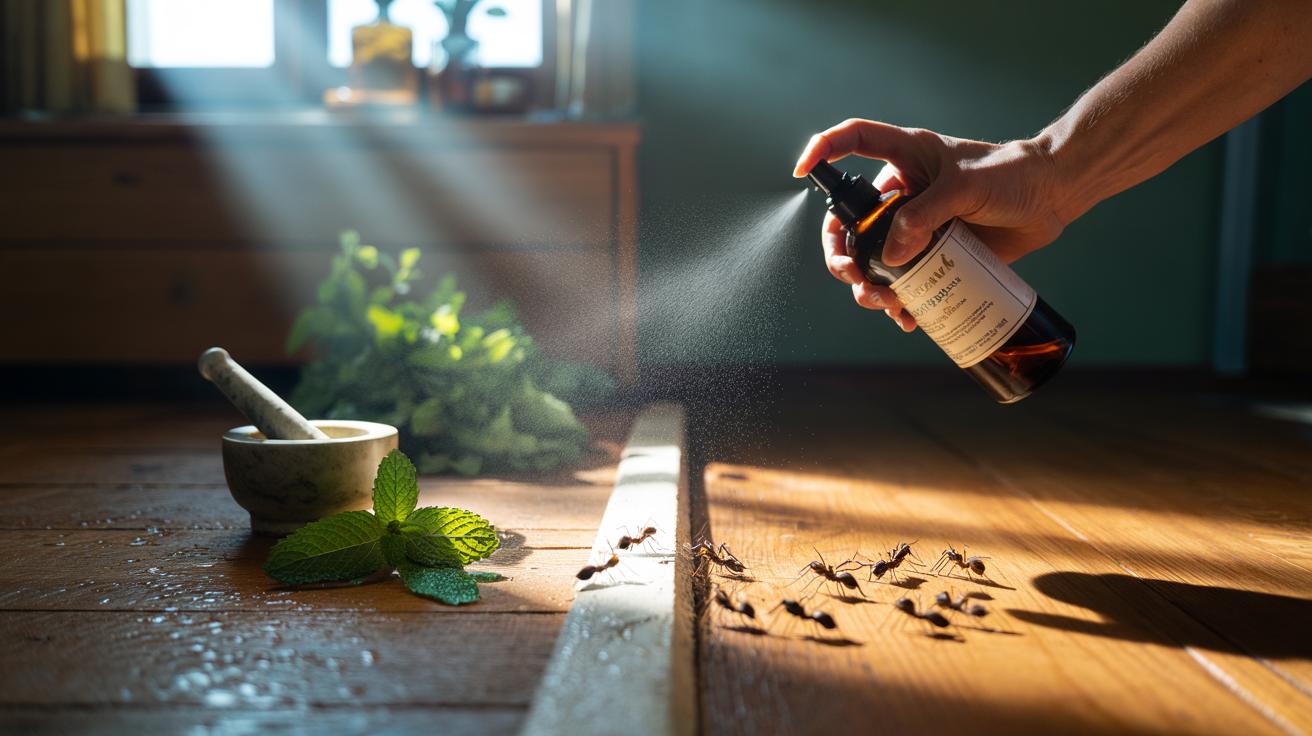
Britain’s summer ants are small, organised, and alarmingly persistent, but your best defence may already be growing on the windowsill. A simple crushed mint spray can nudge colonies away from skirting boards and patio joints without turning your home into a chemistry lab. Mint’s aromatic oils act like nature’s crowd-control, scrambling the cues ants use to navigate. This low-cost method deters intruders while keeping toxins off kitchen counters and child-safe zones. From peppermint to spearmint, the plant’s punchy bouquet becomes a line of scented defence, buying you time to seal gaps, tidy crumbs, and reclaim the threshold.
Why Ants Hate Mint: The Science of Scent
Ants run on information highways laid down by pheromone trails. Their antennae read these chemical signposts to find food, recruit workers, and return home. Mint leaves contain volatile oils such as menthol and menthone that flood the air with strong, persistent odours. These molecules don’t poison ants; they interfere with the messages. Mint’s overpowering scent masks the chemical cues ants depend on, leaving them hesitant, scattered, and less likely to cross a treated threshold. The result is deterrence rather than carnage—a redirection, not a wipeout.
The benefit is twofold. First, the aroma lingers along edges where ants travel, creating a soft barrier that needs topping up rather than heavy dosing. Second, ants are less likely to develop resistance to a scent-based intervention compared with targeted insecticides. In practice, the strategy is simple: cloud the entry points with mint’s complex bouquet, break the trail, and make your home’s perimeter feel like unfamiliar ground.
How to Make a Crushed Mint Spray at Home
For a fast, effective mix, gather one packed cup of fresh mint (peppermint or spearmint), 250 ml hot water, one teaspoon vodka or white vinegar as a carrier, and a half-teaspoon mild emulsifier such as unscented dish soap. Bruise the leaves with a spoon to release oils, pour on hot water, cover, and steep for 20–30 minutes. Strain well into a clean spray bottle, add the carrier and emulsifier, then shake. Optional: boost with 5–10 drops peppermint essential oil for extra punch.
To use, mist door thresholds, window frames, bin cupboards, and along skirting where trails appear. Reapply every two to three days, or after mopping and rain on external steps. Store in the fridge and remake weekly for freshness. Always label your spray and keep it away from pets and children. If you prefer a shelf-stable option, swap the infusion for water plus essential oil at a 1–2% dilution, but avoid overscenting; more smell is not always better for results.
Using Natural Oils Safely and Effectively
Essential oils are concentrated; treat them with respect. Stick to a 1–2% dilution (10–20 drops per 30 ml carrier) for peppermint, and avoid spraying on polished stone, natural wood finishes, or delicate paints without a patch test. Ventilate kitchens, and keep sprays off food-prep surfaces; wipe and reapply along edges instead. Deterrence is about persistence, not potency—consistent lines along entry points work better than heavy bursts everywhere.
Households with pets should take extra care. Cats are sensitive to several oils, so use minimal quantities and restrict treated areas they frequent. Don’t mist pet bedding, cages, or aquariums. For long-term control, combine your spray with good housekeeping: wipe crumbs, secure bin lids, and seal gaps under doors and around pipes with silicone or draught excluders. Used this way, natural oils become part of a layered defence that is kinder to indoor air and kinder to your budget.
Comparing Natural Repellents and Chemical Options
Natural deterrents such as crushed mint sprays excel at breaking trails and nudging scouts elsewhere. They’re ideal for kitchens and entryways where you want fewer residues. Chemical aerosols can provide rapid knockdown but may leave odours and require strict label compliance. Bait stations target colonies over time, offering structural control when nests are hidden. The smart approach is situational: match the tool to the task, starting with low-impact measures and escalating only if activity persists. Use chemicals as a last resort and always follow UK label guidance to protect people, pets, and beneficial insects.
Think of the options below as a toolbox, not a single solution. Combining a mint barrier with tidier food storage and sealed cracks not only deters the vanguard but also reduces what draws them in. When ants meet a hostile perimeter and find nothing worth the effort inside, they move on, and you avoid the spiral of stronger sprays and lingering fumes.
| Option | Primary Action | Best Use | Pros | Cons |
|---|---|---|---|---|
| Crushed Mint Spray | Trail masking | Thresholds, skirting, window frames | Low-tox, fresh scent, inexpensive | Needs frequent reapplication |
| Peppermint Oil Dilution | High-scent deterrence | Edges, cracks, external steps | Strong effect, portable | Surface sensitivity; pet caution |
| Lemon Eucalyptus | Broad repellency | Outdoor frames, bins | Weather-resilient aroma | Distinct scent not for all |
| Chemical Aerosol | Contact kill | Sudden indoor outbreaks | Immediate results | Residues; odour; strict handling |
| Bait Stations | Colony reduction | Hidden nests, long-term control | Targets the source | Slower; place out of reach |
Mint won’t topple a colony, but it will reclaim your space with a cleaner conscience. A crushed mint spray draws a fragrant line, while good hygiene and sealed entry points close the case. When activity is light to moderate, the method shines; when pressure is high, it pairs well with targeted baits used responsibly. The goal is a home that’s less inviting, not a battlefield. As the weather warms and scouts begin to roam, how will you blend scent, sealing, and smart storage to send ants searching elsewhere without drenching your rooms in chemicals?
Did you like it?4.5/5 (21)