In a nutshell
- 🌫️ Fog forms when moist indoor air hits glass below the dew point; a cool, saturated boundary layer lets droplets grow, with showers, cooking, and indoor laundry driving humidity spikes.
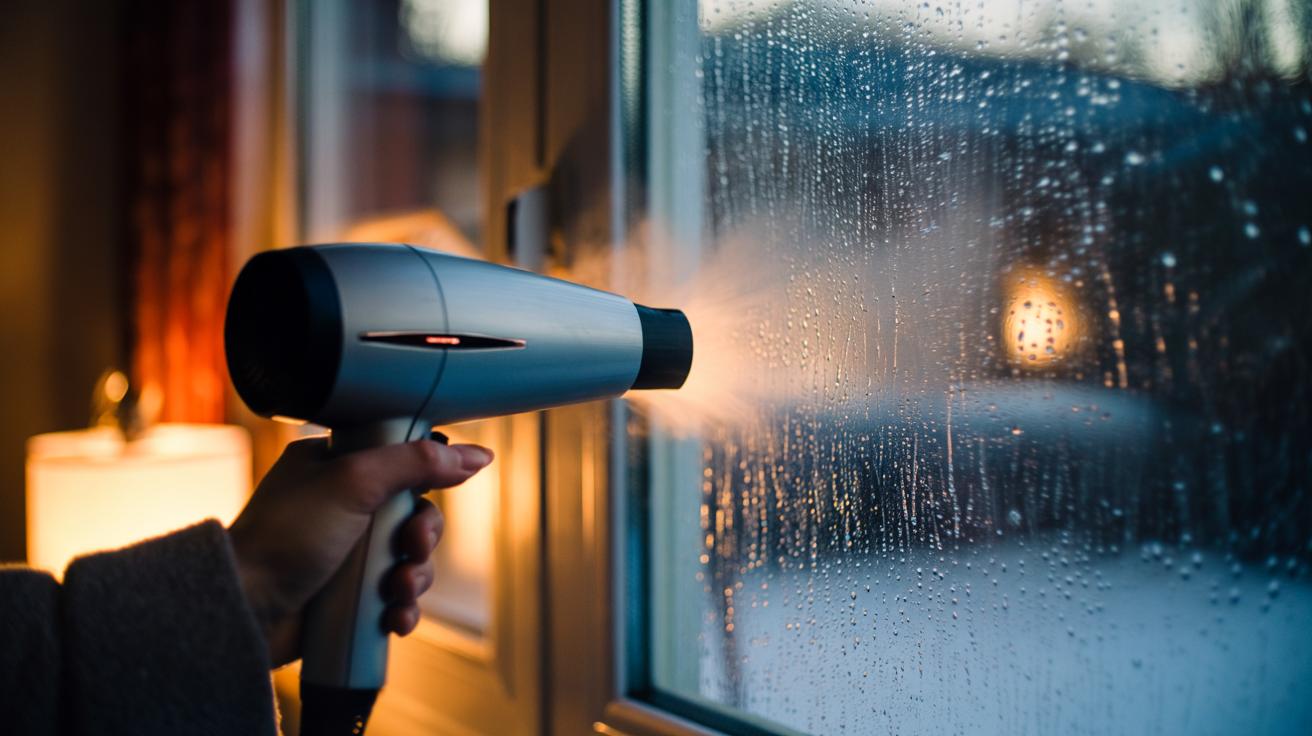
- 💨 A hairdryer’s gentle heat and directed airflow raise the pane above the dew point and strip the boundary layer, so droplets re-evaporate—warm air holds more moisture and clears mist in seconds.
- 🛡️ Stay safe: keep 20–30 cm from the glass, use low–medium heat, keep the nozzle moving, avoid seals and standing water, and prefer an RCD-protected outlet.
- 🧰 Technique tips: start at the bottom with slow, overlapping passes, then finish with a microfibre wipe; persistent haze between panes signals failed seals that warm air cannot fix.
- 🏠 Prevent recurrence: run extractor fans, open trickle vents, use a dehumidifier to maintain 40–50% RH, dry laundry with ventilation, and upgrade to double or triple glazing.
It happens on frosty mornings and steamy evenings alike: the view vanishes behind a milky film. Reach for a hairdryer and the change is instant. Warm air clears fogged glass because it drives the surface temperature above the dew point and shifts the moisture balance at the pane. This simple household tool can turn opaque windows transparent in seconds. Understanding why it works helps you do it faster and more safely. From kitchens to car windscreens on private driveways, the physics is the same: heat and airflow undo condensation by thinning the cool, damp boundary layer and encouraging water to evaporate back into the room air or be wiped away cleanly.
Why Windows Fog Up
Condensation forms when moist indoor air meets a surface that’s colder than the air’s dew point. Water vapour transitions into liquid droplets, scattering light and creating that familiar cloudy look. Homes with single glazing, north-facing rooms, or poorly insulated frames experience this more because glass sheds heat rapidly. Bathrooms and kitchens spike relative humidity, so droplets appear quickly on cold panes. Fog isn’t dirt; it’s physics in action. The thin, still layer of air right against the glass—the boundary layer—stays cool and saturated, allowing tiny droplets to nucleate and grow until the view disappears.
Outside temperature and indoor activities set the stage. Drying laundry indoors, boiling pasta, or showering without extraction pushes the room’s moisture load higher. Even new double-glazed units can fog at the edges if seals are tired. The fix begins by tipping the balance: warm the glass slightly and move air across it. That raises the surface temperature and lowers local humidity, dragging the microclimate at the pane back below saturation so the droplets can re-evaporate.
How a Hairdryer Clears Condensation Fast
A hairdryer delivers two things fog hates: gentle heat and directed airflow. The warm stream lifts the glass surface above the dew point, while the flow strips away the cool, wet boundary layer. In seconds, droplets shrink and vanish as water molecules return to the air. Warm air holds more moisture than cold air, so the same room suddenly has capacity to absorb the liquid film clinging to the pane. Importantly, you don’t need scorching temperatures—just enough to nudge the glass a few degrees warmer than the surrounding air.
Technique matters. Start at the bottom edge where water collects and sweep in slow, overlapping passes, keeping the nozzle moving to avoid thermal stress on the glass. Keep the dryer on a low or medium setting; high heat is unnecessary and wastes energy. For stubborn beads, alternate brief warming with a clean, absorbent cloth to lift residual moisture. Think of the dryer as a quick reset that restores transparency without smearing.
Safe Technique and Settings
Used wisely, a hairdryer is a safe, efficient de-fogger. Keep it at least 20–30 cm from the glass and keep the air stream moving. Never blast one spot for more than a few seconds, especially on older or chipped panes. Avoid seals and uPVC trims, which can deform under concentrated heat. In damp rooms, plug the dryer into an RCD-protected outlet and keep cords and sockets away from water. Never use a hairdryer near standing water or with wet hands. On laminated or toughened glass, the risk of cracking is low, but gentle heat remains best practice.
Time your passes: a medium setting for 30–90 seconds per pane usually suffices. Follow with a microfibre wipe to remove any remaining mist or mineral traces. If you see rainbow streaks or persistent clouding between panes, the unit’s seal may have failed—no amount of warm air will clear interstitial condensation. Stop if you notice unusual odours, excessive heat on the casing, or flickering power and let the dryer cool.
| Setting | Recommendation |
|---|---|
| Heat | Low to medium for control and energy efficiency |
| Distance | 20–30 cm from glass, always moving |
| Motion | Slow, overlapping sweeps from bottom upward |
| Finish | Wipe with microfibre to lift residual moisture |
Longer-Term Fixes to Reduce Moisture Buildup
While a hairdryer is brilliant for instant clarity, lasting relief comes from cutting indoor humidity and warming surfaces. Use extractor fans during and after showers and cooking, and crack trickle vents to maintain a gentle airflow. A compact dehumidifier can keep living areas near 40–50% relative humidity in winter. Small, steady ventilation changes beat short blasts of wide-open windows in cold weather. Dry laundry outdoors or in a ventilated room, and cover pans with lids to reduce steam.
Upgrade the fabric of the home where feasible. Double or triple glazing raises the internal surface temperature of the glass, shrinking the condensation window. Thermal curtains or blinds with side seals help, though they should be opened daily to prevent trapped moisture. Insulate reveals and sills, fix leaky seals, and keep indoor plants clustered with trays to limit transpiration. Prevention turns fog clearing from a daily chore into an occasional tidy-up.
The humble hairdryer wins because it works with the physics of moisture: warm the glass and move the air, and the fog steps aside. With a steady hand, sensible distances, and a quick wipe, you can reclaim the view in under a minute while you tackle the root causes with ventilation, insulation, and humidity control. Fast fixes and smart prevention make the clearest partnership. Which improvement would have the biggest impact in your home this season—better airflow, a small dehumidifier, or an upgrade to warmer, better-sealed glazing?
Did you like it?4.4/5 (20)