In a nutshell
- 🔥 Hot water + washing-up liquid melts grease fast by lowering viscosity and forming micelles that lift fats off pipe walls.
- 🧼 Heat–surfactant synergy: at 60–80°C, fats liquefy while surfactant micelles disperse oils, clearing typical kitchen clogs without harsh chemicals.
- 🛠️ Step-by-step: 2–4 tbsp soap into drain, pour 1–2 kettles hot water (60–80°C for PVC, near-boiling for metal), wait 5–10 minutes, then flush; repeat once if needed.
- 🌿 Safer and cheaper: pennies per use, low pipe risk, biodegradable surfactants; pair with preventive habits like wiping greasy pans and monthly hot-soap flushes.
- ⚠️ Know the limits: struggles with hair mats, grounds, or structural issues; use a plunger or snake next, and never mix with chemical drain openers—call a pro for multi-fixture backups.
When a kitchen sink starts to gurgle and drain at a snail’s pace, the culprit is usually congealed fat and soap residue clinging to the pipe walls. There’s a quick, low-cost fix trusted by plumbers and home cooks alike: hot water plus dish soap—or, in UK households, hot water and washing-up liquid. The mix harnesses heat and surfactant chemistry to loosen, liquefy, and carry away grease without resorting to corrosive products. The result is often a clear sink in minutes, with no lingering chemical fumes. Here’s how it works, the safest way to use it, and when to escalate to other options.
How Hot Water and Dish Soap Melt Grease
The secret lies in surfactants, the active agents in washing-up liquid that reduce surface tension and break the bond between grease and pipe walls. Their hydrophobic “tails” seek out fat, while hydrophilic “heads” stay friendly with water, forming tiny spheres called micelles. These micelles trap and disperse oils so they can be flushed away. Heat accelerates the process: at 60–80°C, fats soften and their viscosity drops, so they flow rather than stick. The soap’s lubricating film also helps clinging residues slide past bends and rough spots inside the waste line.
There’s a second advantage: hot water expands and pushes, creating gentle turbulence that moves the soap solution deeper into the trap and branch pipe. Many household blockages are layered—crumbs embedded in fat, then a skin of hardened soap scum—so the combination of heat and surfactant penetration disrupts these layers quickly. Because washing-up liquid is pH-mild compared with caustic drain cleaners, it’s kinder to finishes and compatible with most pipe materials.
Step-by-Step Method for Quick, Safe Unclogging
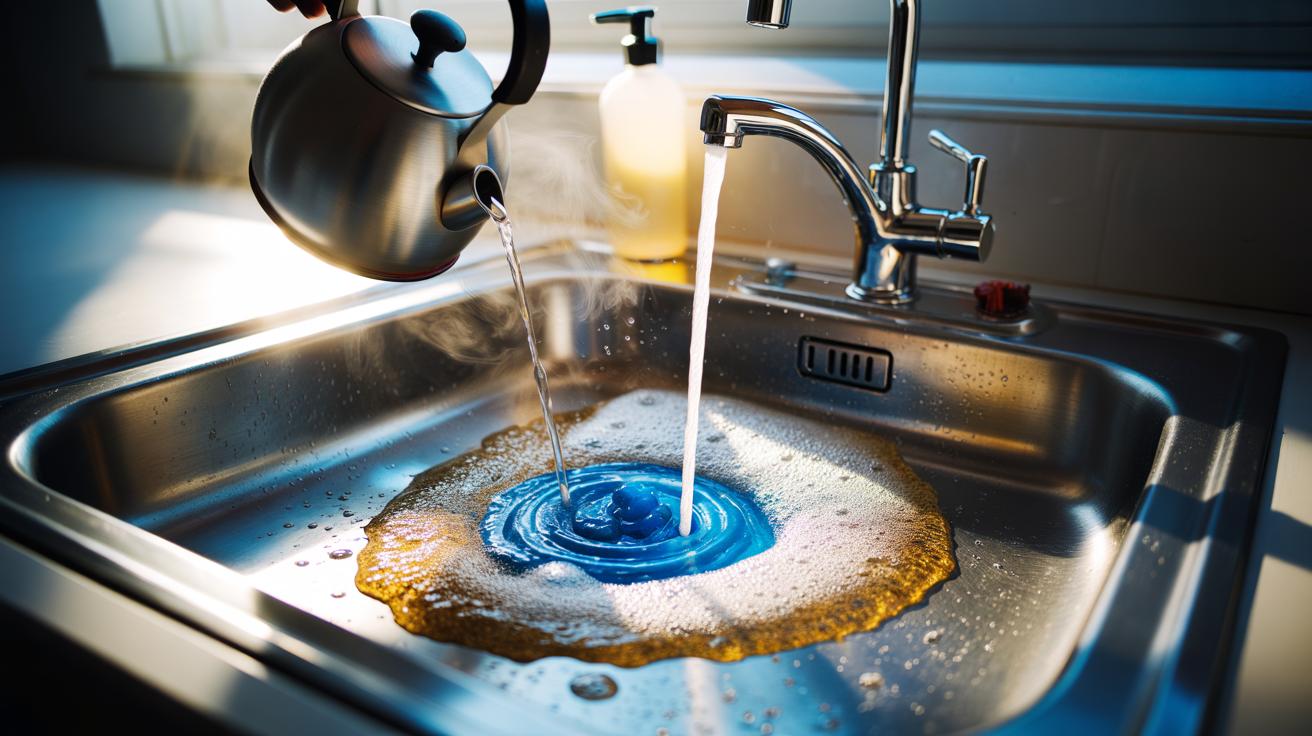
First, remove sink strainers or pop-up stoppers and bail out standing water so the solution can reach the clog. Squeeze in 2–4 tablespoons of washing-up liquid directly into the drain. Heat 1–2 kettles of water to near-boiling for metal pipes, or comfortably hot (about 60–80°C) for PVC to avoid softening. Always pour slowly and directly down the drain, not onto porcelain surfaces. Wait 5–10 minutes to let the heat and surfactants work. Finish with a second slow flush of hot water to carry the loosened residue into the main line.
If drainage improves but isn’t perfect, repeat once. For double sinks, plug the opposite bowl to maintain pressure. On a disposal unit, run it briefly to clear impellers before pouring the mix. Never combine this method with chemical drain openers, which can splash caustic residue. If you need more force, use a cup plunger after the first pour: the soap provides a slick seal, and the warm water primes the clog to shift. Protect hands with gloves and open a window to vent steam.
| Parameter | Recommended | Notes |
|---|---|---|
| Washing-up liquid | 2–4 tbsp | Grease-heavy clogs benefit from the higher dose |
| Water temperature | 60–80°C (PVC); near-boiling (metal) | Avoid prolonged boiling on plastic pipework |
| Volume | 1–2 kettles (1.5–3 litres) | Pour steadily for best heat transfer |
| Wait time | 5–10 minutes | Repeat once if needed |
When It Works—and When to Try Something Else
This mix is a winner for fresh grease build-ups, light soap scum, and the sticky residues from cooking oils washed down after frying. It’s also effective as a preventive flush after roasting or big washing-up sessions. Where it struggles is with dense hair mats, coffee grounds packed into bends, or mineral scale from hard water. In those cases, follow with a cup plunger, then a mechanical snake to slice through tangles. Enzyme-based cleaners can help digest organic slime overnight, but they need time and flow.
If you notice frequent clogs at the same fixture, you may have a sagging waste pipe, a poorly vented line, or a trap undersized for a modern dishwasher discharge. Don’t keep pouring hot water indefinitely; escalating heat won’t fix structural issues. Avoid mixing soap flushes with bleach or acidic cleaners, which add fumes without improving outcomes. Call a professional if backups affect multiple fixtures or if you hear gurgling from neighbouring drains—that points to a broader blockage downstream.
Costs, Safety, and Environmental Upside
For most households, this remedy costs pennies: a few pumps of washing-up liquid and a kettle you already boil for tea. There’s no harsh lye or acid to corrode chrome, etch stonework, or stress older seals. Biodegradable surfactants reduce the chemical load entering wastewater compared with caustic drain openers, and the heat dissipates harmlessly. On septic systems, the mild formulation is typically safe in normal quantities. Sensible precautions apply: pour slowly to avoid splashes, keep children clear, and mind steam when lifting the kettle.
To limit energy use, act early: the less mass you need to heat, the less hot water required. Adopt preventive habits—wipe greasy pans with a paper towel before washing; fit and clean strainers; run a monthly hot-soap flush. Where limescale is common, regular descaling of the tap aerator and kettle improves flow and water heating efficiency. Think of this method as first aid for drains: quick, gentle, and often enough—saving chemical-heavy interventions for the rare stubborn case.
| Aspect | Soap + Hot Water | Chemical Openers |
|---|---|---|
| Typical cost per use | £0.05–£0.15 | £4–£10 |
| Pipe/material risk | Low | Medium to high (corrosive) |
| Environmental impact | Low, biodegradable surfactants | Higher, caustics/acids |
| Best for | Grease, light scum | Hair mats, heavy organic clogs |
A kettle of hot water and a squeeze of washing-up liquid won’t solve every plumbing drama, but it delivers fast relief for the most common, grease-based slowdowns. It’s cheap, kinder to your pipes, and gentler on the environment. Make it your first move, backed by good kitchen habits and the occasional plunger or snake for tougher jobs. If a sink keeps backing up, consider it a diagnostic clue rather than a cue to pour more heat. How will you build this simple routine into your household maintenance—and what signs would prompt you to escalate to the next step?
Did you like it?4.6/5 (30)