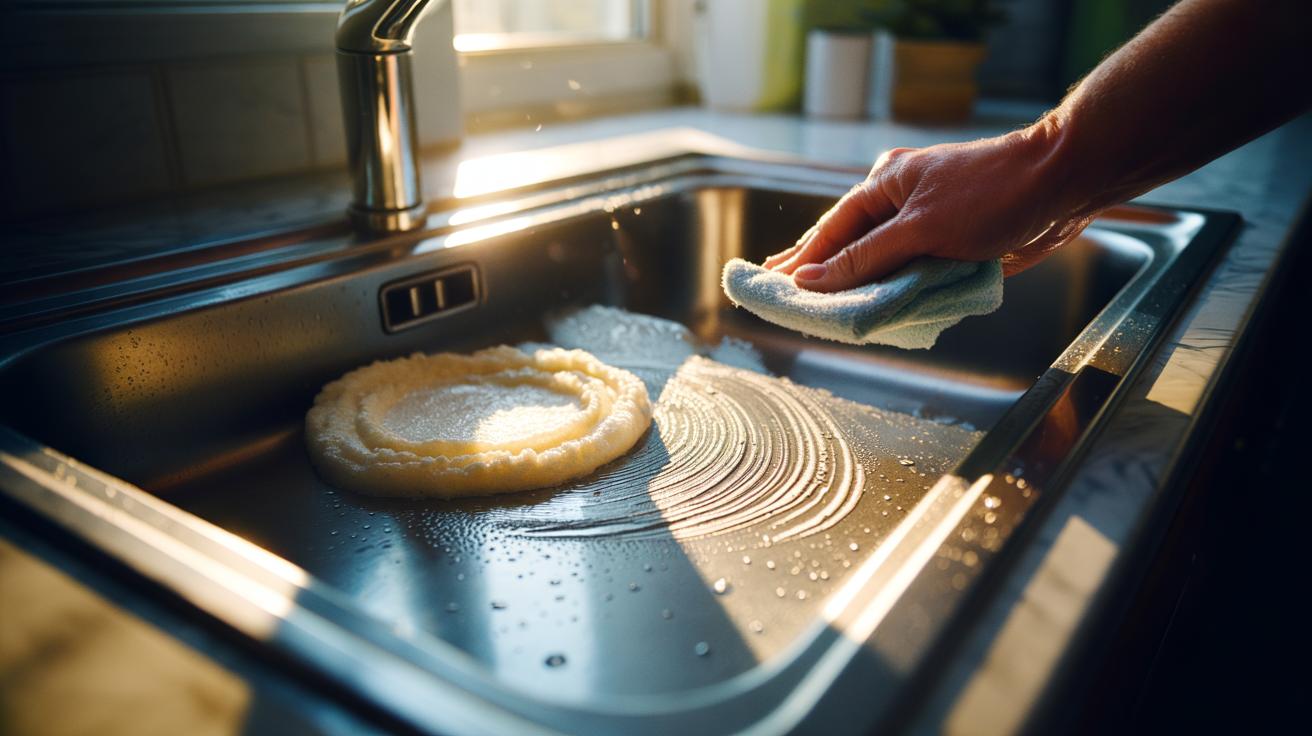
In a nutshell
- 🧪 Gentle abrasion explains the shine: baking soda sits around Mohs 2.5, so its particles scrub films without cutting stainless, porcelain, or enamel.
- 🧼 The paste’s mild alkalinity (pH ~8.3) loosens fatty residues and neutralises odours, while water creates a lubricated “wet sanding” effect that limits scratching.
- 🛠️ Mix a spreadable paste (~3:1 powder to water), allow 5–10 minutes dwell, use a soft microfibre cloth or nylon brush, then rinse and buff dry.
- 🧴 Material tips: polish stainless steel with the grain; treat porcelain/enamel stains gently; use plenty of water on composites; keep acrylic passes light and the paste wet.
- ⚠️ Avoid embedded grit and harsh pads; for limescale, pre-treat with vinegar, rinse, then polish with baking soda—smart sequencing prevents scratches.
Kitchen sinks take a daily battering from tea tannins, coffee oils, limescale and the odd curry stain. Reach for baking soda and a splash of water, and you have a safe, effective cleaner that makes steel and ceramic gleam. The secret lies in gentle abrasion: particles small and soft enough to lift grime yet not hard enough to gouge surfaces. A mild alkalinity also helps loosen fatty deposits and neutralise odours. Used as a damp paste, sodium bicarbonate polishes rather than scours, giving you a bright finish without the hairline scratches some powders and pads leave behind. Here’s the science, the method, and the limits.
What Makes Baking Soda a Gentle Abrasive
Sodium bicarbonate sits at roughly 2.5 on the Mohs hardness scale, softer than stainless steel, porcelain glaze and vitreous enamel. Its crystals are irregular enough to provide a micro-scrub, but their low hardness means they fracture and round off under pressure. That balance—edges that engage dirt, not the substrate—explains why it brightens sinks without cutting into them. When mixed into a paste, the water acts as a buffer, spacing particles and reducing direct contact with the surface. The result is controlled abrasion that targets residue while leaving the base material intact.
There’s useful chemistry at play too. With a mildly alkaline pH of about 8.3, baking soda helps break down fatty acids from soaps and cooking, loosens dried-on proteins, and tames sour smells. The powder’s fine particles also absorb odours. Compared with bleach or caustic soda, the risks to finishes and sealants are far lower. It cleans through physics and gentle chemistry, not brute-force corrosion, which is why it’s trusted on everyday kitchen metals, glossy glazes, and sealed composites.
The Science of Paste: Particle Size, pH, and Lubrication
The brilliance of a baking soda paste is its lubricated abrasion. Add just enough water—about three parts powder to one part liquid—to form a spreadable slurry. Water suspends the particles, reduces friction, and allows them to roll and slide rather than gouge. This “wet sanding” effect limits scratch risk while giving particles freedom to dislodge films and stains. At the same time, that mild alkalinity encourages light saponification, helping greasy residues lift off with less elbow grease. Dwell time matters: leave the paste in contact with stains for five to ten minutes before the wipe-down.
Technique shapes the outcome. Use a soft microfibre cloth or a nylon brush, apply light pressure, and work in small circles so the particles migrate evenly. Rinse thoroughly to flush away loosened grit; then buff dry to prevent water marks. Avoid using the paste alongside gritty soils—grains of sand or metal swarf are far harder than the sink and can cause scratches. Clean off debris first, then let the bicarbonate do the careful work.
Safe Techniques for Shining Different Sink Materials
For stainless steel, wipe away crumbs and grit, then smear a thin layer of paste with the grain. Polish with feather-light strokes, rinse, and finish with a dry cloth. On porcelain and enamel, spread the paste over tea or rust marks, allow a short dwell, then agitate gently with a soft sponge. The goal is contact time, not pressure. For composite granite and quartz sinks, use minimal paste and plenty of water to carry away fines, then re-seal if your manufacturer recommends it.
Plastics and acrylic basins need a gentler hand: keep the paste wetter, swap to an ultra-soft cloth, and avoid vigorous rubbing that could create haze. In every case, rinse well and inspect under good light. Persistent mineral rings may need a brief pre-soak with white vinegar before the bicarbonate polish; just don’t mix acids and alkalis at the same time. Work in stages—loosen, lift, rinse, and dry—and a luminous finish arrives without a scratch.
Scratch Risk by Material and Hardness
Understanding relative hardness helps you choose confidently. With baking soda at about Mohs 2.5, it’s mechanically softer than typical sink surfaces, which keeps scratches at bay when used wet and clean. The exceptions are soft plastics and coated finishes that can be marred by embedded grit or overzealous scouring. Match pressure and dwell time to the material, and keep the paste uncontaminated—that’s the difference between polish and damage.
| Sink Material | Approx. Hardness | Suitability of Baking Soda Paste | Notes |
|---|---|---|---|
| Stainless steel (304/316) | Mohs ~4–5 | Safe | Work with the grain; rinse thoroughly. |
| Porcelain/ceramic glaze | Mohs ~6–7 | Safe | Ideal for tea and coffee stains. |
| Vitreous enamel | Mohs ~5–6 | Safe | Avoid chips; treat rust marks gently. |
| Composite granite/quartz | Mohs ~6–7 (with resin) | Safe | Use plenty of water; re-seal if required. |
| Acrylic/resin plastic | Mohs ~3 | Generally safe | Keep paste wet; use very light pressure. |
| Copper/brass | Mohs ~3 | Safe | Test first; may affect patina. |
Two risks trump hardness: contamination by harder grit, and aggressive pads. Swap steel wool and harsher powdered cleansers for microfibre and bicarb. If limescale outstays its welcome, pre-treat with a mild acid, rinse, then polish with baking soda to neutralise. By separating chemical softening from mechanical polishing, you keep control and protect the finish. The method is quiet, quick and kind to the sink—and to your lungs.
Baking soda paste works because it respects surfaces: a soft scrub that cuts through films, not finishes. When paired with light pressure, clean tools and sensible dwell time, it leaves stainless bright, enamel glossy and composites crisp, all without the hairline scratches that dull a sink over time. It’s a domestic fix rooted in sound materials science, cheap, and easy to rinse away. Will you try a paste-and-buff routine this week—and if you do, which stain or sink material are you most curious to revive first?
Did you like it?4.6/5 (26)