In a nutshell
- 🔬 The science: acetic acid in vinegar chelates minerals, breaking the bond that forms soap scum and softening trace limescale so glass feels smoother and stays clearer.
- 🧴 The routine: mist a vinegar-rinse onto warm glass, allow short dwell time, rinse, squeegee top-to-bottom, then buff edges with microfibre—small, consistent rinses beat heavy scrubs.
- 📊 Ratios that work: soft/moderate water 1:3, hard water 1:1, weekly reset 2:3; adjust dwell time (1–5 minutes) and frequency to match water hardness and habits.
- ⚠️ Safety first: Never mix vinegar with bleach; avoid use on natural stone (marble, limestone, travertine), protect metal frames by spraying cloths, and ventilate to avoid inhaling mist.
- ✨ The payoff: brighter doors, fewer marks, a quieter squeegee, and less weekend scrubbing—an easy, low-cost habit that prioritises prevention over deep cleaning.
Glass shower doors accumulate a stubborn film that looks dull, drags on a squeegee, and resists ordinary rinsing. The simplest fix sits in most kitchen cupboards: white vinegar. Used as a quick vinegar-rinse after bathing, it loosens deposits and keeps the glass feeling smooth to the touch. By dissolving the minerals that bind soap scum to glass, it prevents that hazy veil from ever taking hold. Think of it as a two-minute insurance policy against clouded glass and weekend scrubbing. This accessible, low-cost habit relies on chemistry, not elbow grease, and it works with standard household gear: a spray bottle, warm tap water, and a clean microfibre cloth.
Why Vinegar Softens Shower Doors
The secret is acetic acid, the mild acid in vinegar. When water rich in calcium and magnesium meets soap, it forms a clingy film of calcium stearate—what we call soap scum. Vinegar interrupts that bond. It chelates metal ions and gently dissolves mineral traces, which frees the film from the glass surface. It’s the acidity, not abrasion, that does the work, so the surface feels smoother without scratching. This matters because micro-scratches trap residue and make future cleaning harder. A vinegar rinse clears the film before it hardens and reduces drag, so your squeegee glides instead of squeals.
Bath steam warms the glass, and warmth speeds reactions. A light mist of vinegar solution after showering takes advantage of that heat to soften trace limescale and stop it crystallising. By improving rinse-off and reducing surface tension, vinegar helps water sheet away rather than bead into mineral rings. The net effect is a clean, low-friction surface that looks bright and resists build-up between deep cleans. Used regularly, the glass simply never gets the chance to turn cloudy.
How Regular Rinses Prevent Soap Scum Build-Up
Prevention is a timing game. Most deposits harden as moisture evaporates. A vinegar-rinse interrupts that window: spray, wait briefly, then rinse and squeegee. This neutralises mineral residues while they are still soft and mobile, so they can’t cement themselves to the pane. Small, consistent rinses beat occasional heavy scrubs. You do not need a strong solution; typical kitchen vinegar (around 5% acetic acid) diluted with warm water is sufficient for daily or every-other-day maintenance. Add a single drop of mild washing-up liquid if body oils are noticeable; it improves wetting without leaving residue.
Match your routine to your water hardness and habits. Short, frequent showers in soft water may only need a quick mist and rinse. Hard-water households benefit from a slightly stronger mix and a slightly longer dwell time before rinsing. Keep a labelled bottle in the bathroom and make it the last step before you hang up the towel. This tiny ritual protects glass clarity and saves hours of descaling later.
| Water/Use Case | Vinegar:Water Ratio | Dwell Time | Frequency | Notes |
|---|---|---|---|---|
| Soft to moderate water | 1:3 | 1–2 minutes | After each shower | Light maintenance; quick rinse, squeegee. |
| Hard water | 1:1 | 2–5 minutes | After each shower | Extra dwell time loosens limescale rings. |
| Weekly reset | 2:3 | 5 minutes | Once a week | Add one drop washing-up liquid for body oils. |
| Quick shine | Ready-made 5% | 1 minute | As needed | Use neat vinegar sparingly on glass only. |
A Step-by-Step Routine That Works
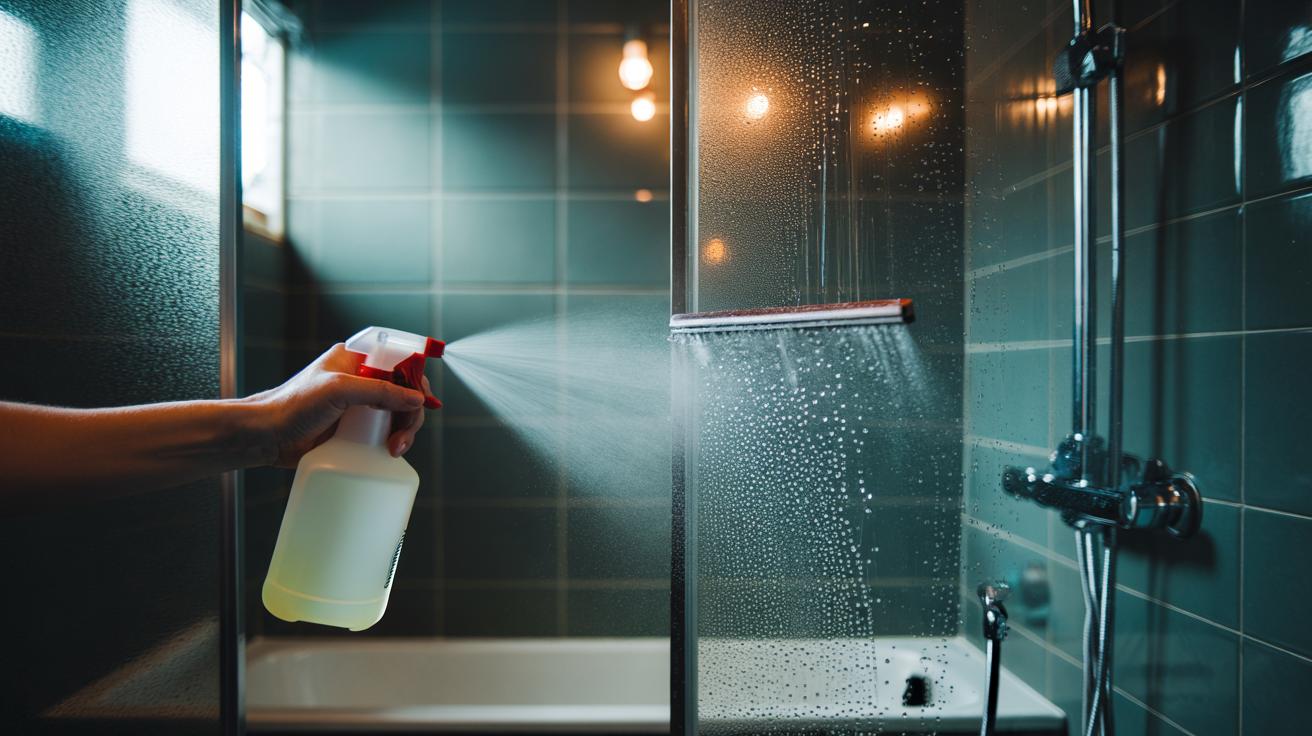
After your final rinse, shake off excess water from the glass. Mist a fine spray of your vinegar solution across the inside and outside of the doors, aiming for even coverage—tracks and seals included. Let it sit briefly so the acid can unlock minerals. Rinse with warm water, then pull a squeegee from top to bottom in straight lines, wiping the blade between passes. Finish by buffing edges and handles with a dry microfibre cloth to prevent droplets from creeping back onto the pane as they dry.
Protect surrounding materials. Do not use vinegar on natural stone such as marble, limestone, or travertine; the acid can etch. On metal frames, apply the spray to a cloth first to avoid pooling under fittings, and dry them to reduce corrosion risk. Ensure good ventilation and avoid breathing mist. Never mix vinegar with bleach or products containing chlorine; dangerous gases can form. If your water is extremely hard, rotate in a limescale remover monthly, but keep the daily vinegar-rinse for effortless upkeep.
Adopting a quick vinegar-rinse turns cleaning into a habit rather than a chore. You are using mild chemistry to keep glass slick and clear, preventing soap scum and limescale from ever getting established. The payoff is visible: brighter doors, fewer water marks, a quieter squeegee swipe, and less need for harsh products. Two minutes now beats two hours at the weekend. If you try the method for a week, you should notice the difference in feel as much as in appearance. What small adjustment—ratio, dwell time, or squeegee technique—will you tweak first to make the routine your own?
Did you like it?4.5/5 (27)