In a nutshell
- 🔬 The science: cellulose fibres in newspaper create capillary wicking and hydrogen bonding that lift water, surfactants, and oils from high–surface energy glass for a streak‑free finish.
- 📰 Ink facts: modern soy/vegetable‑based inks largely polymerise, limiting transfer; avoid glossy inserts, test on fresh paint, and work with lightly damp then dry sheets to prevent smears.
- 🧴 Method: mix 1:4 white vinegar:water (plus 1 tsp isopropyl alcohol per 500 ml for grease), mist lightly, use overlapping S‑strokes, then a dry newsprint buff; avoid direct sun and ammonia on films.
- 📊 Material match: newspaper = high residue uptake, low lint; microfibre = great for particulates but can smear if over‑wet/dirty; paper towels = linty, streak‑prone, best for spills.
- 🌍 Value: newsprint delivers a professional‑grade shine at minimal cost, reuses waste, is recyclable, and avoids microplastic shedding common with worn synthetics.
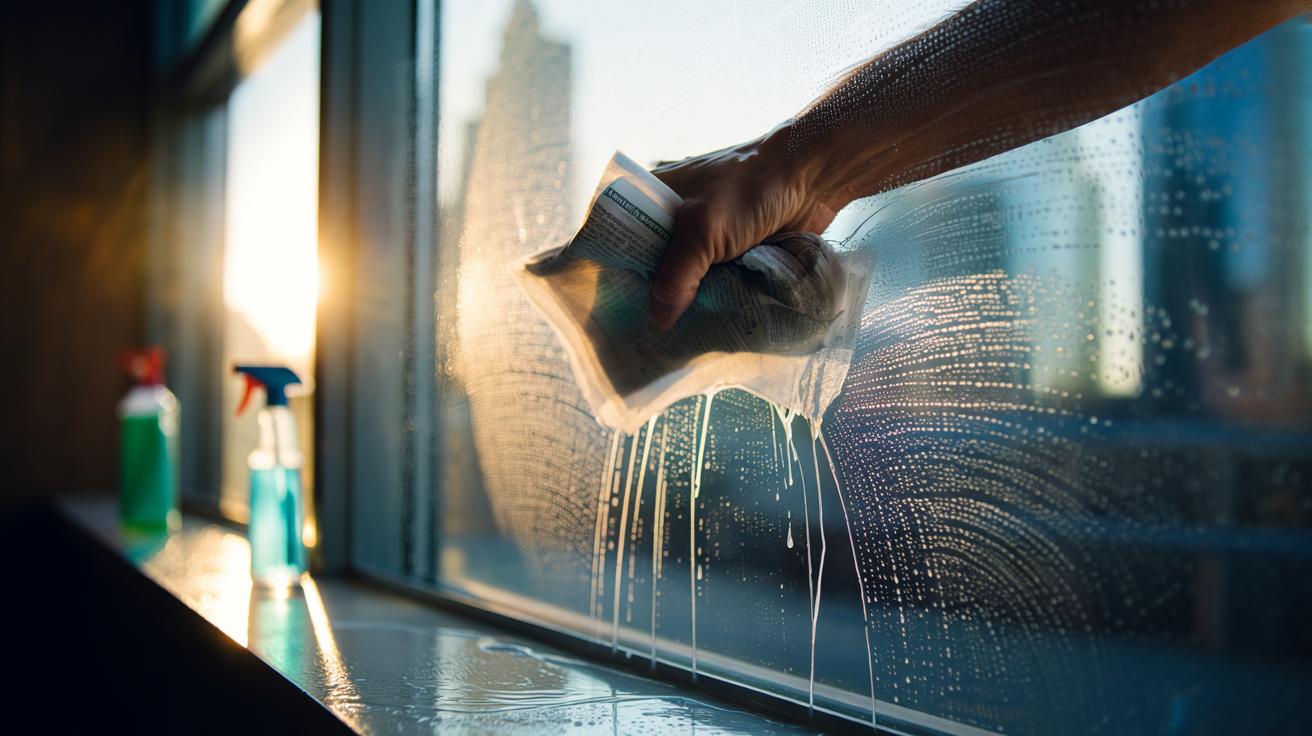
Old-school window cleaning with newsprint isn’t just a sentimental hack from the era of coal fires and milk floats. It works because of science. The tangled web of cellulose fibres in newspaper greedily wicks away water, surfactants, and oily residues while lightly burnishing the glass. Unlike fluffy paper towels that shed lint, newsprint is densely pressed and sized, so it glides with control and leaves a crisp finish. Add the right solution—simple vinegar and water—and you create a low-streak system that pairs high surface energy glass with hydrophilic fibres. Done correctly, newspaper can deliver a professional-grade, streak-free shine with pennies’ worth of materials, and it does so without microplastic shedding or harsh chemicals.
Why Cellulose Fibres Beat Synthetics on Glass
Glass has high surface energy, which encourages thin films of liquid and oil to spread—and to show up as streaks under daylight. The remedy is a medium that both disrupts those films and removes them fully. Enter cellulose, a polymer studded with hydroxyl groups that attract water through hydrogen bonding. In newsprint, these hydrophilic fibres form capillaries that draw cleaning solution and dissolved grime off the pane. At the same time, the paper’s compressed texture offers micro-contact points, gently planing away residues without scratching.
Microfibre excels at trapping particulate dirt, but its polyester and polyamide strands are partly hydrophobic, which can sometimes smear surfactant-rich cleaners unless the cloth is properly damp and clean. Paper towels, with shorter fibres and fluffier build, tend to shed lint and push liquid rather than wick it. Newspaper’s long-fibre network and capillary action help it absorb, not redistribute, the film that causes streaks, leaving glass optically clear.
Ink, Coatings, and the Myth of the Dirty Smear
Many readers worry that print will blacken frames or cloud panes. In practice, modern newspaper inks—often soy- or vegetable-based with stable pigments—polymerise as they dry, which limits transfer. The sheet is calendered (densely pressed) and lightly sized, reducing lint and controlling absorbency. Fillers like kaolin clay or calcium carbonate create a faintly micro-abrasive surface that buffs away greasy fingerprints. That’s why newsprint often leaves glass unusually crisp, especially after a final dry buff.
There are caveats. Do not use glossy magazine inserts or coated advertising stock; they carry heavier varnishes and clay coatings that can smear or print onto damp frames. Very fresh ink can mark white silicone if rubbed wet, so test a corner and work with lightly damp, then dry sheets. If your window frames are newly painted, allow full cure before rubbing. Quality newsprint plus a balanced cleaner is the safe route to a smear-free finish.
Practical Method: From Spray Bottle to Final Buff
Mix a simple cleaner: 1 part white vinegar to 4 parts water in a fine-mist sprayer. For a greasy kitchen pane, add a teaspoon of isopropyl alcohol per 500 ml. Lightly mist a quarter of the window; avoid soaking, which dilutes wicking. Take a crumpled sheet of newspaper and work in overlapping S-strokes from top to bottom, gathering liquid as you go. Flip to a drier patch of paper to lift remaining film. Follow with a fresh, dry sheet for a brisk buff until the surface squeaks.
Avoid ammonia-based cleaners on aftermarket window films, and keep solution off bare timber frames. Don’t clean in direct sun; rapid evaporation encourages streaks. For exterior panes, dislodge grit with a rinse first to prevent scratching. On big panes, a rubber squeegee for the wet pass plus a newspaper buff for the final shine is a quick, professional hybrid. Finish by checking from several angles; a final dry pass erases the faintest halos.
Newspaper vs Microfibre vs Paper Towels: A Quick Comparison
Different materials behave differently on glass because of fibre chemistry, density, and surface interaction. The table below summarises what to expect. The sweet spot is pairing the right cleaning solution with the right wipe. For most household windows, newsprint offers unmatched value and crisp results, microfibre suits maintenance cleans when kept impeccably laundered, and paper towels are best reserved for spills, not final polishing. If streak-free clarity is the priority, choose a medium that wicks and buffs rather than smears and sheds. Keep any cloth very clean; detergents or fabric softeners left in fibres can ghost on glass.
| Material | Fibre Structure | Residue Uptake | Lint/Streak Risk | Environmental Notes | Best Use |
|---|---|---|---|---|---|
| Newspaper | Compressed cellulose with fillers | High via capillary wicking | Low lint; low streak with dry buff | Reuses waste; recyclable | Final polish and de-smearing |
| Microfibre cloth | Split polyester/polyamide | High for particulates; variable for films | Low lint; can smear if over-wet or dirty | Durable; sheds microplastics if worn | Routine cleaning, dust and pollen |
| Paper towels | Short-fluff cellulose | Moderate; pushes liquid | High lint; streak-prone | Single-use waste | Spill absorption, not polishing |
There’s a reason professional window cleaners obsess over how materials meet the glass. Newsprint’s cellulose fibres don’t just rub; they wick, plane and polish, leaving nothing behind but clarity. When matched with a light, balanced solution and a steady technique, it outperforms pricier options and turns a weekend chore into a quick win. The method is simple, repeatable, and kind to both your budget and the environment. Next time you recycle the Sunday edition, save a few sheets for the windows and judge the finish by the skyline. What small changes to your cleaning kit could help you see your home—literally—in a clearer light?
Did you like it?4.5/5 (28)