In a nutshell
- 🧼 Towels feel crunchy due to detergent residue and limescale; a simple vinegar rinse dissolves buildup to restore softness and absorbency.
- 🧪 Acetic acid lowers rinse pH, neutralises alkaline residues, and loosens mineral films; use distilled white vinegar (5%), not malt or balsamic.
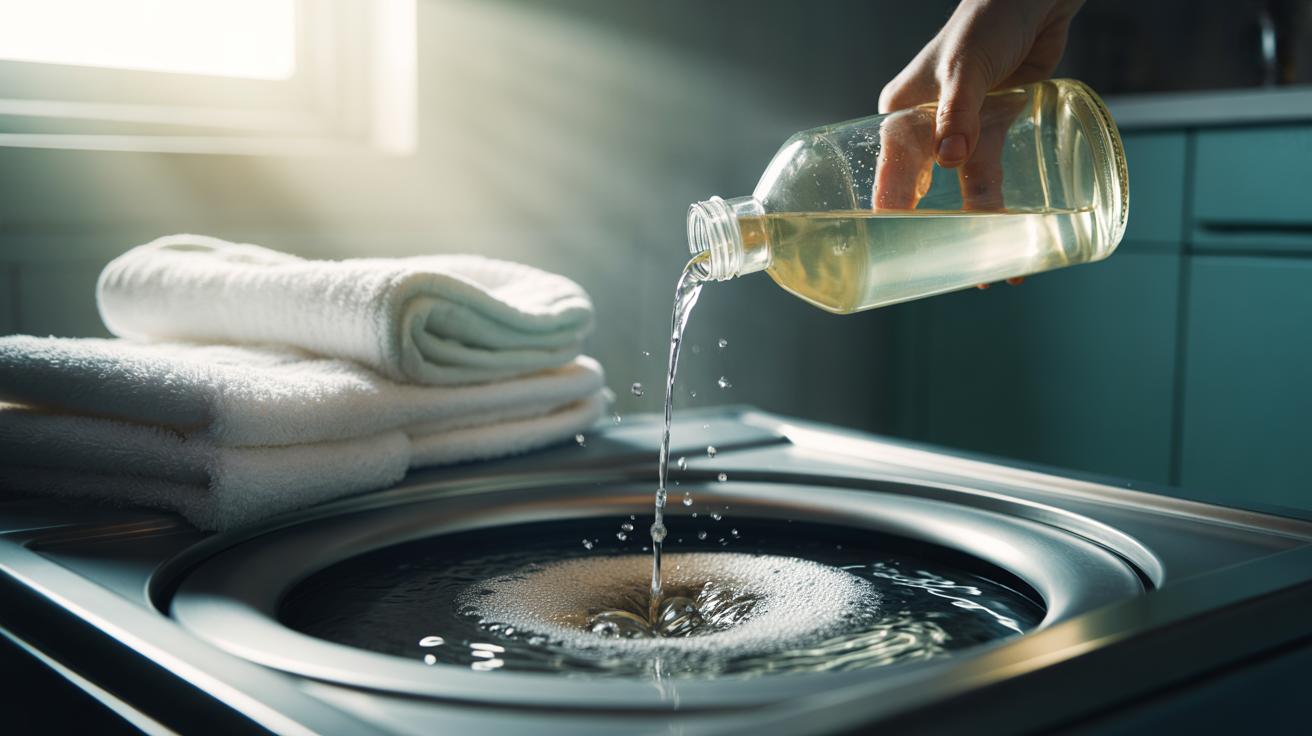
- 🧺 Method: Warm 40°C cycle, drum two-thirds full, add 120–250 ml vinegar to the rinse drawer, no softener; run an extra rinse if heavily coated and avoid overdrying.
- ⚠️ Safety: Never mix vinegar with chlorine bleach; safe for cotton terry in rinse-level doses, but limit frequency on elastics/metal trims; small amounts are generally septic-safe.
- 📏 Routine: Adjust dose to water hardness (soft 100–150 ml; moderate 150–200 ml; hard 200–250 ml); skip liquid fabric softeners, use wool dryer balls and consider powder detergents; repeat every 2–4 weeks.
There’s a quiet revolution happening in British laundry rooms: a simple vinegar rinse that revives scratchy towels without new products or pricey gadgets. When towels lose their loft, the culprit is rarely age; it’s build-up. In the UK, hard water combines with generous doses of detergent and liquid softener to leave a gritty film that flattens fibres and traps odours. A measured shot of household vinegar—acetic acid at around 5%—can rebalance the wash, dissolve residue, and restore softness. Used correctly, vinegar won’t leave your bathroom smelling like a chip shop—any tang disappears as the fabric dries. Here’s how the chemistry works, and how to adopt the technique safely and effectively.
Why Towels Turn Crunchy: The Science of Build-Up
Towels feel rough when their loops are coated with a cocktail of surfactants, fragrance oils, optical brighteners, and minerals from hard water. When detergents meet calcium and magnesium, they form insoluble “soap scum” that clings to cotton. High-heat drying then bakes this residue into the pile, reducing absorbency and spring. Most stiff towels aren’t ruined—they’re simply coated. Add in liquid softeners, which are cationic conditioners designed to cling, and you amplify the problem: the coating masks harshness briefly but compresses fibres over time.
More detergent rarely means cleaner laundry, especially in soft water or modern high-efficiency machines. Residual alkalinity from builders such as sodium carbonate leaves towels at the wrong pH, encouraging static and that greasy handfeel. Overdosing and cool quick cycles can leave grime half-suspended in the fabric. The result is a crunchy drape, dull colour, and musty odour—classic signs of detergent residue meeting mineral deposits.
How a Vinegar Rinse Works: Acidity to the Rescue
Acetic acid in distilled white vinegar lowers the rinse pH and helps dissolve mineral films that make towels feel board-stiff. By neutralising alkaline residues from detergents and builders, it loosens the ionic grip between fibres and deposits. It also converts some calcium and magnesium salts back into water-soluble forms that flush away in the rinse water. This is a chemistry fix, not a perfume cover-up: change the pH, release the gunk, regain the fluff.
Vinegar’s acidity can also help disperse lingering odours, which are often held by residues rather than the cotton itself. After rinsing and drying, the scent dissipates. Choose distilled white vinegar at around 5%; stronger cleaning vinegars should be diluted. Use plain white vinegar, not malt or balsamic, which can stain or leave sugars behind. For anyone wary of “softeners,” consider this a corrective: you’re removing what shouldn’t be there, rather than adding another coating.
Step-by-Step: The Vinegar Rinse Method
Start with clean—but crunchy—towels. Set the machine to a warm cycle (40°C is ample). Load the drum no more than two-thirds full to let fibres move. In the detergent drawer’s rinse compartment, pour 120–250 ml of 5% white vinegar, adjusting to water hardness and load size. Run the cycle without added softener. If towels are heavily coated, run a second rinse. Do not mix vinegar with chlorine bleach; keep treatments separate to avoid hazardous fumes.
After the vinegar rinse, wash as usual next time using a modest dose of a good-quality powder detergent—powders often perform better in hard water. Spin adequately but avoid overdrying, which sets stiffness. Tumble on low to medium heat or line-dry to just-dry and then fluff briefly in the dryer. Consider occasional maintenance: a vinegar rinse every few weeks prevents the slow creep of residue and keeps cotton loops open and absorbent.
| Water Hardness | Vinegar (5%) per 4–5 kg Load | Notes |
|---|---|---|
| Soft | 100–150 ml | Reduce detergent dose by 25–50% |
| Moderate | 150–200 ml | Use warm rinse and adequate spin |
| Hard | 200–250 ml | Consider a monthly deep-rinse routine |
Safety, Fabrics, and Frequency: What the Experts Recommend
In normal rinse-level amounts, white vinegar is safe for cotton terry and most linen towels. Avoid frequent vinegar rinses on items with elastane trims or specialised finishes, as repeated acidity may hasten wear on elastics and some metal components. Never combine vinegar in the same cycle with chlorine bleach—keep them separate by at least one full wash and rinse. For septic systems, these small volumes are generally acceptable, but avoid routine high dosing.
How often? For hard-water households, try every 2–4 weeks; otherwise, use it as a reset when towels feel slick or underperform. Skip liquid fabric softeners on towels—use wool dryer balls to lift fibres instead. Keep dryer temperatures sensible; overdrying compacts loops and amplifies scratchiness. If limescale is chronic, a water softener or adding a small dose of water conditioner to the wash may reduce the need for corrective action and keep whites brighter.
The vinegar-rinse trick doesn’t mask problems; it solves them by clearing what’s weighing your towels down. A brief return to the right pH, a rinse that actually rinses, and mindful drying can restore that hotel-plush feel at home. The result is softer, more absorbent towels without adding a single extra coating. With the chemistry on your side, you can spend less, waste less, and enjoy better results. Will you try a vinegar reset on your next towel wash—and what tweaks will you make to suit your water, your machine, and your routine?
Did you like it?4.5/5 (25)