In a nutshell
- 🧪 The vinegar steam trick harnesses hot vapour and mild acetic acid to soften baked-on splatters, reduce surface tension, and neutralise lingering odours for a quick wipe-away clean.
- ⏱️ Step-by-step: Mix 250 ml water + 2–3 tbsp white vinegar, heat 3–5 minutes until steamed, let rest 2 minutes, then remove bowl and wipe walls, ceiling, and turntable for a streak-free finish.
- 🛡️ Safety and variations: Use microwave-safe glass, open the door away from your face, Do not mix vinegar with bleach, and tailor odour control with lemon slices or a teaspoon of bicarbonate of soda (not together).
- 💷 Cost and eco gains: Typically £0.05–£0.10 per clean, takes 5–8 minutes, neutralises smells, and is more eco-friendly than solvent-heavy commercial sprays with single-use plastics.
- 🧼 Maintenance tips: Steam clean weekly, use a splatter cover, wipe spills while warm, and pair with a microfibre pad after steaming for stubborn spots.
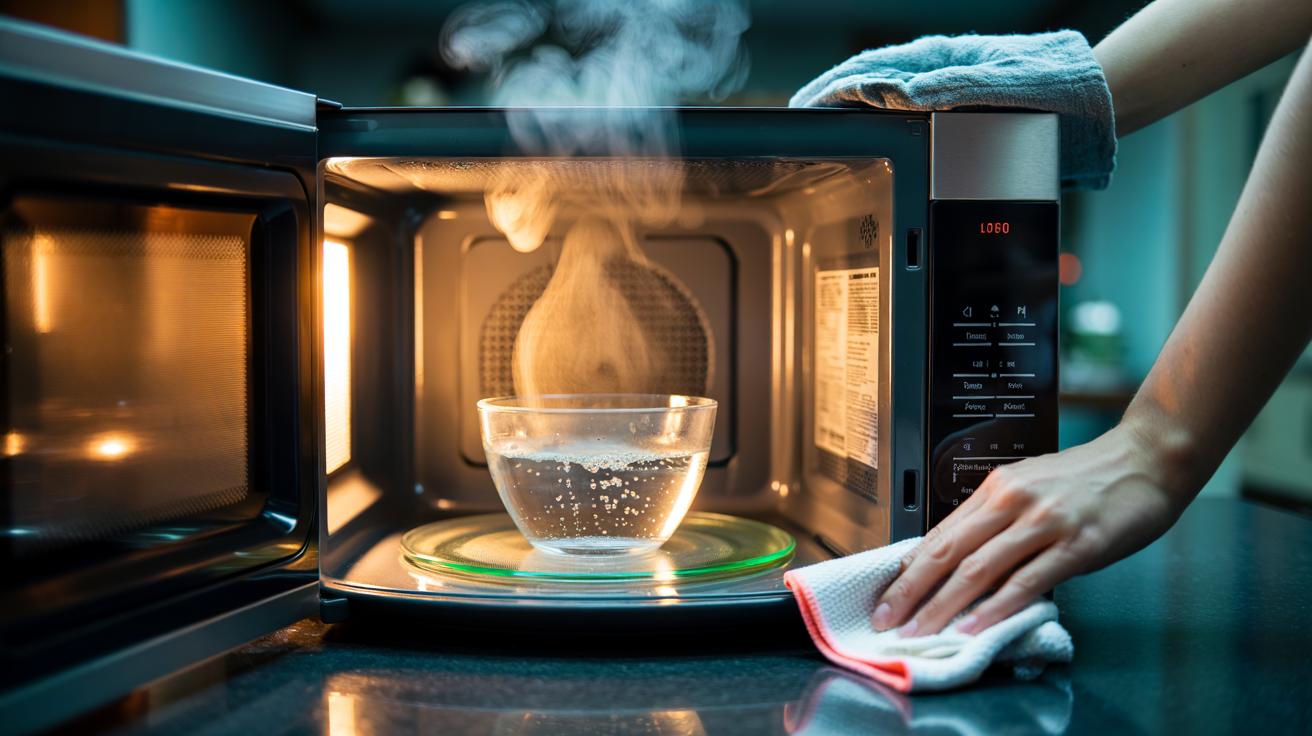
Forget chipping away at crusted sauce and mystery splats: the quickest route to a gleaming microwave is simple chemistry and a little patience. The vinegar steam trick harnesses heat and humidity to soften baked-on food so it wipes away in seconds. As the bowl boils, hot vapour condenses on the cooler walls, loosening grime and neutralising odours at the same time. Because the steam does the heavy lifting, you avoid harsh scrubbing and abrasive cleaners. It’s cheap, gentle on finishes, and brilliantly reliable. Below, we explain why it works, exactly how to do it in under five minutes, and the safest ways to adapt the method for stubborn messes or lingering smells.
How Hot Vinegar Vapour Works Inside a Microwave
The magic is in the mix of heat, humidity, and acetic acid. When you heat a bowl of water and white vinegar, the microwave excites water molecules, creating a plume of steam that saturates the cooking cavity. That vapour condenses on comparatively cooler walls and the ceiling, transferring heat directly into dried splatters. As the residue warms, its structure relaxes and its grip on the enamel weakens. This is why stains that once needed elbow grease now lift with a single pass of a cloth.
Vinegar’s mild acidity boosts the effect. Acetic acid helps break down mineral traces from hard water and can disrupt the bonds in some food residues and grease films. The hot condensate also lowers surface tension, so moisture can slip under edges and lift deposits. Meanwhile, odour molecules are neutralised, leaving a fresher interior. It’s a small-scale version of a steam clean, but tailored to a microwave’s sealed space, where heat and humidity are trapped long enough to do the work for you.
Step-by-Step: The Vinegar Steam Clean in Under Five Minutes
Step 1: Mix. In a microwave-safe glass bowl or jug, combine 250 ml water with 2–3 tablespoons of white vinegar. For heavy grease, add a slice of lemon or a teaspoon of bicarbonate of soda (not both together) for a deodorising boost. Never heat liquids in a sealed container.
Step 2: Heat. Place the bowl on the turntable. Microwave on high for 3–5 minutes until the mixture boils and the window fogs. If your microwave is powerful, start at three minutes. Do not let the bowl boil dry. Leave the door closed for a further 2 minutes to let the steam saturate every surface.
Step 3: Wipe. Carefully open the door away from your face to avoid a burst of steam. Remove the bowl with oven gloves. Lift out the turntable and roller ring, then wipe walls, ceiling, and door gasket with a soft cloth or sponge. Stubborn spots now smear away with minimal pressure. Rinse the turntable at the sink, dry, and reassemble. Finish with a quick pass of a dry microfibre cloth for a streak-free sheen.
Safety, Materials, and Variations for Stubborn Messes
Use a microwave-safe glass bowl or a ceramic jug; thin plastics can soften, and metal is never safe in a microwave. If you have a chrome rack or metal shelf, remove it before heating. Always open the door cautiously and keep your face out of the steam path. For very caked-on mess, repeat the cycle or extend the steam rest to 4 minutes before wiping; the point is to let heat penetrate, not to scrape.
To target odours, swap lemon slices for a teaspoon of bicarbonate of soda in the water-and-vinegar mix, or follow the steam with a quick wipe of diluted washing-up liquid, then rinse with a damp cloth. If you dislike the vinegar scent, a drop of essential oil (tea tree or lemon) in the bowl can mask the aroma without affecting performance. Do not mix vinegar with bleach-based cleaners—this produces harmful fumes. For tinted interiors, spot-test a hidden area, though vinegar’s acidity at this dilution is gentle on enamels and glass.
Cost, Eco Impact, and Smell: a Quick Comparison
The vinegar steam method is frugal, effective, and kinder to the planet than many aerosol degreasers. It reduces single-use plastic, cuts exposure to harsh solvents, and works in minutes with ingredients you likely have. Here’s how it stacks up against common alternatives:
| Method | Typical Cost per Clean | Time Required | Odour Control | Eco Considerations |
|---|---|---|---|---|
| Vinegar Steam | £0.05–£0.10 | 5–8 minutes | Neutralises most smells | Low-impact, minimal packaging |
| Lemon Steam | £0.20–£0.40 | 5–8 minutes | Fresh citrus scent | Compostable, food-based |
| Commercial Cleaner | £0.50–£1.50 | 8–12 minutes | Strong perfume masks odours | Solvents; plastic bottle waste |
If speed, cost, and sustainability matter, vinegar steam is hard to beat. Its predictable results and low residue make it ideal for regular upkeep, especially in homes with children or pets where gentler solutions are preferred. For an occasional deep clean, you can pair it with a microfibre scrub pad after steaming to whisk away anything the vapour softened but didn’t fully lift.
Used weekly, the vinegar steam trick turns cleaning into a two-cloth job: one damp to loosen, one dry to finish. Keep a microwave cover on hand to prevent splatters, wipe spills while warm, and schedule a quick steam after any messy reheat—habit is your best ally. Because the method is safe, cheap, and fast, it’s easy to stick with and kinder to your appliance’s finish. Ready to swap scrubbing for science and put steam to work—what tweaks will you try first, and how will you adapt the routine to your kitchen?
Did you like it?4.5/5 (28)