In a nutshell
- 🧪 Aluminum foil acts as a gentle micro-abrasive and, in an alkaline soak, provides a chemical assist that loosens baked-on grime, making scrubbing nearly effortless without scratching chrome.
- 🛁 Step-by-step soak: line tub with towels, wrap racks in foil, submerge in hottest water with dishwasher tablets or washing soda for 2–6 hours, then rub with the same foil, rinse, and dry for a showroom shine.
- ⚡ Quick clean: apply a baking soda paste, scrub with a crumpled foil ball (optionally spritz with vinegar), follow rack bars to minimise marks, then rinse and dry immediately for fast results.
- ⚠️ Safety first: wear gloves, ventilate, never mix bleach with alkaline cleaners, protect enamel surfaces, remove racks before self-clean cycles, and avoid steel wool to prevent damage.
- 📊 At-a-glance choices: a comparison highlights soak vs. scrub times, effort, and supplies; foil methods are low-effort and budget-friendly, with tips to recycle foil and maintain racks monthly.
Browned-on grease, caramelised sugar, and smoky residue make oven racks the most stubborn part of a kitchen deep-clean. Yet a humble roll of aluminum foil can turn the job into a near-effortless task. When paired with hot water and the right cleaner, foil unlocks a chemical assist and provides a gentle, grippy abrasion that lifts grime without harsh scouring pads. The result is less elbow grease, fewer scratches, and a finish that actually shines. Below, you’ll find the science behind the trick, a step-by-step guide for a thorough soak, a speedy option for last-minute cleans, and a quick comparison of safety, time, and materials so you can pick the method that suits your kitchen and schedule.
Why Aluminum Foil Works on Oven Racks
Two forces make aluminum foil so effective. First, a crumpled foil ball is a micro-abrasive: it has ridges that grip onto carbonised grease without biting through the rack’s chrome plating. Second, in a hot, alkaline bath made with a dishwasher tablet or washing soda, foil acts as a reactive metal. The solution encourages tiny bubbles that sneak under baked-on residue, loosening the bond so it wipes away. Think of it as a gentle lift-and-separate, not a brute-force grind. That’s why scrubbing suddenly feels easy—the chemistry does the heavy lifting.
There’s another advantage: foil conforms to curves. Unlike a flat sponge, a foil ball hugs each bar and the awkward corners where spills harden. Used correctly, it’s kinder to the finish than steel wool, yet more effective than soft cloths. And because the supplies—foil, hot water, dishwasher tablets or baking soda—are everyday items, you avoid specialist degreasers. Fewer products, less time, cleaner racks.
Step-by-Step Method: Bathtub or Big Sink Soak
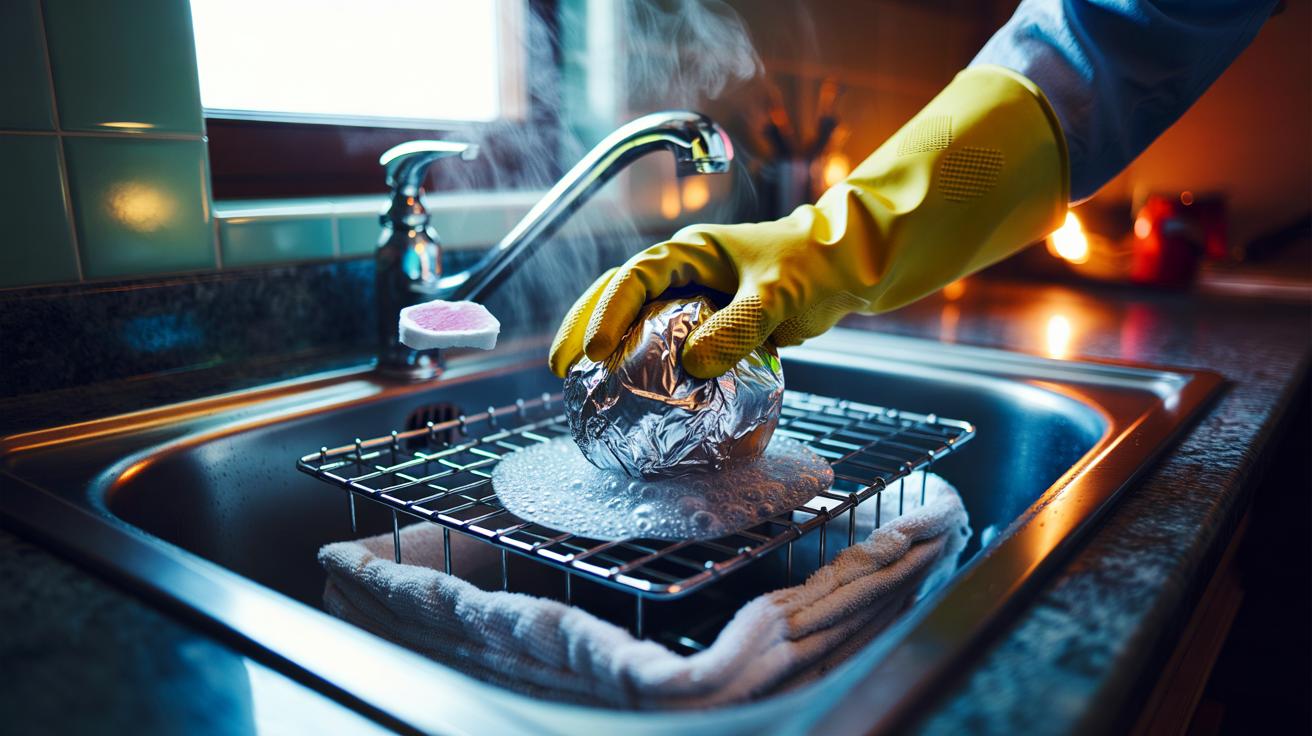
Preparation is simple. Line the base of a bath or large sink with old towels to prevent scratches. Remove the racks and shake off loose debris. Wrap each rack in a loose layer of aluminum foil, shiny side out, leaving small gaps so water can circulate. Fill with the hottest water from the tap, submerging completely. Drop in 1–2 dishwasher tablets (or 3–4 tablespoons of washing soda). Swish to dissolve. Do not add bleach or any chlorine-based cleaner.
Soak for 2–6 hours, or overnight for heavy build-up. Unwrap a rack in the water and rub with the same foil—now a soft, effective scrubber. Most residue will float off in sheets. Rinse thoroughly, then dry with a tea towel to prevent water spots. If needed, spot-treat joints with a nylon brush. Always wear gloves and ventilate the room. This method is low-effort, budget-friendly, and ideal when you want that just-installed gleam without damaging the chrome.
Quick Option: Foil Ball and Baking Soda Scrub
Short on time? Mix a thick paste: 3 parts baking soda to 1 part hot water. Spread it along the rack bars and corners. Crumple a palm-sized aluminum foil ball and scrub in short strokes, following the bar direction to minimise micro-scratches. The paste acts as a cushion while adding mild alkalinity. For stubborn spots, spritz with white vinegar to trigger fizzing that undermines carbon. Wipe with a damp microfibre cloth and rinse well.
This approach delivers fast results without a full soak, making it ideal for light-to-moderate grime or midweek maintenance. If your oven racks are heavily baked-on, target the worst areas with the foil ball first, then finish with a 30–60 minute hot-water rest with a drop of washing-up liquid. Avoid steel wool, which can gouge plating and invite rust. Finish by drying immediately. A light mist of cooking oil on a cloth can help future splatters release more easily.
Safety, Materials, and Time at a Glance
Choosing the right approach comes down to time, soil level, and what you have in the cupboard. The table below summarises common options, including the foil techniques that make scrubbing effortless by combining mild abrasion with chemistry.
| Method | Soak/Time | Effort | Supplies | Notes |
|---|---|---|---|---|
| Foil + Dishwasher Tablet Soak | 2–8 hours | Low | Aluminum foil, hot water, dishwasher tablets | Best for heavy grime; gentle on chrome if used correctly |
| Foil Ball + Baking Soda Scrub | 20–40 minutes | Medium | Aluminum foil, baking soda, vinegar (optional) | Great for quick cleans; watch for light surface marks |
| Ammonia Bag Method | Overnight | Low | Clear bag, ammonia | Pungent fumes; requires great ventilation; avoid mixing chemicals |
| Plain Scrub Pad + Degreaser | 60–90 minutes | High | Nylon pad, degreaser | Works, but laborious; risk of scratches with harsh pads |
Never combine bleach with alkaline cleaners, and always check your oven manual: some brands warn against abrasive tools on specialty coatings. Remove racks during self-clean cycles; extreme heat can discolour plating. Protect enamel baths with towels, catch loose foil pieces, and dispose of sludge responsibly. If the foil remains relatively clean after use, rinse and recycle it. These small steps keep the method safe, effective, and kinder to both your cookware and plumbing.
With a roll of aluminum foil and a little chemistry, baked-on gunk stops dictating your Saturday. The soak method handles deep cleans while the foil ball trick tackles weekday messes, both reducing the need for harsh abrasives. Less strain, less damage, more shine. Set a reminder every month, and you’ll maintain that easy-wipe finish with minimal effort. Ready to give your racks the effortless treatment—will you try the long soak for a showroom sparkle or the quick scrub for swift wins this week?
Did you like it?4.6/5 (28)