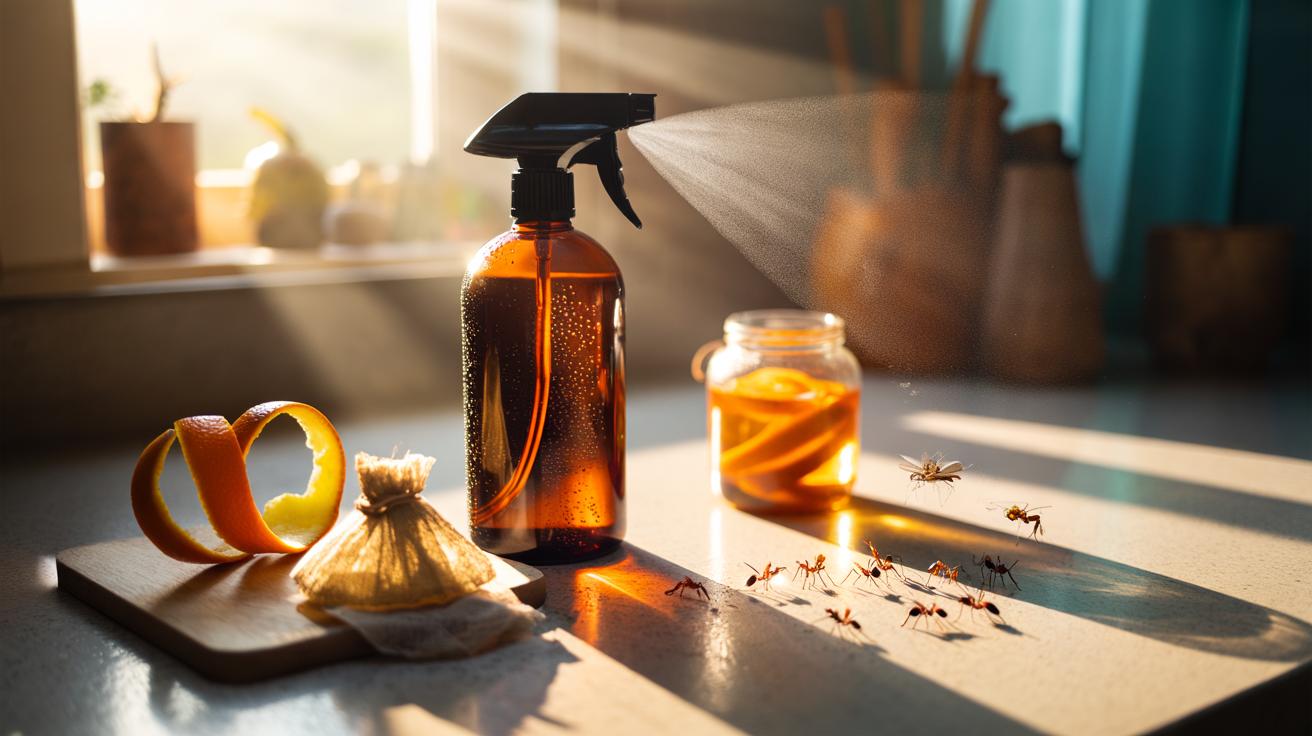
In a nutshell
- 🧪 Orange peels contain d-limonene and linalool that disrupt insect olfaction, mask pheromone trails, and act as fast-evaporating repellents requiring periodic reapplication.
- 🛠️ Simple DIY repellents: citrus-vinegar spray (1:1 dilution), simmered peel rinse for gentle wipes, dried peel sachets for cupboards, and peel + cider vinegar traps for fruit flies.
- 📍 Target strategic entry points—skirting boards, windowsills, bins, and garden containers—and reapply after cleaning or rain; avoid blossoms to protect pollinators.
- ⚠️ Safety first: keep strong citrus away from pets (cats are sensitive to terpenes), don’t use on skin or natural stone, patch-test surfaces, and store mixes out of children’s reach.
- 🌱 Sustainable and low-cost: turn kitchen waste into effective deterrents, cut chemical and plastic use, and build consistent routines that fit integrated pest management.
Fed up with ants in the sugar bowl or fruit flies orbiting your bananas? Before you reach for a chemical aerosol, look to what’s left after breakfast: orange peels. Packed with fragrant citrus oils, these kitchen scraps offer a practical, low-cost way to discourage household pests while scenting your home. Used correctly, orange peels can help repel insects, cut chemical use, and make better use of food waste. Below, you’ll find the science behind their punch, clear step-by-step methods to turn peel into sprays and sachets, and safety notes to keep people, pets, and plants out of harm’s way.
The Science Behind Citrus: Why Orange Peels Repel Insects
Fresh orange peel contains high levels of d-limonene and linalool, aromatic compounds that many insects find alarming or disorienting. These volatile molecules can interfere with insect olfactory receptors and mask pheromone trails, pushing species such as ants, fruit flies, and some mosquitoes to avoid treated areas. In direct contact, concentrated limonene may affect the waxy cuticle of certain pests, though home preparations are chiefly repellents rather than killers. Their power lies in discouraging entry and breaking routine pathways, which is ideal for door thresholds, bins, and countertop hotspots.
Because they evaporate readily, citrus volatiles act fast but don’t linger indefinitely. That’s an upside if you want fewer residues indoors, but it means reapplication is essential. In gardens, the scent can help shield seedlings from sap-suckers or gnats, yet it won’t outmuscle a heavy infestation alone. Think of orange peel as one tool within integrated pest management: pair it with sanitation, sealing entry points, and targeted traps for reliable control without overreliance on synthetic pesticides.
Practical Methods: From Kitchen Scraps to DIY Repellents
Citrus vinegar spray: Fill a jar with clean orange peels and cover with white vinegar. Seal and steep for 7–14 days, shaking every few days. Strain, then dilute 1:1 with water and decant into a spray bottle. Mist along ant trails, bin lids, windowsills, and pet-proof baseboards. Patch-test on finishes; avoid marble or natural stone as acids can etch. For plant use, dilute further and keep to pots and non-porous containers. Reapply after cleaning or rain.
Simmered peel rinse: Simmer peels in water for 15 minutes, cool, strain, and use within 48 hours. It’s gentler than vinegar and handy for quick wipes on high-touch surfaces. Dried peel sachets: Dehydrate thin strips and tuck into cupboards, wardrobes, and pantry corners to discourage moths and weevils. Replace monthly when the scent fades. For fruit flies, bait a jar with peel and a splash of cider vinegar; cover with film, pierce small holes, and dispose after capture. Always keep strong citrus preparations away from pets’ bedding and direct skin contact.
| Pest | Preparation | Where to Use | Reapply | Caution |
|---|---|---|---|---|
| Ants | Vinegar-peel spray | Trails, skirting boards, door thresholds | Every 2–3 days or after cleaning | Avoid natural stone; test paint |
| Fruit flies | Peel + cider vinegar trap | Near fruit bowls and compost caddies | Refresh weekly | Dispose promptly to prevent breeding |
| Clothes moths | Dried peel sachets | Drawers and wardrobes | Monthly or when scent fades | Keep away from delicate fabrics if oily |
| Mosquitoes | Lightly diluted peel rinse on hard surfaces | Patio tables, door frames, windows | After rain or every evening | Not for skin; use approved repellents outdoors |
Placement, Safety, and Limitations
Success hinges on where you deploy scent. Target entry points—sills, vents, letterboxes, plumbing gaps—and high-reward spots like bins, pet feeding areas, and fruit storage. In gardens, scatter a light ring of dried peel around containers or lay sachets beneath benches to nudge pests elsewhere. Keep citrus sprays off blossoms to protect pollinators, and apply at dusk when bees are inactive. Rain and sunshine strip volatiles quickly, so build reapplication into your routine, especially after watering or cleaning.
Safety matters. Don’t use concentrated essential oils on pets; cats are particularly sensitive to terpenes. Avoid spraying soft furnishings, natural stone, or unfinished wood. On skin, citrus oils can be photo-reactive; use specialist repellents if you need personal protection. Store preparations out of reach of children. If pests persist, combine citrus with sealing cracks, removing food residues, and setting species-specific traps. Orange peels help tip the balance in your favour, but they are not a silver bullet.
Sustainability and Cost: Turning Waste Into a Household Asset
Harnessing orange peels converts a plentiful waste stream into a multi-use deterrent. A fortnight’s worth of peels and basic vinegar often replaces multiple single-use cleaners and niche repellents, trimming plastic and chemical consumption. Freeze peels until you have enough for a batch, or dehydrate thin ribbons on a low oven setting to build a long-lasting sachet supply. The scent is fresher than synthetic fragrances and fades cleanly without cloying residues, ideal for small flats where airflow is limited.
Budget-wise, the inputs are minimal—largely time and a reused jar—while the outputs cover cupboards, skirting boards, and patio furniture. Because citrus notes dissipate, the true “cost” is regular reapplication, but that cadence encourages better housekeeping: wiping trails, emptying caddies more often, and noticing gaps that need sealing. As a habit, orange-peel repellents sit neatly within low-tox living and integrated pest management, emphasising prevention and gentle control rather than escalation.
Orange peels won’t eradicate a thriving nest, yet they excel at setting boundaries, masking trails, and keeping everyday nuisances at bay while uplifting your space with a bright, clean aroma. With a jar, a handful of peels, and a little patience, you can craft sprays, rinses, and sachets that fit your home and routine. The key is consistency: small, regular applications beat sporadic blitzes. Ready to turn your next orange into a quiet line of defence—and which corner of your home will you treat first?
Did you like it?4.4/5 (26)