In a nutshell
- 🧼 A clogged dishwasher filter causes odours, poor drainage and cloudy results; cleaning improves hygiene and protects the pump.
- 🛠️ Gather safe tools: soft brush, non-scratch sponge, white vinegar, bicarbonate of soda, and switch power off before starting.
- 🔧 Step-by-step: remove and rinse filters, soak 10 minutes, scrub mesh and O-ring, clear the sump, reassemble flush; run a hot cycle with vinegar then a short rinse with bicarb—never mix bleach and vinegar.
- 🔄 Prevention: run the hottest cycle weekly, scrape not pre-rinse, leave the door ajar to vent, top up dishwasher salt, and clear spray arms jets.
- ⏱️ Routine: in busy homes clean weekly (5–15 minutes); smaller households fortnightly—regular care boosts efficiency, reduces energy use, and keeps the kitchen smelling neutral.
That sour waft when you open the dishwasher isn’t mysterious at all. It is almost always the work of a clogged dishwasher filter harbouring food scraps, grease and a little bacterial biofilm. The fix is simple, quick, and cheap. In most UK homes, it takes less than 15 minutes and requires nothing fancier than washing-up liquid and a soft brush. A clean filter is the fastest route to banishing odours and restoring that just-washed freshness. You’ll also protect the pump, improve drainage and help your detergent do its best work. Here’s how to clean the filter properly, what to use, and how to keep smells away for good.
Why Your Dishwasher Filter Matters
Hidden under the lower rack, the filter assembly stops pasta, seeds and shards of bone from reaching the pump. Most machines have a two-part design: a coarse screen and a fine mesh. When these clog, water can stagnate. On warm cycles, it becomes a perfect broth for smell-causing bacteria. The result is a whiff that clings to plates and travels through the kitchen. If your glasses look cloudy, the base feels gritty, or drainage sounds sluggish, the filter is telling you it needs attention.
Left alone, the build-up hardens. Grease binds crumbs, and hard water leaves limescale around the sump where water collects. That forces the pump to work harder and can shorten the lifespan of seals. Cleaning the filter restores flow, reduces energy use, and makes detergent rinse away cleanly. It’s also a hygiene win. In a family home running daily cycles, plan a quick filter clean each week. In smaller households, fortnightly may do, but trust your nose and look for debris after heavy loads.
Tools and Safe Products You’ll Need
You don’t need specialist chemicals. A soft brush or old toothbrush, a non-scratch sponge, warm water, and standard washing-up liquid will handle most grime. Keep a small bowl or jug for soaking, plus a bamboo skewer or cocktail stick to tease out threads from mesh. White vinegar cuts grease and dissolves limescale, while bicarbonate of soda helps deodorise. Rubber gloves protect your hands from hot water and any sharp fragments. Always switch the dishwasher off at the socket before you start. If your manual warns against certain products, follow it; some aluminium parts dislike strong alkalis.
Go gentle. Avoid wire brushes and harsh powders that scratch plastic or stainless interiors. Skip bleach unless your manufacturer explicitly allows it, and never at the same time as vinegar. Keep a microfibre cloth for wiping the seal and the stainless door edge, where residue collects. A torch or your phone’s light helps you inspect the dark sump area without fishing around blindly.
| Item | Purpose |
|---|---|
| Soft brush/toothbrush | Lift grease from fine mesh |
| Non-scratch sponge | Wipe filter housing and base |
| White vinegar | Dissolve limescale and cut film |
| Bicarbonate of soda | Neutralise lingering odours |
| Microfibre cloth | Dry parts and polish seal |
Step-by-Step: Cleaning the Filter and Sump
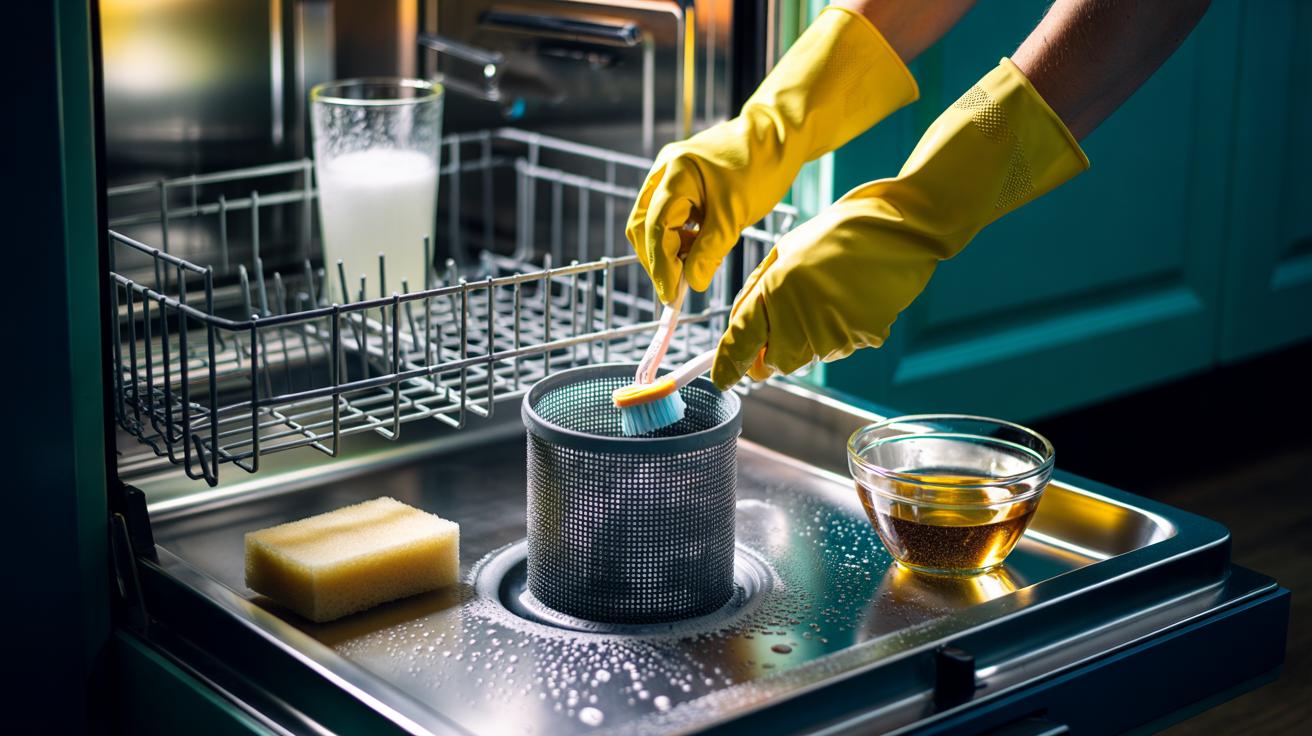
Power off the appliance at the wall. Pull out the lower rack and locate the circular filter at the base. Most twist anticlockwise to unlock; lift out the cylinder and the flat mesh beneath. Tap loose debris into the bin, not the sink. Rinse under warm running water. A drop of washing-up liquid on a soft brush will break the greasy film that traps smells.
Soak the parts for 10 minutes in hot, soapy water. Scrub gently, paying attention to the fine mesh seams and the O-ring if fitted. Rinse until water runs clean. Shine a light into the sump and remove any glass slivers, pasta, or labels. Never probe with metal tools, and avoid forcing anything past the impeller. Wipe the filter housing, the spray arm hub, and the stainless base with a non-scratch sponge.
Reassemble the flat mesh and lock the cylinder firmly. It should sit perfectly flush. For a deep deodorise, place a cup of white vinegar on the top rack and run a hot, empty cycle. When finished, sprinkle two tablespoons of bicarbonate of soda on the base and run a short warm rinse to freshen, not concurrently with vinegar. Never mix bleach and vinegar; the fumes are dangerous. Dry the door seal with a cloth, close gently, and enjoy the clean, neutral scent.
Odour Prevention Between Deep Cleans
Simple habits keep smells away. Scrape, don’t pre-rinse; modern detergents expect a little soil to work properly. Run the hottest cycle weekly to melt grease, especially after low-temp eco washes. In hard-water areas, top up dishwasher salt to protect against limescale that traps residue. Wipe the rubber gasket and the lower edge of the door every few days, where food particles often collect unnoticed. After each cycle, leave the door ajar for 20–30 minutes to vent steam and stop musty build-up.
Make a quick inspection part of your Sunday reset: lift the lower rack, glance at the filter, and check the spray arms for blocked jets. A toothpick clears them in seconds. Use a measured detergent dose; too much can leave a film, too little won’t clean. Once a month, run an empty hot cycle with vinegar, or a manufacturer-approved cleaner if you prefer. Keep the routine light, regular, and consistent. Your machine will smell like nothing at all—the ideal result.
Cleaning a dishwasher filter isn’t glamorous, but it is the five-minute ritual that protects an expensive appliance and keeps your kitchen truly clean. Do it regularly and you’ll spend less on products, get sparkling results first time, and avoid that tell-tale pong drifting across the room. The process is gentle, low-cost, and easy to teach every member of the household. Make it a habit and odours won’t return. What’s your own rhythm—weekly quick rinse, or a monthly deep clean—and which tip above will you try first to keep your dishwasher smelling fresh?
Did you like it?4.4/5 (26)