In a nutshell
- 🧪 The science: bicarbonate of soda is a mild alkaline buffer with a high surface area and gentle hygroscopic action, so dwell time lets it draw out moisture and neutralise odour molecules trapped in mattress fibres.
- 🛠️ Method: Strip bedding, treat fresh biological stains with an enzyme cleaner, vacuum seams and tufts, sieve on an even layer of baking soda (about 100–150 g for a double), let it sit, then vacuum thoroughly; flip/rotate if suitable.
- ⏱️ Timing: Match sit time to conditions—2–4 hours for light mustiness, 4–6 hours for moderate sweat, 6–12 hours or overnight for heavy odours; enhance with airflow/ventilation rather than piling on more powder.
- ⚠️ Safety: Keep it dry for memory foam/latex, avoid mixing with vinegar or peroxide on the mattress, skip essential oils, and consider a mask if dust-sensitive; remember it’s a deodoriser, not a disinfectant.
- 🛏️ Aftercare: Fit a breathable mattress protector, rotate quarterly, manage humidity (around 40–60%), and refresh monthly; for urine or vomit, use enzymatic cleaning first, then deodorise once fully dry.
Even the cleanest bedroom accumulates hidden moisture and stale smells, and your mattress soaks up much of it. A simple, inexpensive fix sits in most kitchen cupboards: bicarbonate of soda (also known as baking soda). When sprinkled over fabric and left to rest, it quietly draws out dampness and neutralises odours that washing can’t reach. The trick is dwell time. Letting the powder sit gives it long contact with the mattress surface and inner fibres, allowing chemistry and physics to do the work. Below, you’ll find the science behind this household staple, a practical routine for every mattress type, and expert timings tailored to British homes.
Why Baking Soda Works on Mattresses
At the heart of bicarbonate of soda’s effectiveness is its chemistry. As a mild alkaline buffer, it neutralises acidic and some basic molecules responsible for stubborn smells, from sweat-derived volatile fatty acids to cooking and pet odours. The powder’s fine particles offer a large surface area, giving smelly compounds more places to adhere. It also has a gentle hygroscopic effect, which means it attracts moisture. Moisture carries odour molecules and can keep them trapped in upholstery, so drawing out humidity helps remove smells at the source rather than masking them.
Time is essential because diffusion is slow through mattress covers and quilting. Leaving a generous layer of powder in place extends contact, so vapours can travel from inside the fabric to the particles. Think of it as passive filtration happening on the surface. While it isn’t a disinfectant, bicarbonate can reduce the conditions in which bacteria thrive by lowering dampness. That is why a proper rest period—not a quick sprinkle and sweep—is crucial for noticeable deodorising results.
Step-By-Step: Deodorise Your Mattress With Bicarbonate of Soda
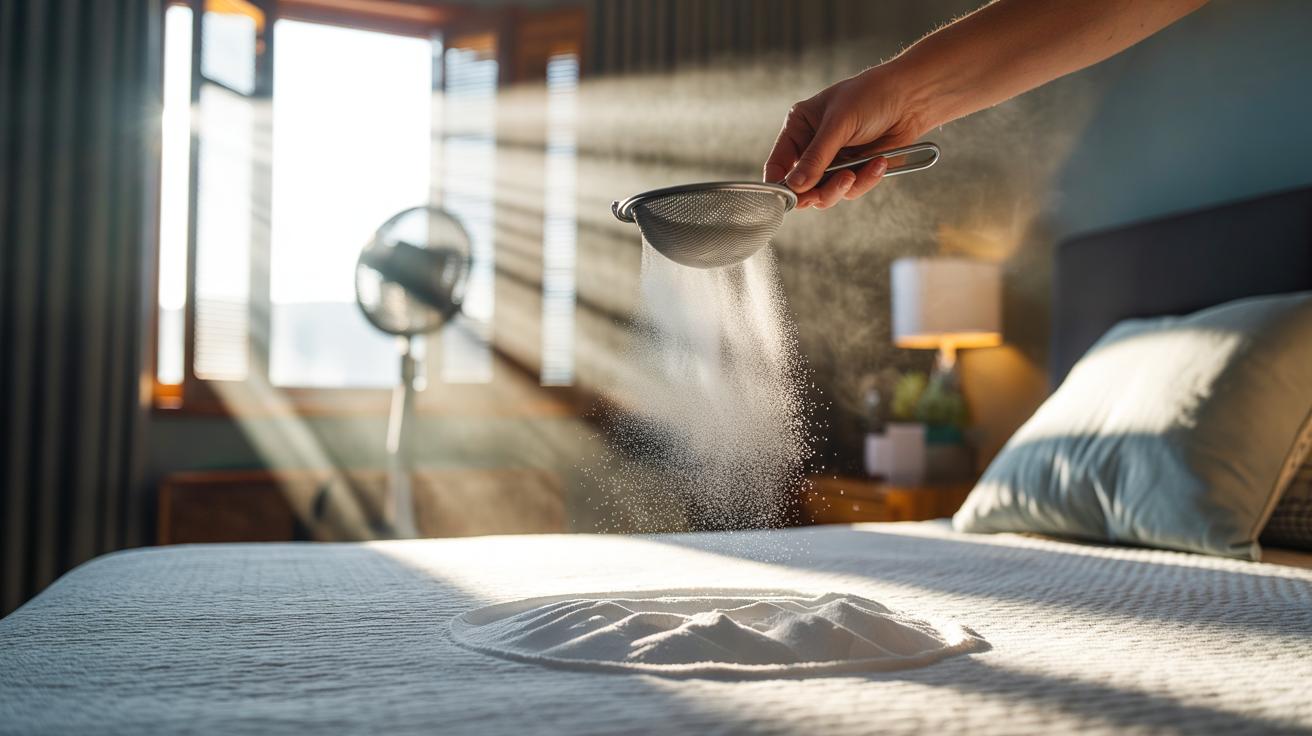
Start by stripping all bedding and laundering it hot, following care labels. Address fresh stains first: use a dedicated enzyme cleaner on biological spills, then allow the area to dry fully. Vacuum the mattress methodically with an upholstery tool, paying attention to seams and tufts. Using a sieve, dust a thin, even layer of bicarbonate of soda over the entire surface—roughly 100–150 g for a double. Gently work it across with a clean, dry cloth, avoiding over-rubbing that could drive particles too deep.
Open windows or run a fan to speed evaporation; avoid adding liquids, especially on memory foam. Do not wet memory foam or latex, as trapped moisture can damage the structure. Let the powder sit for the recommended time (see guidance below), then vacuum thoroughly—slow passes in overlapping lines are best. Flip or rotate if your mattress design allows, and repeat on the other side. Always vacuum meticulously after treatment to remove residue and lifted debris for a smoother, fresher finish.
How Long Should You Let It Sit? Time, Humidity, and Odour Types
Duration depends on odour strength, ventilation, and room humidity. In a dry, well-aired bedroom, two to four hours can lift light mustiness. In humid British weather or for sweat-heavy mattresses, extending to an afternoon or overnight is worthwhile. Longer dwell times allow more moisture to migrate into the powder, improving odour capture. If you can, treat the mattress in the morning, air the room, and vacuum before bed. Avoid leaving powder for days, which can invite dust and tracking.
Consider the source: cooking aromas and smoke benefit from long contact, while fresh spills require enzymatic cleaning first, then a bicarbonate session once dry. A dehumidifier or open window strengthens results. If the room feels clammy, simply increase the sit time and airflow rather than adding more product; depth of contact beats thickness of powder. Use the table below to match conditions to timings, then adjust to your home’s microclimate.
| Room/Odour Condition | Suggested Dwell Time | Notes |
|---|---|---|
| Light mustiness, dry room | 2–4 hours | Windows open if possible |
| Moderate sweat odour, average humidity | 4–6 hours | Use a fan for steady airflow |
| Heavy odours or damp room | 6–12 hours | Overnight works best |
| Smoke/pet smells | 8–12 hours | Repeat weekly until resolved |
Safety, Fabrics, and Aftercare Tips
Check your mattress label: memory foam and latex need dry methods only, while pocket-sprung or hybrid designs can be treated on both sides. If you’re sensitive to dust, wear a simple mask during application and vacuuming. Keep pets and children away until you’ve fully cleaned up. Avoid mixing bicarbonate with vinegar or hydrogen peroxide on the mattress fabric; never combine wet acids and powders in situ, as foaming pushes moisture deeper. Skip essential oils—they can stain and linger in ways you didn’t intend.
After vacuuming, fit a breathable mattress protector to catch future sweat and spills, and rotate the mattress quarterly to even out wear and exposure. Remember, bicarbonate of soda is a deodoriser, not a sanitiser. For urine or vomit, rely on enzymatic products first, then deodorise once fully dry. Control humidity (ideally 40–60%) with ventilation or a dehumidifier, and let morning light air the bed. Regular monthly refreshes prevent odours from setting in and keep that hotel-crisp feeling longer.
Used thoughtfully, bicarbonate of soda is a frugal, low‑effort way to restore freshness to a mattress by pulling out dampness and neutralising the chemistry of everyday smells. The key is even coverage, patient dwell time, and a thorough vacuum to remove the spent powder and the odours it has captured. Pair the method with good ventilation and a protector, and most mattresses will stay pleasantly neutral for months. How will you tailor the sit time and airflow in your own bedroom to get the best results?
Did you like it?4.6/5 (22)