In a nutshell
- 🧪 Science: Citrus peels contain limonene, citral and linalool that act as antimicrobial solvents, sanitising and deodorising floors with a fresh scent.
- 🧰 DIY: Steep peels for an infusion, then mop with 150–250 ml per 2 L warm water plus a drop of castile soap; allow brief contact time on stains.
- ⚠️ Safety & surfaces: Use lightly on sealed wood/laminate and freely on tiles/vinyl; avoid acids on natural stone; prioritise proper dilution, good ventilation and caution around cats.
- 🌿 Sustainability: Turn kitchen scraps into a low-waste, budget cleaner that reduces harsh synthetics while keeping rooms smelling bright.
- 🎯 Results & tips: Aim for a barely damp mop that dries in ~5 minutes for a streak-free finish; blend peels (orange, lemon, grapefruit) to tailor fragrance and degreasing power.
Citrus peels are the unsung heroes of the cleaning cupboard, quietly carrying a cocktail of fragrant compounds that cut through grime and leave rooms smelling like a Mediterranean market. When turned into a simple mop solution, these peels release natural oils that sanitise floors while masking odours with a bright, uplifting aroma. Home cooks already know their zest; home cleaners should too. By reclaiming what we usually throw away, a citrus-peel mop offers an affordable, low-waste alternative to harsh synthetics. A few peels and a jar can become a month’s worth of floor cleaner, bringing a touch of sunny freshness to tiles, vinyl and sealed wood without overpowering the senses.
Why Citrus Peels Work: The Science of Natural Oils
Inside orange, lemon and grapefruit skins lurks a powerful blend of limonene, citral and linalool. These natural oils exhibit broad antimicrobial activity, disrupting microbial membranes and helping to reduce the bacterial load left by everyday footfall. Limonene also acts as a mild solvent, lifting greasy residues and the grey film that dulled your floor’s finish. Because the oils are volatile, the fresh scent disperses as surfaces dry, leaving rooms crisp rather than cloying. Natural oils can sanitise while smelling good, without the harshness associated with many synthetic cleaners.
The peel’s chemistry pairs effectiveness with practicality. Oils emulsify when whisked with warm water and a drop of mild soap, helping them spread evenly across the floor. Unlike neat essential oils, which can be too concentrated, an infusion drawn from actual peels provides a gentler, more balanced dose. There is also a sustainability dividend: using peels reclaims food waste while trimming the family budget. Contact time matters; allow the damp mop to sit briefly on trouble spots to bolster the sanitising effect.
That said, match method to material. The citric content in any peel infusion is mild, yet it can trouble natural stone if misused. Always dilute appropriately, wring mops well, and wipe spills promptly. Patch-test in an inconspicuous spot before your first full-room clean to confirm sheen and colour remain unchanged.
| Citrus Oil Source | Key Compounds | Primary Action | Suggested Dilution |
|---|---|---|---|
| Orange peel | Limonene | Degreasing, deodorising | 1 cup infusion per 2 L warm water |
| Lemon peel | Citral, limonene | Bright scent, light sanitising | 1 cup infusion per 2–3 L warm water |
| Grapefruit peel | Limonene, nootkatone | Cutting grime, fresh finish | 1 cup infusion per 2 L warm water |
DIY Citrus-Peel Mop: A Step-by-Step Method
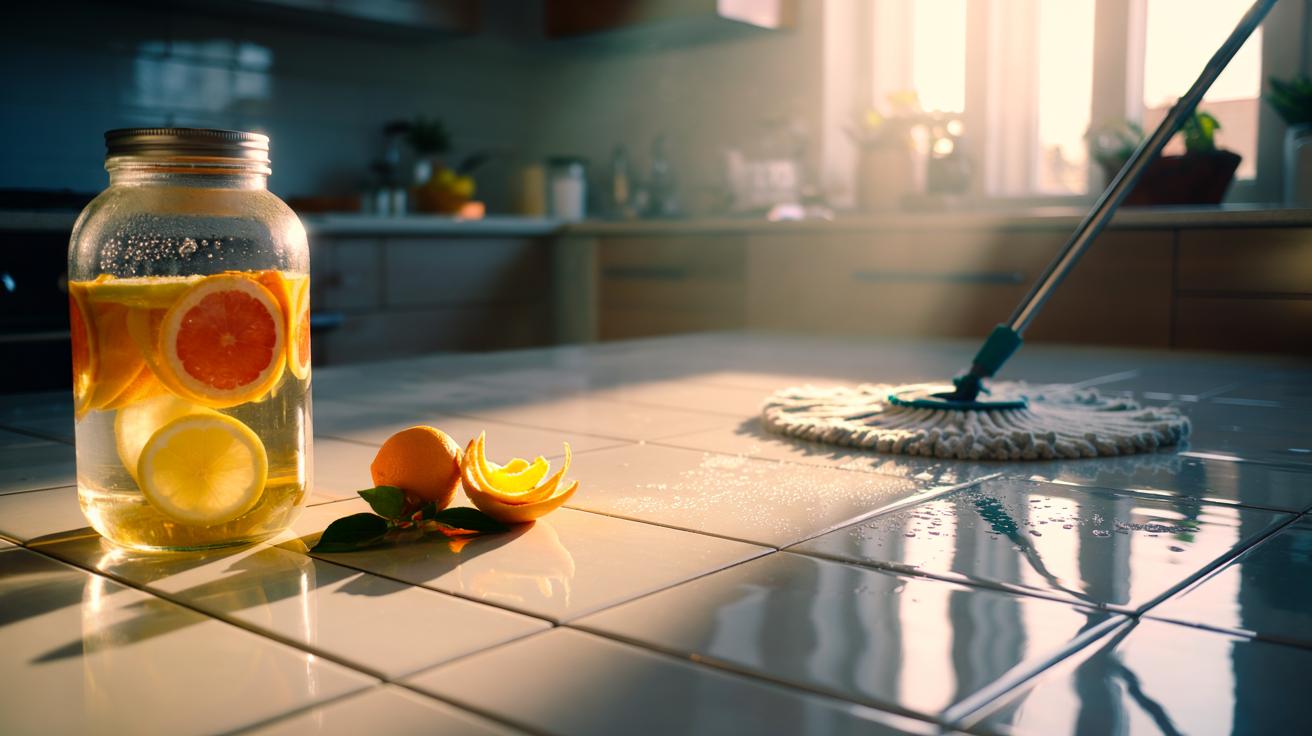
Start by saving peels from two to three oranges or lemons. Store them in a lidded jar in the fridge, or freeze them to build a stash. For a versatile infusion, fill a clean 1-litre jar halfway with chopped peels; top with hot (not boiling) water and press peels under the surface. Seal and leave for 24 hours, then strain. For a stronger concentrate, steep for 48–72 hours, shaking the jar occasionally. Strain thoroughly to avoid clogging spray heads and leaving specks on the floor.
For everyday mopping of tiles and vinyl: add 250 ml of citrus infusion to 2 litres of warm water, plus 3–5 ml of mild, unscented castile soap to emulsify oils. Wring a microfibre mop until just damp and work in S-shaped strokes. Stubborn patches? Lay a towel saturated with the solution over the spot for two minutes, then wipe. For sealed wood and laminate, reduce the infusion to 150 ml per 2 litres, and wring extremely well to limit moisture exposure.
If you prefer a vinegar route for heavy kitchens, create a 1:1 citrus peel and white vinegar soak and steep for 7–10 days before diluting 1:4 with water. This bolsters degreasing but is unsuitable for stone. Never use acidic cleaners on marble, travertine or limestone. Optional boosts include a rosemary sprig in the jar or two drops of lemon essential oil in the bucket, though the peel infusion alone will deliver a bright clean.
Safety, Floors, and Fragrance: Getting the Balance Right
Surface sensitivity is key. Sealed hardwood usually tolerates a lightly damp mop and a mild citrus infusion, while laminates demand even drier passes to prevent seam swelling. Ceramic tiles, porcelain and most vinyls welcome the solution. Natural stones are the exception; they react to acids and can etch. When in doubt, test and check for dulled sheen or a chalky patch. Mind slip hazards: oils lower friction until fully dry, so keep children and pets away from a freshly mopped corridor. Good ventilation speeds drying and disperses scent.
Households with cats should be cautious; felines metabolise citrus compounds poorly if ingested or concentrated fumes accumulate. Keep solutions closed, mop in ventilated rooms, and avoid pools of liquid. Store infusion in the fridge up to two weeks; discard if cloudy or off-smelling. Label jars clearly. Because fragrance is fleeting by design, layer freshness by washing mop heads regularly and opening windows. Dilution is not negotiable—stronger is not better and risks streaking or surface stress.
For those who love a signature scent, blend peels: orange for round sweetness, lemon for sparkle, grapefruit for sophistication. A pinch of baking soda in the bucket helps neutralise sour odours on entry mats, while the citrus oils tackle grease on kitchen tiles. Aim for a barely damp mop that dries within five minutes; this is the sweet spot for cleanliness, sanitising effect and a residue-free finish that lets the floor’s natural look shine.
The citrus-peel mop fuses thrift with science, saving money while putting natural antimicrobial oils to work where they’re most useful: the high-traffic paths of daily life. It’s an easy ritual—peels in a jar, a week’s worth of infusion, a bucket by the door—that replaces heavy chemical notes with a bright, welcoming aroma. Floors look cleaner, kitchens smell fresher and the bin holds less waste. Once you’ve seen what peels can do, it’s hard to go back. What peels will you save this week, and how will you tailor the infusion to suit your home’s specific floors, pets and cleaning rhythm?
Did you like it?4.5/5 (26)