In a nutshell
- 👟 Step-by-step: Sprinkle baking soda (1–2 tbsp) into dry shoes or use a tied sachet, leave 8–12 hours, then tap and vacuum out for fresher, drier footwear.
- ⚗️ Science: Sodium bicarbonate raises pH to neutralise odour-causing acids and its fine crystals boost adsorption and light absorption of moisture for rapid relief.
- ⚠️ Safety and materials: Use sachets on leather/suede, avoid mixing with liquids or vinegar, and keep dust away from sensitive users; test delicate finishes first.
- ⏱️ Dosage and timing: For routine freshening use 1 tbsp overnight; for heavy odour use 2 tbsp for 12–24 hours, treating insoles separately for best results.
- 🔄 Smart alternatives and habits: Pair bicarbonate with cornflour for extra moisture pull, use activated charcoal or silica gel for storage, rotate shoes, and dry thoroughly between wears.
Sweaty commutes, long runs, or a wet pitch can leave trainers and boots smelling less than fresh. A simple fix sits in most kitchen cupboards: baking soda, also known as sodium bicarbonate. Sprinkle it into shoes and it goes to work fast, pulling out moisture and neutralising pungent acids. The trick isn’t magic; it’s chemistry and clever physics. Apply it properly and you’ll often notice a cleaner, drier shoe by morning. In this guide I explain an easy, step-by-step method, why the powder works so quickly, and when to use alternatives. With a few precautions, you can keep odours at bay without perfume sprays or disposable inserts.
How to Deodorise Shoes With Baking Soda
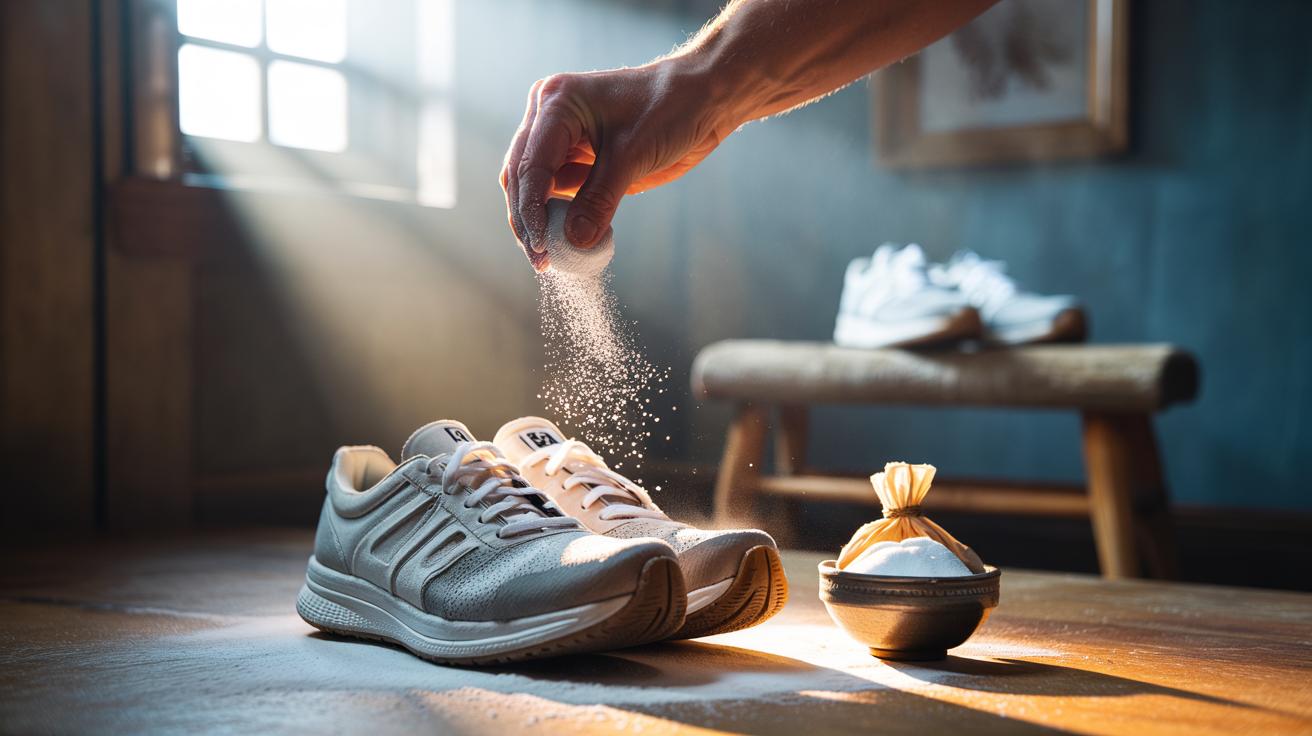
Start with dry footwear. Remove insoles if possible and brush away grit. Shake 1–2 tablespoons (about 15–30 g) of baking soda into each shoe, tilting and tapping the sides so the powder coats the toe box, heel cup, and seams. For mess-free use, spoon the same amount into a thin sock or coffee filter, tie it off, and tuck the sachet inside. Always apply only to dry shoes for best absorption.
Leave the powder in place for 8–12 hours. For heavy odour, extend to 24 hours or repeat on consecutive nights. The fine particles wick away moisture and tame volatile acids while you sleep. In very sweaty trainers, remove and treat the insoles separately; they harbour most odour-causing residues, so a targeted dose there makes a big difference.
In the morning, tap out the powder and vacuum the footbed to lift residue from stitching and foam. Wipe with a dry cloth and reinsert insoles. Do not add water or vinegar inside the shoe with baking soda. That creates dampness and can soften adhesives. Use the method weekly for active footwear or after any soak-through to keep odours under control.
Why the Powder Absorbs Moisture Fast
Foot odour mainly comes from sweat breaking down into odour‑causing acids (think acetic and butyric acids) and sulphur compounds as bacteria thrive in warm, damp fabric. Sodium bicarbonate raises the local pH and neutralises those acids, forming milder sodium salts while releasing minute amounts of CO₂. That chemical “quietening” of acids reduces the sharp smell you notice when you slip shoes off.
Physically, the powder is made of irregular, micro‑textured crystals. Spread through a shoe, they create huge contact area for rapid adsorption of vapour and light absorption of liquid films. Capillary spaces between grains draw moisture from fibres and foam, lowering water activity so bacteria become less comfortable. Fast odour relief comes from both chemistry and physics acting together.
It’s true that bicarbonate is only mildly hygroscopic compared with silica gel. Yet in a closed shoe, where humidity is high and the powder touches the insole directly, it works quickly enough to matter. Distribution is crucial: a light, even layer across the footbed outperforms a lump in the toe that barely contacts sweaty areas.
Materials, Safety, and When to Avoid It
Most textiles and synthetic insoles tolerate baking soda well. With leather, nubuck, and suede, use a sachet rather than loose powder to avoid visible residue in the nap. Test on a hidden area, then brush away traces with a clean suede brush. Memory‑foam footbeds can trap grains; again, the sachet method is tidier and less abrasive.
Steer clear of combining bicarbonate with liquids inside shoes. Never mix baking soda with vinegar, cleaning sprays, or water in the footbed—it creates dampness and can degrade adhesives or invite mould. If shoes are wet, first stuff with paper or use a boot dryer until fully dry, then deodorise. People with asthma should avoid inhaling dust; pour gently and vacuum up spills promptly.
Keep powder away from curious pets and toddlers. Don’t confuse baking soda with baking powder (which contains acids) or washing soda (sodium carbonate), which is harsher on dyes. If a shoe remains smelly after treatment, consider washable replacement insoles or a machine‑washable cycle for fabric trainers following the manufacturer’s care label.
Quick Reference: Amounts, Timings, and Alternatives
If you like a plan you can glance at, this guide covers typical situations, dose, and timing. Pair it with habits that stop sweat from lingering: rotating shoes, airing them after wear, and wearing moisture‑wicking socks. For extra pull on damp days, blend baking soda 2:1 with cornflour (cornstarch) in a sachet; starch boosts moisture uptake, while bicarbonate targets acids. Activated charcoal or silica gel pouches work well for storage, but they don’t neutralise acids as effectively.
| Use Case | Amount per Shoe | Contact Time | Best Method | Notes |
|---|---|---|---|---|
| Routine freshening | 1 tbsp (15 g) | Overnight | Loose powder | Vacuum out in the morning |
| Heavy odour | 2 tbsp (30 g) | 12–24 hours | Loose powder + insole treated | Repeat on two consecutive nights |
| Suede/leather | 1–2 tbsp | Overnight | Sachet | Avoid loose grains in the nap |
| Kids’ trainers | 1 tbsp | Overnight | Sachet | Reduces mess and inhalation risk |
| After rain | 1–2 tbsp | Overnight | Dry fully first, then sachet | Dryness before deodorising is essential |
Essential oils? Use sparingly on the sachet, not the shoe, as some oils stain. Sunlight and airflow help between wears; just avoid prolonged harsh sun on leather. Wash fabric laces and insoles regularly. The most effective routine combines moisture management and bicarbonate neutralisation, not masking smells with fragrance.
Used smartly, baking soda gives shoes a swift reset by removing moisture and silencing acidic odours at their source. It’s inexpensive, reusable in sachets, and kinder to materials than many perfumed sprays. If smells persist, you’re likely dealing with trapped grime in insoles or a shoe that never fully dries. Swap in washable insoles, rotate pairs, and keep a sachet in your gym bag for emergencies. What combination of steps—dosage, contact time, and airflow—will you try first to keep your footwear fresh without fuss?
Did you like it?4.6/5 (25)