In a nutshell
- 🔬 Harness the science: citrus peels and herbs release volatile oils (limonene, linalool, eucalyptol); heat, airflow, and humidity boost diffusion for bright, clean scent.
- 🍲 Quick wins with Simmer pots: gently heat water with peels and herbs for 20–30 minutes; top up as needed, never leave unattended, and use two small pots in open-plan spaces for a subtle veil of fragrance.
- 🧺 Long-lasting freshness: create dry sachets with oven- or air-dried peels plus rosemary/lavender/bay; add baking soda to combat mustiness, and hang bundles where stale air lingers (avoid polished surfaces).
- 🧽 Make zero-waste cleaners and sprays: infuse peels in vinegar for 2–3 weeks, dilute 1:1 for a citrus-vinegar cleaner; mix a light fabric spray (water + vodka + infusion) and always patch test.
- 🐾 Smart, safe strategy: prioritise ventilation, keep strong infusions away from pets, and tailor room-specific pairings—lemon+thyme for focus, orange+cinnamon for welcome, grapefruit+mint for energy.
Your kitchen bin is not the end of the story for orange, lemon, or grapefruit peels. It can be a beginning. Fragrant, thrifty, and surprisingly chic, citrus peels and kitchen herbs turn everyday scraps into a quiet luxury for the home. Think morning-bright corridors, calmer bedrooms, and a living room that smells like sunshine on a cutting board. This is about simple chemistry and common sense. It’s also about low-cost, low-waste rituals that work in British homes, small and large. Small gestures add up. A peel, a sprig, a gentle simmer. Minutes later, stale odours retreat and a cleaner, citrus-forward freshness moves in.
The Science of Citrus and Herbs
Before you simmer or stash, it helps to know why citrus peels and herbs punch above their weight. The skins contain volatile oils such as limonene and linalool that evaporate readily, lifting bright, zesty notes into the room. Rosemary and bay contribute eucalyptol and cineole, giving that brisk, resinous lift you notice in good Mediterranean kitchens. Heat, airflow, and humidity all amplify diffusion. A warm hob or a sunlit sill can coax scent from even tired peels. Use what you have, waste less, and let the house breathe. There’s craft in timing and in pairings, and a little restraint goes a long way.
Match the mood to the room. Lemon with thyme for alertness in the study. Sweet orange with cinnamon in the hallway for a gentle welcome. Grapefruit and mint where you exercise, energising but clean. Be mindful of surfaces and pets. While we’re not using concentrated essential oils here, cats and small pets can be sensitive; keep strong infusions and open bowls out of reach. Always ventilate lightly. Fresh air plus fragrance smells like diligence, not disguise.
| Ingredient | Scent Profile | Best Room | Pairs With | Notes |
|---|---|---|---|---|
| Lemon peel | Bright, clean, zesty | Kitchen, study | Thyme, bay | Deodorises cooking odours |
| Orange peel | Sweet, sunny | Hallway, lounge | Cinnamon, clove | Welcoming, soft |
| Grapefruit peel | Bitter-bright, tonic | Gym corner | Mint, sage | Energising kick |
| Rosemary | Piney, herbal | Bathroom | Lemon, bay | Feels crisp and spa-like |
Simple Kitchen Simmer Pots
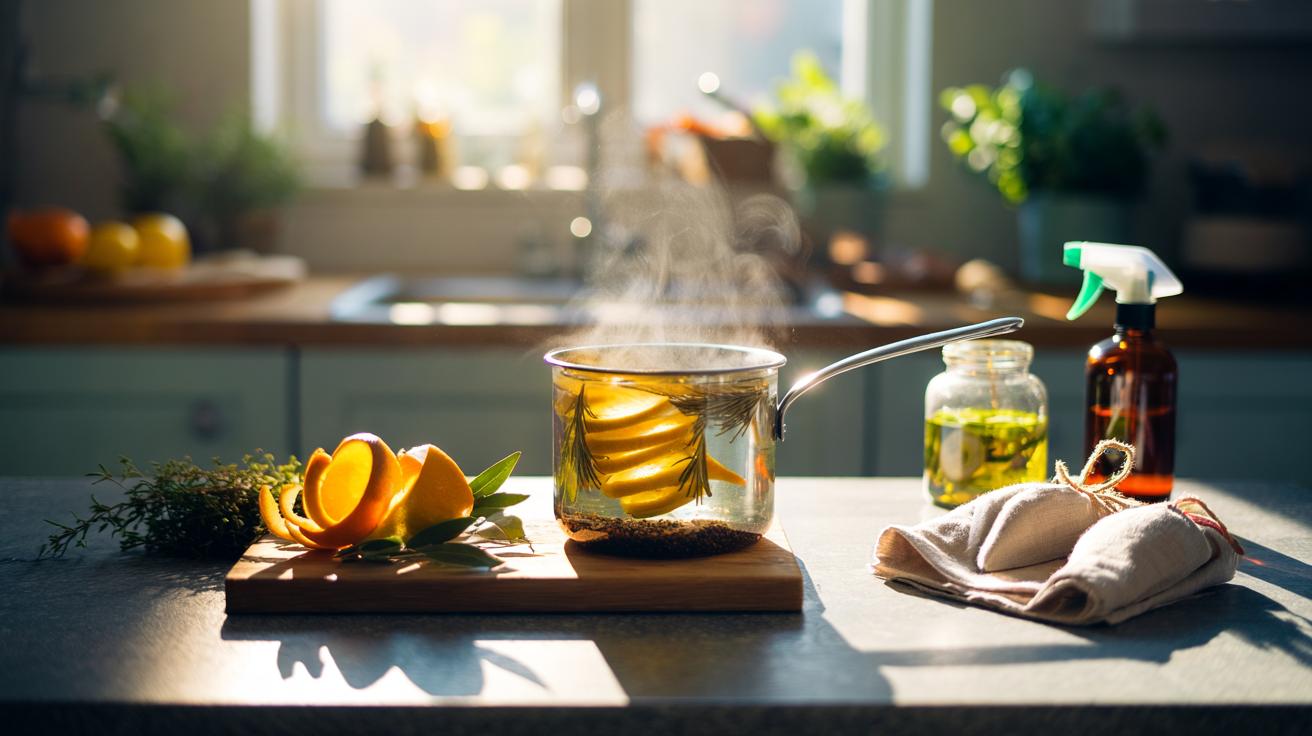
The classic trick is also the fastest. Fill a small saucepan halfway with water, add a handful of citrus peels and two or three sprigs of fresh herb, then bring to a bare simmer. Keep it gentle. Steam carries aroma like a liftboy, ferrying it through doorways and up the stairs. Top up water as needed and turn the hob off after 20–30 minutes. Never leave a simmer pot unattended. For open-plan flats, use two smaller pots at opposite ends rather than one rolling boil; the fragrance will read as a veil, not a fog.
Recipe ideas? Lemon peel with thyme and a coin of ginger for brisk clarity. Orange peel with bay and a crack of black pepper for a warm, grown-up twist. Grapefruit with mint to chase gym-kit echoes. You can repurpose kettle offcuts: pour hot water over peels in a heatproof bowl and perch it safely near a radiator for passive diffusion. Slip a cinnamon stick in when guests are due. Stop before it smells like pudding; the house should feel fresh, not festive.
DIY Citrus Sachets and Herb Bundles
When you want quiet, long-lasting scent, go dry. Spread peels on a tray and dry them on the lowest oven setting with the door slightly ajar, 60–90 minutes, or air-dry for a few days on a sunny sill. Combine crisped peel with rosemary, lavender, or bay and spoon into muslin bags or old cotton handkerchiefs. Tie with string. These sachets belong in wardrobes, shoe cupboards, luggage, and linen drawers. Add a spoon of baking soda to each bag if you’re battling mustiness; it absorbs while the botanicals perfume.
For an attractive bundle, twist orange peel into corkscrews as it dries, then bind with rosemary stems and a sliver of bay. Hang from a coat hook or tuck behind books where dust gathers. Refresh by crumbling in a few fresh peels, or warm the sachet in your hands to wake the oils. Avoid direct contact with polished wood and lacquered surfaces; dried peel can mark if it becomes damp. The result is steady, low-maintenance freshness that doesn’t shout.
Zero-Waste Cleaners and Freshening Sprays
Save your peels in a jar and cover with white vinegar. Leave for 2–3 weeks; the vinegar extracts the citrus oils and softens its sharpness. Strain, then dilute 1:1 with water for a zesty all-purpose cleaner on sealed worktops, tiles, and glass. Add a sprig of rosemary or a strip of grapefruit peel to the bottle for looks and a final lift. Always dilute vinegar; it’s powerful. Do not use on natural stone, unsealed grout, or waxed surfaces. Label the bottle clearly and store it away from children and pets.
For a fabric-safe refresher, combine cooled boiled water (200 ml) with 1 tablespoon of vodka and 2 tablespoons of your citrus-vinegar infusion. Shake gently. Lightly mist washable curtains, hallway runners, and car mats, then open a window for five minutes. The alcohol helps the scent disperse quickly. You’ll notice cleaner air rather than a perfumed mask. Test on an inconspicuous patch first. The aim is crisp, airy neutrality, with citrus as a bright edge, not a blanket.
Small domestic rituals carry weight, especially when they turn waste into value. Citrus peels and herbs are humble tools, yet they stitch freshness into the fabric of daily life without sprays that shout or price tags that sting. Choose your pairings, pace the scent, and let ventilation do half the work. Simmer when guests are inbound, hang sachets where stale air lingers, keep a jar of infusion for the everyday wipe-down. Your home will smell like effort well spent. Which peel-and-herb combination will you try first, and where will you place it for the biggest impact?
Did you like it?4.6/5 (20)