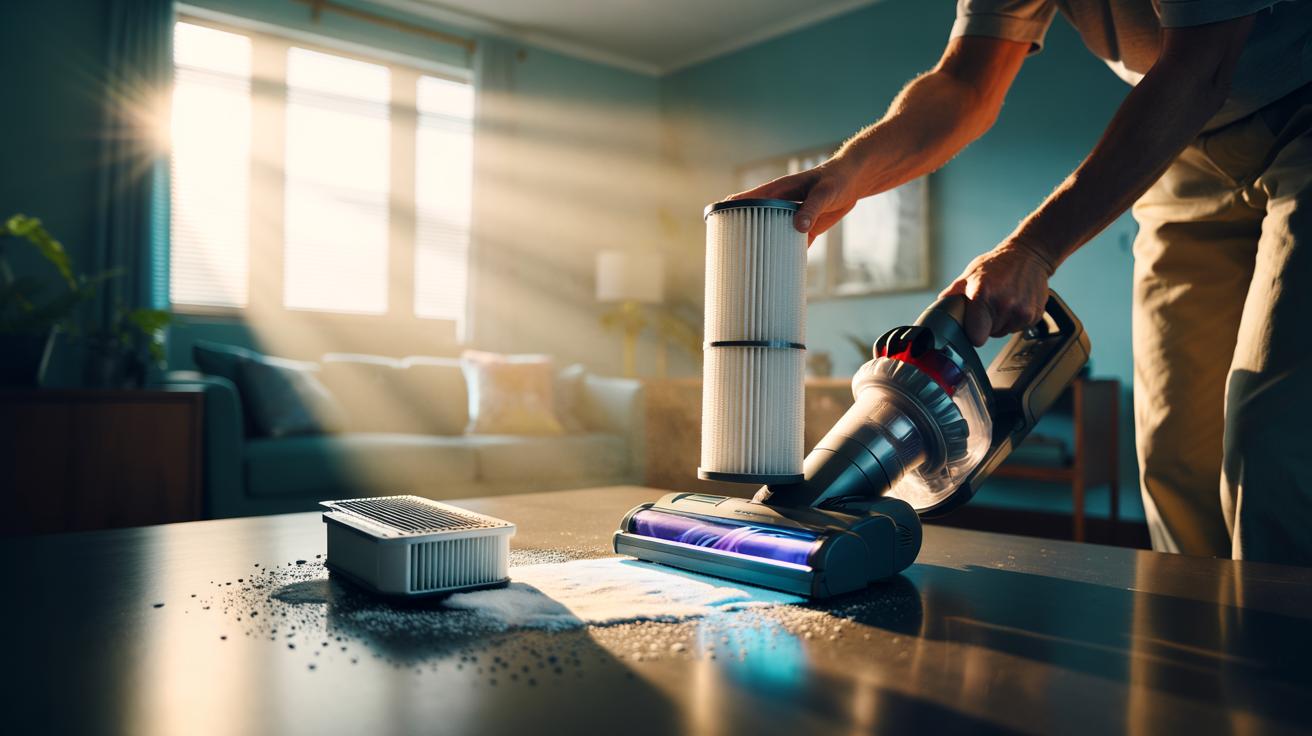
In a nutshell
- 🧹 Monthly filter changes keep airflow high and HEPA capture sharp, preventing dusty plumes and improving overall indoor air freshness.
- 🌬️ Clean filters reduce PM2.5, pollen, and pet dander during vacuuming, easing allergy and asthma symptoms by lowering airborne irritants.
- 👃 Fresh media and activated carbon boost odour control, trapping smell-carrying particles and VOCs so the vacuum stops spreading musty or “burnt dust” notes.
- 🛠️ Lower resistance protects the motor, restores suction, and raises cleaning efficiency—faster passes, less noise, and a longer-lasting machine.
- 🗓️ Pick the right filter (HEPA H13, washable, or carbon) and a monthly schedule; check gaskets, dry washable filters fully, and mind UK running costs.
Picture a Saturday blitz with the vacuum roaring, crumbs vanishing, carpet lines crisp as corduroy. It feels clean. Yet the air can still taste stale if your filter is clogged and shedding captured debris back into the room. Changing a vacuum filter every month sounds fussy, but it’s the quickest way to lift the invisible haze from your home. Freshness isn’t just fragrance; it’s fewer particles, lighter odours, and calmer sinuses. HEPA or not, every filter has limits. A fresh filter lowers what you breathe while you clean, not just what you see on the floor. That’s why a monthly routine pays off in clarity you can actually feel.
Why a Vacuum’s Filter Dictates Indoor Air Freshness
Every vacuum is an air pump before it’s a crumb catcher. Air rushes in, drags along PM2.5, pollen, fibres, and microscopic fragments, then exits through the filter. When that media is saturated, pressure builds, fine dust escapes through seams, and the machine starts misting the room with the very particles you wanted gone. HEPA filters can trap 99.95% at 0.1–0.3 microns, but only while they’re clean and properly seated. Once overloaded, even premium media can turn from barrier to backdoor. Monthly changes reset performance, keeping the airflow high and the capture efficiency sharp.
Less resistance equals better sealing and cooler operation. That matters. A hot motor can volatilise residues, adding a faint “warm dust” smell that lingers. Fresh filter, fresher outflow. It also prevents the sloppy plume you notice when you finish a room and sunlight reveals a sparkling cloud. Airflow and filtration aren’t rivals; they’re partners. Keep one strong and the other thrives.
Health Effects: From PM2.5 to Pet Dander
Most homes carry a mix: pet dander, dust-mite allergens, mould fragments, brake-dust traces from streets, and seasonal pollen. These aren’t just nuisances; the smallest particles slip deep into lungs and irritate airways. For children, allergy sufferers, and anyone with asthma, the difference between a clean and a dirty filter shows up as fewer sneezes and less morning congestion. Reduce airborne load during cleaning, and you reduce the after-effects once the vacuum is back in the cupboard. Monthly refreshes ensure you’re not resuspending what last week’s tidy-up captured.
There’s also the microbial angle. Filters hold organic dust, which can absorb humidity and host odour-making microbes. Leave it long enough and the vacuum’s exhaust begins to smell “furry” even in a pet-free flat. Rotating in a new filter disrupts that cycle. It’s preventive hygiene, not overkill, and it’s cheaper than running an air purifier longer to chase the haze a tired filter creates in the first place.
Odour Control and Mechanical Efficiency
Your nose is a reliable sensor. The faint wet-dog whiff, burnt-dust notes, or musty undertones? Those are VOCs and volatile by-products hitching a ride on fine particles. A fresh filter, ideally with an added activated-carbon layer, grabs smell-bearing compounds while the machine does its rounds. When you swap filters monthly, you arrest the accumulation that turns a vacuum into a portable odour distributor. It’s a tactical strike: cleaner exhaust, fewer ghost smells after cleaning, and less air freshener required to mask them.
Mechanically, a clogged filter increases static pressure, which means the motor works harder for less. That can dull pickup on edges, make the brushroll spit grit, and amplify noise. Swap the filter and suction rebounds, grit lifts in one pass, and you spend fewer minutes over the same square metre. Efficiency is silent comfort: less energy, less time, more air quality. The machine lasts longer, too.
Choosing the Right Filter and Schedule
Not all filters are equal. Your choices shape both air freshness and running costs. Use the table as a quick guide, then adjust for pets, occupancy, and cleaning frequency. If you vacuum weekly in a busy household, monthly is the sweet spot; light-use homes may stretch a little, but fresher air rewards discipline.
| Filter Type | Typical Change/Wash Interval | Air Freshness Impact | Estimated Yearly Cost (UK) |
|---|---|---|---|
| Standard foam/pre-filter | Rinse monthly; replace 3–6 months | Moderate; protects main filter | £8–£15 |
| HEPA H13 cartridge | Replace monthly in high-use homes | High; captures fine particles | £20–£40 |
| Washable HEPA | Rinse monthly; replace annually | High if dried fully | £10–£25 |
| Carbon pre-filter | Replace monthly | Odour control | £12–£24 |
Follow manufacturer specifications, but prioritise fit and seal quality over bargain substitutes. Allow washable filters to dry 24 hours to avoid mould growth, and check gaskets for wear. In UK pollen season, a monthly cadence keeps sniffles down; with pets, it’s non‑negotiable. Replace bags before they’re bulging and wipe the bin to remove clingy fines. Fresh filter, tight seals, clean bin—your three pillars of consistently fresh air.
Monthly filter changes sound small, yet the outcome is big: quieter cleans, crisper rooms, lighter noses, happier lungs. It’s a ritual that keeps the machine honest and your home’s microclimate on the right side of healthy. Add a carbon layer if odours nag, and schedule a reminder so it actually happens. Think of it as airing the indoors from the inside out. Are you ready to trial a month-on-month filter swap and see how the air in your home feels after four weeks of more mindful maintenance?
Did you like it?4.4/5 (30)