In a nutshell
- 🧽 Make reusable cleaning wipes in minutes using upcycled cotton or microfibre, a sealable jar, and pantry staples like white vinegar, castile soap, optional isopropyl alcohol (70%), and essential oils.
- 🧪 Mix a safe solution: 250 ml warm water + 1 tbsp vinegar + 1 tsp castile soap + 2 tbsp 70% alcohol; use variants for different surfaces and never combine vinegar with bleach.
- ⚙️ Cut, soak, store: trim 15×20 cm cloths, nest in a jar, saturate (not dripping), label and date; keep separate “kitchen” and “bathroom” batches to prevent cross-contamination.
- 🧼 Smart care: wash at 60°C, skip softener, dry fully, and refresh weekly; fix streaks by reducing soap, tackle odours with bicarbonate, and use hotter washes for greasy residue.
- 🧯 Follow surface-specific solutions: vinegar blends for sealed worktops and glass, soap-only for natural stone, alcohol boost for bathrooms; allow adequate contact time and buff dry for a streak-free finish.
Disposable wipes are convenient, yes, but they’re costly, wasteful, and often packed with harsh chemicals. Here’s the brighter alternative: reusable cleaning wipes you can make in minutes with ingredients you recognise and fabrics you already own. Five minutes is enough to make a batch. The method is simple, the results impressive. Your home gets clean, your bin stays light, and your budget breathes easier. Whether you’re tackling kitchen counters or the buggy’s sticky handle, this quick guide shows you how to mix a safe solution, prep durable cloths, and store them neatly so they’re always within reach.
What You Need, and Why It Matters
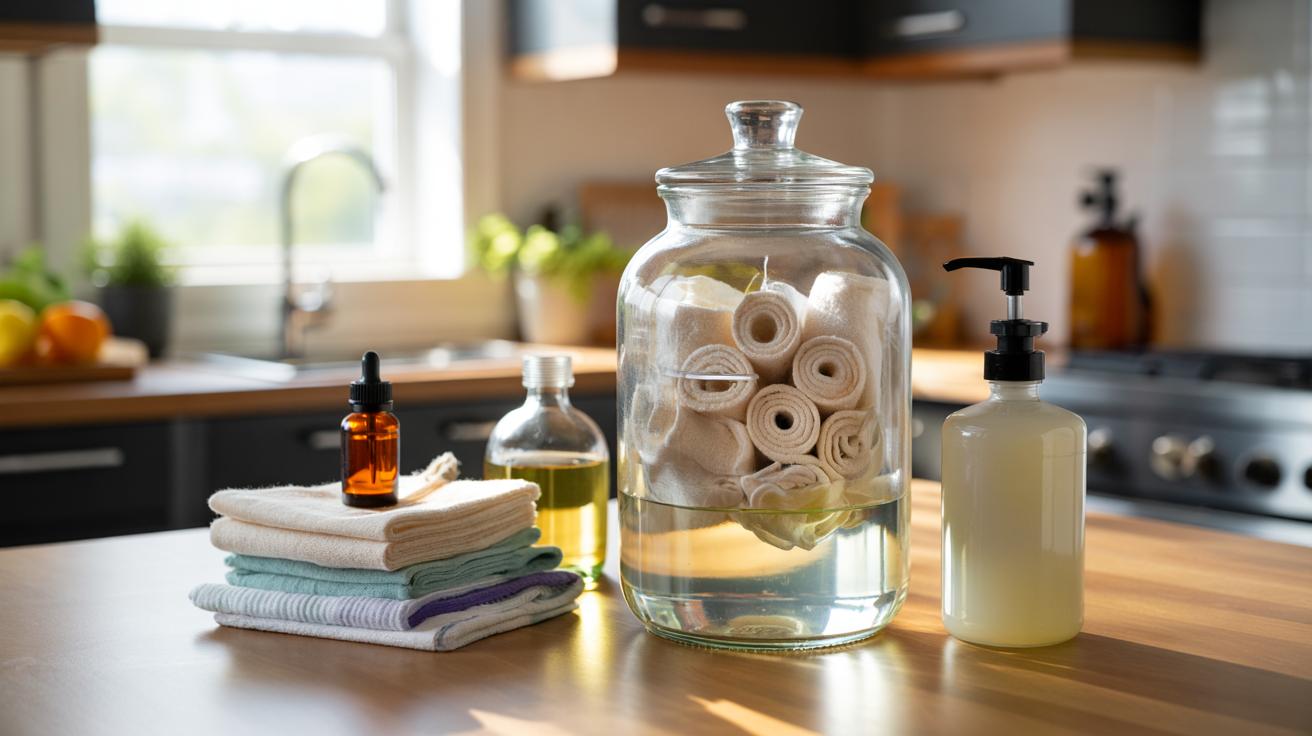
The best reusable wipes begin with the right kit. Gather a stack of soft, absorbent cloths—cut-up cotton T-shirts, old tea towels, or microfibre squares. Choose a wide-mouthed glass jar or a snap-lid tub to keep air out and solution in. You’ll also want white vinegar, castile soap or mild washing-up liquid, and optionally isopropyl alcohol (70%) for extra sanitising. A few drops of essential oil (tea tree, lemon, or eucalyptus) add a clean scent. Avoid highly dyed or lint-prone fabrics, which can streak surfaces.
These choices aren’t arbitrary. Cotton soaks and releases liquid reliably. Microfibre lifts grease and fine dust. A sealable container prevents evaporation, keeping every wipe ready to use. Meanwhile, simple household ingredients provide cleaning power without the mystery cocktail found in many shop-bought wipes. The result: a reusable system that is gentle on surfaces, tough on grime, and kinder to your skin and purse.
Mixing a Safe, Effective Cleaning Solution
Start with 250 ml of warm water. Stir in 1 tablespoon of white vinegar to cut limescale and film, then add 1 teaspoon of castile soap for grease-busting suds. For a sanitising boost, mix in 2 tablespoons of isopropyl alcohol (70%). Finish with 4–6 drops of tea tree or lemon essential oil if desired. Never mix vinegar with any product containing bleach. The above blend is balanced: mild on hands, tough on kitchen splatters, and quick to dry without streaks on most sealed surfaces.
Tailor it to task. Skip vinegar on natural stone such as marble or granite; use a water-and-soap-only mix instead. For bathrooms, lean into alcohol for better drying and odour control. Want glass to sparkle? Use water, a tiny dab of soap, and a splash of vinegar, then buff with a dry cloth. Contact time matters—let the surface stay visibly damp for a minute before wiping dry, especially when targeting high-touch spots like doorknobs and phone screens (avoid soaking electronics).
Cut, Soak, and Store: The Two-Minute Assembly
Cut your fabric into palm-sized squares or rectangles—about 15 cm by 20 cm works well. Neat edges help, but perfection isn’t required; pinking shears reduce fray if you have them. Roll or fold 12–20 pieces, pack them snugly into the jar, then pour your mixed solution over the top until the cloths are saturated but not swimming. Press down gently to disperse liquid evenly. If you’ve got excess, decant a little—damp, not dripping, is the sweet spot.
Label the container with the recipe and date. Keep it under the sink or on a laundry shelf, out of direct sunlight. To use, pull one wipe, wring lightly, and clean from the cleanest area to the grubbiest to avoid spreading grime. For streak-prone surfaces—stainless steel, mirrors—finish with a dry cloth. Tip: keep a second jar marked “bathroom” to prevent cross-contamination. Separate sets keep hygiene simple and instinctive.
Care, Reuse, and Quick Troubleshooting
After each session, toss used wipes into a ventilated basket. Wash on a hot cycle (60°C where fabric allows) with your regular detergent. Skip fabric softener; it coats fibres and reduces absorbency. Dry thoroughly—line dry in breeze or tumble on low—then restock the jar with fresh solution. If the container sits unused, refresh the liquid weekly. Musty smells mean it’s time to wash and reset. Stains? A teaspoon of oxygen bleach in the wash restores brightness without harshness.
Match your solution to the surface for best results, and jot this quick reference next to your kit.
| Surface | Best Solution Variant | Notes |
|---|---|---|
| Sealed worktops, tiles | Water + vinegar + soap | Test grout; rinse if residue remains |
| Natural stone (marble, granite) | Water + mild soap | No vinegar; dry promptly to avoid water marks |
| Bathroom fixtures | Water + soap + alcohol | Great for taps; keep room ventilated |
| Glass, mirrors | Water + a dash of vinegar | Buff dry with a clean cloth |
| Wood (sealed) | Water + mild soap | Minimal moisture; wipe dry |
If you see streaks, reduce soap. If cloths feel greasy, increase wash temperature. Persistent odours? Add a cup of bicarbonate of soda to the wash. Small tweaks solve most issues.
In a world of instant convenience, making reusable wipes feels both quietly radical and wonderfully practical. You save money, reduce plastic, and decide exactly what touches your home surfaces. The routine soon becomes second nature: cut, soak, store, repeat. It’s a habit that rewards you every week. Ready to reclaim your cleaning cupboard with a system that works for your schedule, your skin, and your space—starting today? What room will you transform first, and which fabric will you upcycle into your initial set of wipes?
Did you like it?4.4/5 (29)