In a nutshell
- 🔬 The science: acetic acid (≈5% in vinegar) dissolves alkaline residue and mineral films, loosens light oils, and reduces static, so dust releases and wipes away in minutes.
- 🧽 Fast method: Use a damp microfibre cloth, clean slats top-to-bottom, flip, then finish with a dry cloth; typical dilutions—1:1 for aluminium/vinyl, 1:2 for faux wood, 1:3 for sealed real wood.
- 🧪 Material rules: Safe for vinyl, aluminium, painted metal; be cautious with faux/real wood; avoid unsealed timber and keep vinegar off marble/limestone; patch-test when unsure.
- ⚠️ Safety first: Never mix vinegar with bleach; add only a tiny drop of washing-up liquid for greasy build-up, ventilate, and keep moisture away from cords and mechanisms.
- ✅ Why it beats soap: Vinegar leaves less residue, counters static so dust returns more slowly, and delivers a quicker, low-waste clean than detergent-only methods.
There’s a reason professional cleaners reach for white vinegar when faced with slatted window blinds. A cloth soaked in a simple vinegar solution wipes away stubborn dust, greasy film, and mineral haze in minutes, leaving crisp, brighter slats with minimal effort. The secret is acidity. Vinegar’s mild acid targets the invisible binders that make dust cling and builds a conductive, damp film that defeats static. Because it loosens what holds grime together, you spend less time scrubbing and more time finishing. Below, we unpack the science, share a rapid routine, and outline which materials love vinegar—and which don’t.
The Chemistry: How Acidity Loosens Dust and Film
Household white vinegar is about 5% acetic acid with a pH near 2.4—enough to disrupt the forces that help dust accumulate without being harsh. Dust may look dry, but it often sits in a thin layer of alkaline residue from tap water, soaps, and outdoor particulates. Acetic acid neutralises that residue and dissolves microscopic mineral grains. In hard-water homes, calcium carbonate deposits cement dust to slats; acid breaks them down into soluble calcium acetate and releases carbon dioxide, so the debris lifts on contact. This chemical nudge is why a single pass can outpace repeated dry dusting.
Acidity also helps with light oils from kitchens and skin contact. While vinegar isn’t a surfactant, it changes the surface environment so oils smear less and wipe more cleanly. The dampness reduces static charge that makes plastic and aluminium blinds pull dust back the moment you clean. Add the gentle abrasion of a microfibre weave and you get a fast, low-pressure clean that protects paint and coatings. Crucially, vinegar flashes off without leaving a soapy film, so the slats stay cleaner for longer.
Step-by-Step: Clean Blinds in Minutes With Vinegar-Soaked Cloths
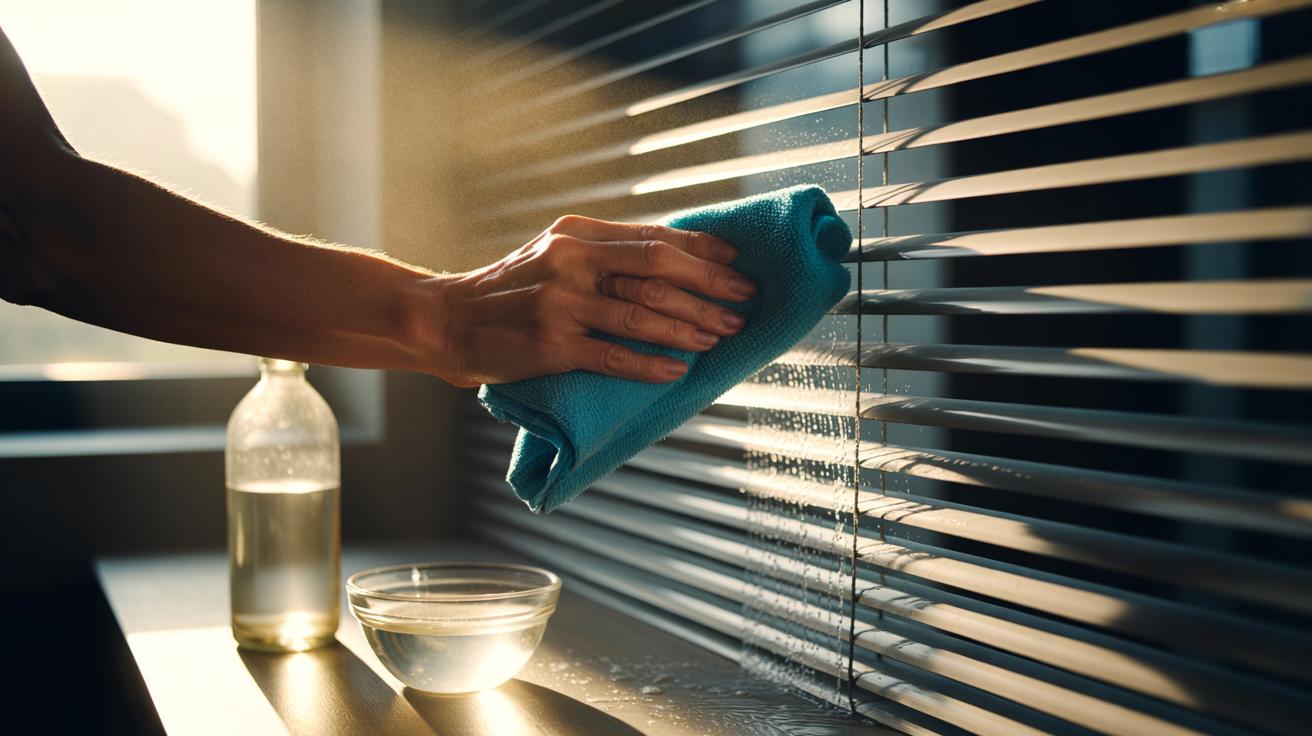
Gather a bowl, white vinegar, warm water, two microfibre cloths, and optional tongs or a thick sock. Mix a 1:1 vinegar-to-water solution for metal or vinyl; use 1:3 on finished wood. Submerge one cloth, then wring until merely damp. Close the blinds. Pinch a slat between thumb and forefinger (or grip with tong-wrapped cloths) and wipe from one end to the other, working top to bottom. Flip the slats and repeat. Refresh the cloth as it darkens; wring thoroughly to avoid drips on cords or sills. On lightly soiled blinds, a small window can be done in five minutes.
Open the blinds and do a final light pass with the second, dry cloth to remove any remaining moisture and streaks. Stubborn specks? Hold the damp cloth in place for 10–20 seconds to let the acid work before wiping. For greasy kitchen build-up, add one small drop of washing-up liquid to the bowl (no more, to prevent residue). Ventilate the room and wear gloves if you have sensitive skin. Never mix vinegar with bleach or spray it over bleach residues—dangerous chlorine gas can form.
What to Use, What to Avoid: Materials and Ratios
Vinegar is friendly to most vinyl, aluminium, and painted metal blinds when diluted properly. On faux wood, keep dilution mild and cloths only damp to guard against swelling. Real wood needs special care: finished slats tolerate brief, light contact; unsealed timber does not. Fabric pleated shades respond better to vacuuming and spot treatments than wet wiping. When in doubt, do a discreet patch test and keep the cloth almost dry. Also avoid letting acidic solution drip onto natural stone sills such as marble or limestone; acid etches calcium-rich stone. Below is a quick-reference guide for common materials.
| Blind Material | Vinegar:Water | Contact Time | Notes |
|---|---|---|---|
| Aluminium/Vinyl | 1:1 | Wipe immediately | Safe and fast; reduces static cling. |
| Painted Metal | 1:2 | Short, no soaking | Test for colourfastness on older paint. |
| Faux Wood (PVC/Composite) | 1:2 | Wipe only | Cloth just damp; avoid pooling at edges. |
| Real Wood (Sealed) | 1:3 | Very brief | Dry immediately to protect finish. |
| Real Wood (Unsealed) | Avoid | — | Use dry dusting or manufacturer’s polish. |
| Fabric Pleated/Roman | Spot only | Minimal | Vacuum with brush; blot, don’t rub. |
Keep vinegar away from marble, limestone, and cement-based surfaces. Protect cords and headrails from excess moisture, and never spray directly into mechanisms. If you see streaks, your cloth is too wet or the ratio is too strong; dilute and use the follow-up dry cloth to finish to a sheen.
Why It Works Better than Soap Alone
Neutral detergents lift grease, but they struggle with alkaline haze and mineral grit that glue dust to slats. Acidity cuts through that invisible cement, then the microfibre’s split fibres trap loosened particles. With soap alone, residue can stay behind and act like a magnet for airborne dust. Vinegar evaporates cleanly, leaving fewer sticky traces. The slight ionic content in the solution also helps discharge static on plastic and metal slats, slowing the re-accumulation of fluff.
Used correctly, vinegar is kinder to finishes than repeated abrasive scrubbing. It pairs well with a tiny dab of washing-up liquid for greasy kitchens, but do not combine it with bleach or hydrogen peroxide products. Avoid harsh scouring pads that can scratch powder-coated or painted blinds, giving grime new crevices to cling to. For allergy sufferers, the low-residue result can mean fewer irritating particles resettling in the days after a clean.
In short, vinegar’s acetic acid does the heavy lifting: it breaks mineral films, tames oils, and knocks out static so dust wipes away in a swift, satisfying pass. The method is inexpensive, low-waste, and versatile across most modern blind materials when diluted and applied with a barely damp microfibre cloth. Respect the exceptions—unsealed wood and stone surfaces—and you’ll get brilliant results without harsh chemicals. Will you try the quick vinegar routine on a single window first, or adapt it room by room to test which dilution and tools give you the fastest, streak-free finish?
Did you like it?4.6/5 (27)