In a nutshell
- 🧪 Citrus peels release volatile aromatic oils—notably limonene, linalool, and citral—that disrupt insect olfaction; it’s a repellent, not an exterminant.
- 🍋 Method: Simmer two handfuls of mixed peels in ~1 litre of water for 20–30 minutes, then strain; use the infusion to mist bins, sills, and thresholds, refresh regularly, and never leave a simmer unattended.
- 🪲 Targets and limits: Helps deter ants, fruit flies, fungus gnats, some mosquitoes and silverfish; less effective for cockroaches or bed bugs, which need targeted control.
- 🌍 Environmental upsides: Upcycles kitchen waste, avoids aerosols and sticky residues; gentler than concentrated essential oils—ventilate and be cautious around pets.
- 🧰 Strategy: Pair the simmer with integrated pest management—seal entry points, maintain hygiene, fix damp, use traps/baits, and call professionals for structural infestations.
Put leftover peels to work. When orange, lemon, or grapefruit skins are simmered gently in water, they release a bouquet of volatile aromatic oils that insects dislike. The effect is not magic; it’s chemistry rooted in plant defenses that confound insect senses and discourage them from settling. A citrus-peel simmer is low-cost, pleasantly scented, and fits neatly into an eco-minded routine that values reuse. It is a repellent, not an exterminant, yet in kitchens, balconies, and near bins, it can tip the balance. Here’s how the aroma acts on insect physiology, the best way to brew it, and where its limits lie.
How Citrus Aromas Confound Insects
Many insects navigate and feed using exquisitely tuned olfactory receptors. Citrus peels contain terpenes—especially limonene, linalool, and citral—that scramble these chemical conversations. In lab assays, such compounds reduce landing rates, interrupt trail-following, and trigger avoidance behaviours. To us, the scent reads as clean and fresh; to flies or ants, it resembles a hostile chemical landscape. The result is fewer insects choosing to linger, feed, or breed in scented zones. This does not guarantee a pest-free space, but it raises the “odour barrier” that makes your home less inviting than the one next door.
Mode matters. As the peels warm, their volatile oils evaporate, pushing a scented plume through the room. Contact can also irritate insect cuticles, while lingering residues on surfaces deter scouting. Crucially, these compounds dissipate rather than accumulate like some synthetic residues, so repellency fades over hours to a day. That is why routine “refreshes” keep protection consistent, especially during summer peaks or after cooking sessions that attract fruit flies.
A Kitchen Simmer: Method, Ratios, and Safety
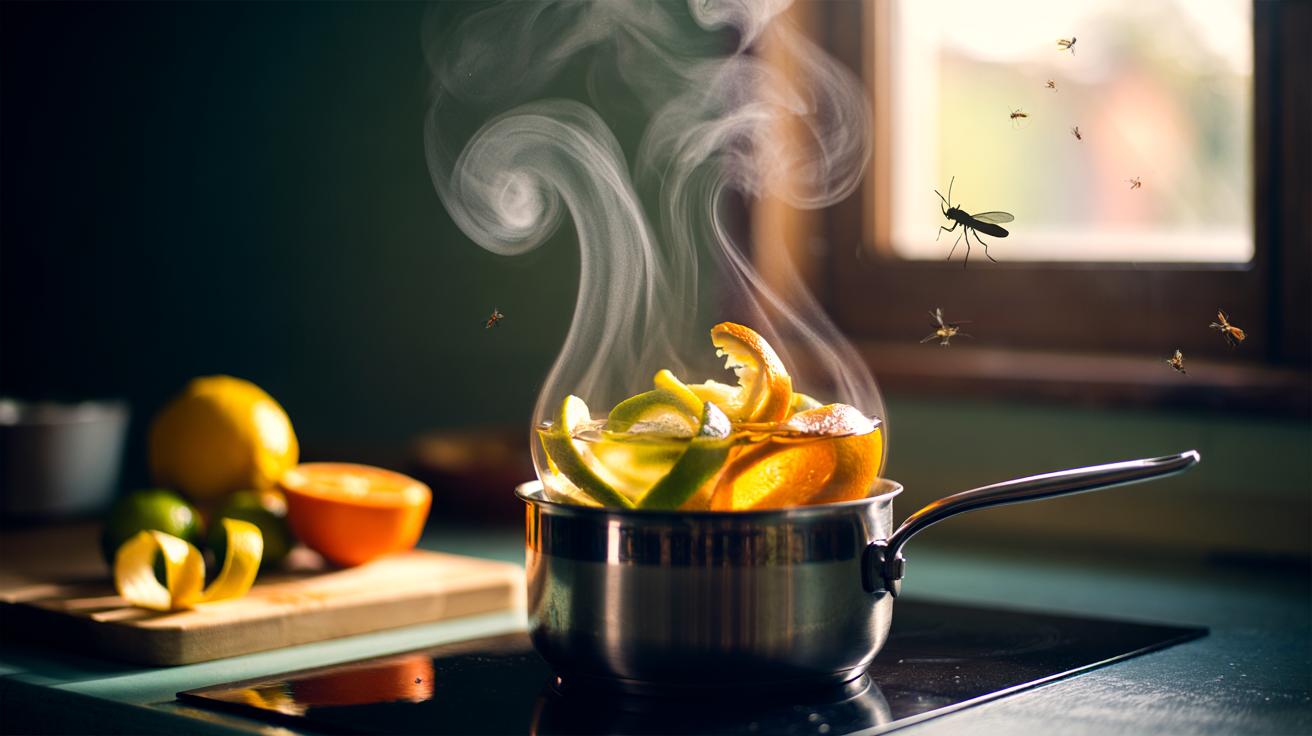
Fill a saucepan with roughly 1 litre of water and add two generous handfuls of mixed citrus peels—orange for limonene, lemon and lime for linalool and citral. Bring to a low simmer for 20–30 minutes, lid on, until the room smells distinctly of citrus. Switch off the heat and let it cool. Strain the liquid and decant into a spray bottle for spot use on window frames, bin lids, and door thresholds. Keep the pot on a safe, warm setting for passive diffusion when you’re at home. Never leave a simmer unattended, and keep pans well away from curious children.
For surfaces, a 1:1 dilution with water usually suffices; patch-test on varnished wood or painted finishes. Add a few crushed cloves or a sprig of rosemary if you enjoy a spicier edge, though the citrus oils do the heavy lifting. Store strained liquid in the fridge and use within five to seven days. If you keep cats, avoid concentrated essential oils and stick to gentle peel infusions, ventilating rooms as scents build.
Which Pests It Deters—and Its Limits
The citrus-peel simmer helps most with ants (trail disruption), fruit flies and fungus gnats (reduced landing near sinks, bins, and potting soil), and some mosquito activity around doors and patios. It can also make cupboards less welcoming to silverfish. Heavier pests like cockroaches or bed bugs require targeted control and proofing, not aroma alone. Think of citrus as a frontline discouragement, best paired with good hygiene—sealed food containers, dry drains, and swift compost disposal—plus physical barriers such as screens and door sweeps.
Expect variability. Species differ in sensitivity, room drafts disperse scents, and competing odours—ripening fruit, sugary spills—can overpower the deterrent effect. In UK flats and terraces, consistent evening use during warm months yields the best feedback from residents. Keep notes: which rooms, what time, and which pests respond. Your own pattern will refine where and when to simmer or spray.
| Key Compound | Main Citrus Sources | Pests Most Affected | Notes |
|---|---|---|---|
| Limonene | Orange, grapefruit | Ants, fruit flies | Disrupts trail pheromones; strong, cheerful scent |
| Linalool | Lemon, lime | Mosquitoes, gnats | Mild floral note; avoid high concentrations around pets |
| Citral | Lemon zest | Flies, silverfish | Sharp lemon aroma; fades relatively quickly |
Environmental Upsides and When to Choose Alternatives
Repurposing peels turns waste into utility, cutting reliance on aerosol sprays and single-use plastic refills. It’s a modest, everyday act of waste reduction with real comfort benefits. The vapours disperse naturally, and there is no sticky residue on counters. Natural does not mean risk-free, but peel infusions avoid the concentrated loads found in some bottled essential oils. For many households—especially those seeking less synthetic fragrance—the simmer becomes a weekend habit that complements routine cleaning and clutter control around food zones.
Still, pragmatism wins. If you’re facing persistent cockroaches, bed bugs, or wasps nesting in eaves, escalate. Combine citrus with integrated pest management: seal entry points, dry out damp areas, fix screens, deploy traps, and use targeted baits where appropriate. For structural infestations, call a licensed professional and request the least-toxic effective option. Keep the simmer as your daily deterrent, not your only defence, and document what measurably reduces sightings in your home.
The citrus-peel simmer proves that household scent can be both pleasant and practical. By releasing plant-made aromatic oils, you nudge insects elsewhere without fogging rooms in harsh chemicals. It’s quick to brew, fits neatly into a Sunday clear-out, and respects the line between deterrence and full-on extermination. Pairing aroma with cleanliness and simple barriers is the winning formula. As warmer months approach and windows open, where will you place your first pot, and how will you measure its impact on the tiny trespassers that test your patience?
Did you like it?4.5/5 (26)