In a nutshell
- 🧪 Hard water leaves Ca/Mg deposits, but acetic acid lowers pH, converts carbonates to soluble forms, and disrupts nucleation so a mineral film can’t form.
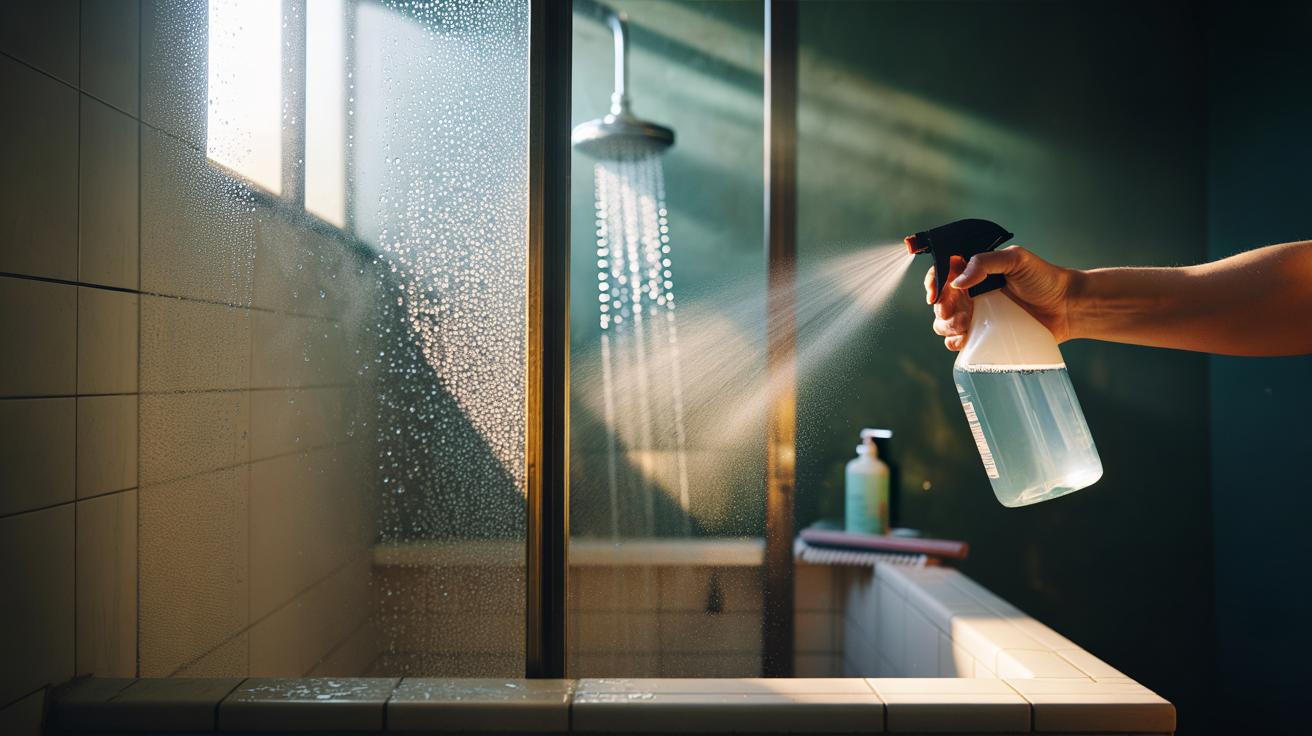
- 🚿 Daily routine: mist a 1:1 white vinegar:water mix after showering, wait 60–120 seconds, squeegee top-to-bottom, then buff edges with microfibre; use 2:1 or longer dwell for very hard water.
- ⚠️ Safety first: choose clear spirit vinegar (5–8%); never mix with bleach; avoid natural stone like marble/limestone; spray glass not fittings; distilled water reduces streaks.
- 🧰 Technique tips: atomise evenly, target edges and hinges, keep the squeegee blade sharp, ventilate to speed drying, and rinse fittings weekly to prevent residue.
- 🌍 Benefits: a low-level acidity habit is cheaper, eco-friendlier, and faster than deep cleans, delivering consistent, streak-free clarity with minimal effort.
Your shower glass collects cloudy deposits not because you’re untidy but because Britain’s famously hard water leaves microscopic crystals every time droplets dry. Those crystals bind with soap scum, producing that stubborn grey haze. A simple daily mist of white vinegar interrupts the process. Its mild acidity breaks the chemical chain before crystals take hold, keeping the pane clear with little effort. Regular low-level acidity outperforms sporadic deep cleans, and it’s cheaper and kinder to the planet than harsh descalers. Here’s how it works, why daily spritzing matters, and the safest way to keep glass gleaming without damaging seals, frames, or lungs.
The Chemistry Behind Mineral Film on Glass
Most UK mains supply carries dissolved calcium and magnesium ions. When hot droplets evaporate, those ions combine with carbonate and bicarbonate to form limescale (chiefly calcium carbonate). Soap residues add an alkaline matrix that helps crystals anchor to the microscopic pits of glass. The result is the familiar whitish veil that resists normal wiping. Vinegar’s key actor, acetic acid, lowers the surface pH and converts carbonate deposits into soluble bicarbonate and, ultimately, CO₂ and water, while forming mobile acetate salts that rinse away easily.
Because crystal growth relies on local alkalinity and repeated drying cycles, small, frequent doses of acid halt the earliest stages. Disrupt the first few molecular layers and the film never develops. In effect, a daily spritz stops “nucleation sites” from maturing into the visible crusts that need scouring or strong chemicals. The chemistry is gentle, predictable, and ideal for a humid bathroom where prevention beats cure.
Glass isn’t harmed by mild acid at household strengths, and brief contact times keep silicone seals and chrome fittings safe. You’re not dissolving the glass; you’re neutralising residues before they harden. That’s why a light routine—spray, wait, squeegee—delivers outsized results, even in households with very hard water.
How Daily Vinegar Spritzing Keeps Limescale at Bay
After a shower, mist the glass with a 1:1 mix of white distilled vinegar and water. Give it 60–120 seconds to work, then squeegee from top to bottom and buff edges with a microfibre cloth. This brief window is crucial: droplets haven’t fully dried, so acetic acid can neutralise minerals while they’re still diffuse. Daily acidity denies crystals time to organise into a tenacious film. If your water is extremely hard, extend dwell time to three minutes or adopt a stronger 2:1 solution. For households sensitive to scent, use warmed vinegar or add a few drops of essential oil (never exceed a teaspoon per litre to avoid smearing).
Good technique matters. Atomise the spray for even coverage, target door edges and hinge zones where runoff lingers, and keep the squeegee blade clean. Rinse fixtures weekly to remove acetate residues. Ventilation helps: a quick burst from the extractor fan reduces drying marks by speeding evaporation. If you skip a day, return to the routine—vinegar remains effective at reversing early haze before it becomes scale.
| Scenario | Vinegar:Water | Dwell Time | Extra Tip |
|---|---|---|---|
| Moderate hardness | 1:1 | 1–2 minutes | Squeegee, then microfibre edges |
| Hard/very hard water | 2:1 | 2–3 minutes | Warm solution enhances action |
| Weekly reset | Full strength | 5 minutes | Rinse fittings after dwell |
| Natural stone nearby | Not advised | — | Mask stone; use neutral cleaner |
Practical Ratios, Safety Notes, and What to Avoid
Stick to clear, colourless spirit vinegar (5–8% acetic acid). For everyday use, 1:1 with tap water is sufficient; in very hard areas, try 2:1, then taper down once glass is stable. Distilled or deionised water reduces streaks by removing extra minerals from the spray itself. Store the bottle with a silicone-safe trigger and label it clearly. Never mix vinegar with bleach or chlorine-based products; the reaction can release hazardous gases. Keep sprays away from marble, limestone, or unsealed grout—acid can etch or dull stone. If your enclosure includes stone tiles, mask them before misting or switch to a pH-neutral routine for those areas.
On metals, brief exposure is fine: spray the glass, not the fitting, and wipe chrome dry. Test silicone in an inconspicuous corner if seals are old. Replace blades when squeegees chatter, as nicks leave water trails that dry into spots. For a fragrance lift without residue, add a drop of tea tree or lemon oil per bottle. Cost-wise, vinegar beats branded descalers and slashes plastic waste. The real dividend is time: a minute a day avoids weekend scrubbing, and the glass looks new because scale never gets a foothold.
In short, sustained low-level acidity is the most efficient way to keep shower glass clear: it neutralises minerals, interrupts crystal growth, and simplifies drying. You spend seconds, not hours, and swap abrasive cleansers for a bottle that costs pennies. Preventing deposits is always easier than dissolving them once hardened. If you fine-tune dilution, dwell time, and squeegee technique to match your local water, the transformation is both visible and lasting. What small tweak—warmer spray, longer dwell, or a sharper blade—will you try first to make a streak-free pane your new everyday default?
Did you like it?4.4/5 (21)