In a nutshell
- ❄️ Cold Comes First: Ice halts wicking, stabilises dyes, and hardens sticky residues (gum, wax, chocolate) so they can be lifted; blot, don’t scrub to avoid fibre damage.
- 🔥 Then Controlled Heat: Cover with a damp white cotton towel and apply a low–medium, no-steam iron in short presses to transfer pigment to the cloth—press, don’t glide.
- 🧪 Targeted Timings: Protein/tannin, grease/oil, wax/gum, and dye-rich stains each have optimal ice times and heat levels to maximise lift while protecting fibres.
- ⚠️ Safety Essentials: Test in a hidden spot, use only white cotton towels, avoid saturating the underlay, keep heat brief near joins, and stop if sheen or distortion appears.
- 🧼 Smart Alternatives: Use enzymatic cleaners for pet stains and solvent removers for nail varnish, then follow with the ice-and-iron routine; finish by grooming, drying, and vacuuming to prevent browning or resoiling.
Spilt tea, crushed chewing gum, a blob of melted chocolate: the horrors that lurk in a British carpet are many. The clever “ice cube + iron” trick turns that panic into a plan, using cold to lift and controlled heat to extract. First, ice halts dye migration and hardens residues so they can be chipped or blotted away; then a warm iron, buffered by a white cloth, wicks remaining moisture and pigment into the fabric. Timing is everything: act before heat has a chance to set the mark. Done carefully, this two-stage method is fast, cheap, and kind to most household fibres, including wool and synthetics.
Why Cold Comes First
The moment a spill hits the pile, liquids begin to migrate along the carpet’s capillaries. Heat accelerates this process and can lock in protein-based and tannin stains from coffee, tea, milk, or blood. Ice does the opposite. Pressed in a bag or wrapped cloth over the spot, it lowers the temperature, thickens the liquid phase, and reduces wicking, buying you crucial minutes. With sticky offenders such as gum, wax, toffee, or chocolate, cold turns a smeary mess into a brittle residue that can be lifted in flakes with a dull knife. Cold stabilises; rushing for heat risks permanent dye-binding. On wool, which is sensitive to alkalinity and high temperatures, the controlled chill also protects the fibre scales from swelling, keeping the stain localised and easier to treat.
Always start by blotting, never scrubbing. Rubbing drives pigment deeper and abraded fibres catch light differently, leaving a visible patch long after the colour is gone. The ice phase lets you remove solids and thickened liquids with minimal mechanical damage, setting up a safer, more effective pass with gentle heat.
The Step-by-Step Ice and Iron Method
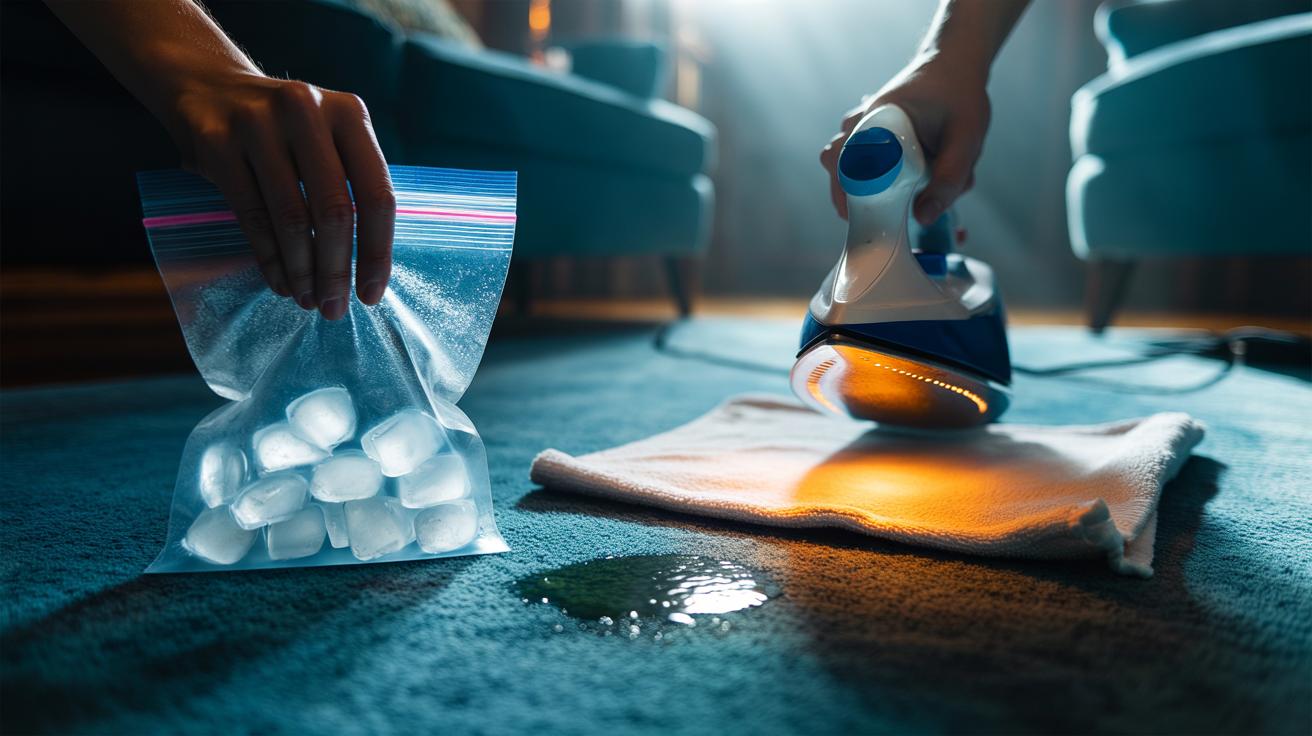
Blot up loose liquid using a clean, white cotton cloth. Avoid coloured towels that could bleed. Apply ice in a zip bag or wrapped in a tea towel for 5–10 minutes, refreshing as needed until the surface is firm and cool. For gum or wax, gently lever off hardened pieces with a butter knife, working from the edges inward. Do not gouge the pile.
Prepare a second white cotton towel, folded to two layers, lightly damp with water or a 1:1 mix of water and white vinegar for tannin stains. Set your iron to low–medium, no steam. Place the towel over the spot and press, don’t glide, for 10–15 seconds. Lift and check the towel: you should see transfer. Rotate to a clean area and repeat until no further colour comes up. Never press a hot iron directly onto carpet fibres.
Finish by misting with clean water and blotting dry. Groom the pile with your fingers or a spoon edge to realign fibres. Once fully dry, a light vacuum pass prevents soil lines and restores texture.
Quick Reference: Stain Types, Ice Time, and Heat Levels
Different soils respond best to slightly different timings. The guide below pairs common household stains with sensible ice contact and iron settings. Test on an inconspicuous patch first, especially with wool or delicate blends. For loop-pile polypropylene, low heat is your safest option; for solution-dyed synthetics, you have a wider margin but should still avoid steam. Keep towels scrupulously white to track progress and avoid dye transfer.
| Stain Type | Examples | Ice Time | Iron Heat | Notes |
|---|---|---|---|---|
| Protein/Tannin | Tea, coffee, milk, blood | 5–7 minutes | Low–medium | Use water or 1:1 water–vinegar towel |
| Grease/Oil | Gravy, butter, makeup | 6–8 minutes | Medium | Pre-blot; a drop of mild detergent in rinse |
| Waxy/Gum | Candle wax, gum | 8–10 minutes | Low | Harden with ice, chip off, then towel + iron |
| Dye-Rich | Red wine, juice | 5 minutes | Low | Blot fast; avoid steam which can set colour |
Work in short presses to prevent heat travel beyond the target area. If the towel stops showing transfer, switch to a fresh section or refresh with clean water. Finish with dry blotting and airflow to prevent browning or resoiling.
When to Use Alternatives and Safety Tips
Not every mark suits the ice-and-iron duet. Nail varnish and solvent dyes may need a dedicated remover used sparingly from the outside in, followed by the cold-then-warm routine. Heavy pet accidents benefit from an enzymatic cleaner after the ice stage to break down proteins before gentle heat extraction. For candle spills deep in the pile, cold-and-chip first, then use the towel-and-iron method in several passes rather than a single long press. If you see any distortion or sheen change, stop immediately.
Safety matters. Keep irons on low–medium and avoid steam. Never saturate underlay; excess moisture can wick stains back and encourage odours. Use only white, absorbent cotton towels. On wool, skip alkaline detergents; a neutral pH is kinder to the fibre. Improve drying with fans or open windows, then vacuum to lift the nap. If your carpet has a latex-backed rug or join near the stain, keep heat brief to protect adhesives and prevent delamination.
This simple pairing of ice and a modestly warm iron gives householders a fast, frugal way to reverse the damage of everyday spills. The cold phase limits spread and firms residues; the controlled heat phase draws out what’s left without scalding fibres. With a clean towel, patient blotting, and an eye on temperature, most routine marks surrender gracefully. The secret is measured, methodical work—not force. Which spill do you dread most on your own carpets, and how might you adapt this two-stage approach to tackle it next time?
Did you like it?4.5/5 (24)