In a nutshell
- 🧦 The old sock over hand hack exploits static electricity—the triboelectric effect—to attract and lift pet hair from upholstery like a magnet.
- 🛋️ Pair dissimilar materials for stronger charge; choose socks (cotton, polyester, wool blend, microfibre) to match sofa fabrics for safer, faster results.
- 🌬️ Conditions shape success: low humidity strengthens static, while damp rooms and fabric softener reduce charge and hair pickup.
- 🧭 Use a dry, clean sock with overlapping strokes; light friction, twist to refresh the surface, and finish seams with microfibre to gather strays.
- 🧹 Combine methods: the sock lifts fur efficiently, then a HEPA-equipped vacuum removes fine dander; reserve rollers for clothes and use a damp cloth on leather.
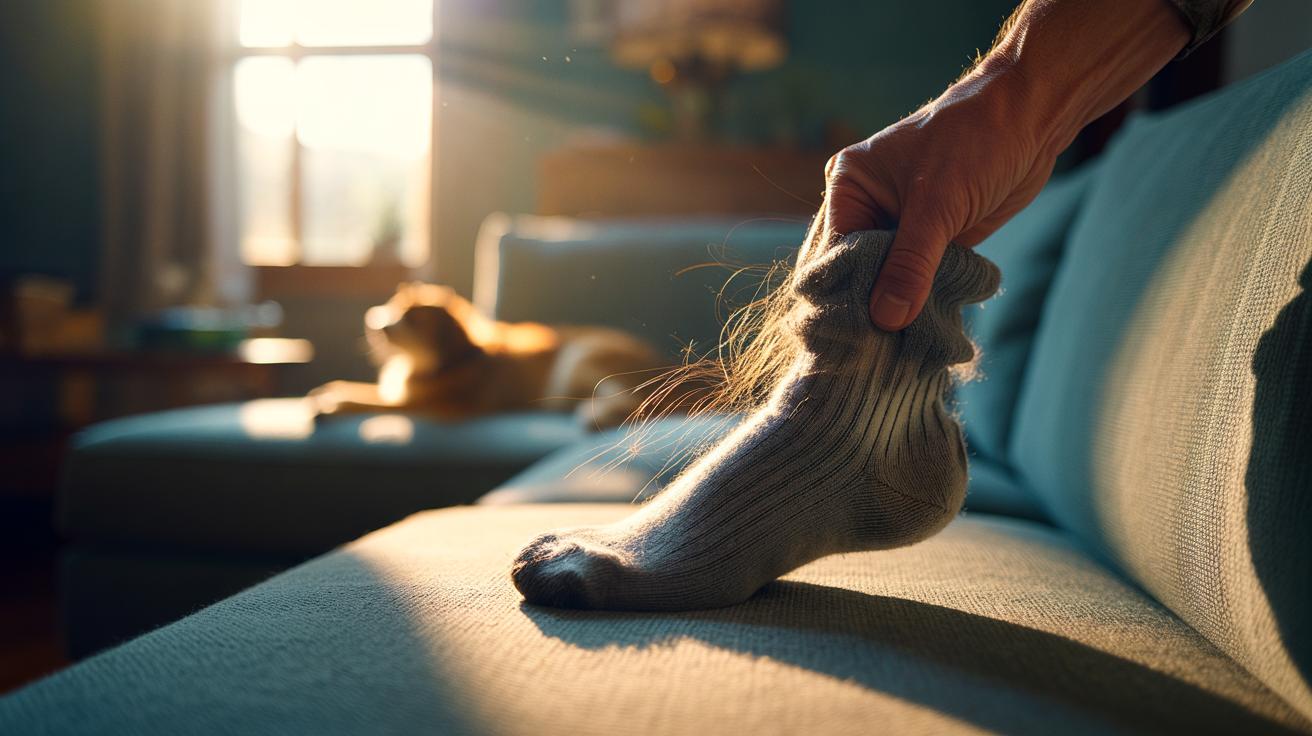
Every pet owner in Britain knows the ritual: sit down for a cuppa, stand up covered in fur. Among the thrifty fixes passed down through generations, the old sock over hand has real staying power. It’s quick, costs nothing, and uses nothing more exotic than static electricity. Swipe a socked hand over your sofa and the hairs leap as if magnetised. The trick isn’t magic, it’s physics: the charge built between fibres and your sock pulls fur from upholstery and into clumps. Used properly, this simple method can rival spendy rollers and single‑use sheets, keeping your settee presentable between deeper cleans.
Why Static Electricity Lifts Pet Hair
Rub a dry sock across a sofa and you create charge by friction, known as the triboelectric effect. Different materials swap electrons; some become positively charged, others negative. Pet hair, made largely of keratin, is extremely light and easily influenced by an electrostatic field. When your charged sock passes over the surface, it exerts an attractive force that pulls hairs free from the weave. That’s why fur appears to jump to your hand as though drawn by a magnet. Sofas that blend polyester with cotton often respond best because synthetic fibres build charge swiftly.
Conditions matter. Low humidity favours stronger static because moisture allows charge to leak away. Very damp rooms will blunt the effect, so aim for a dry day or turn on the heating briefly. The weave also plays a role: tighter weaves lock hair in; looser ones release more easily. Don’t confuse static cling with residue—no chemicals are needed, just a clean, dry sock and a steady sweeping motion.
How to Use the Old Sock Trick Step by Step
Slip a dry, clean sock over your dominant hand. A cotton–polyester blend works well for generating charge without scratching. Begin at one armrest, sweeping in overlapping strokes towards the centre, then across cushions and seams. Press lightly; the goal is to build charge, not scrub. Short, brisk passes increase friction and lift more hair with less effort. When a clump forms, pinch it off with your free hand and bin it before you continue.
If hair is deeply embedded, stretch the fabric gently with your other hand and make a second pass along the grain. For stubborn patches, twist the sock slightly to present a fresh area with maximum charge. Finish by turning the sock inside out to trap debris before shaking it out outdoors. To avoid redepositing dander, wash the sock after heavy sessions. Tip: a microfibre cloth can serve as a follow‑up pass to gather strays along seams and piping.
Choosing the Right Sock and Sofa Prep
The wrong fabric combination can sap the effect. Before you start, give cushions a quick pat to loosen surface debris and remove throws that could dampen charge. Static thrives on dry, clean textiles with contrasting materials rubbing together. A wool‑blend sock often charges quickly, while pure cotton is gentle but slower to build. On leather or faux leather, switch to a barely damp microfibre cloth; static does little on slick surfaces, and the sock will simply glide without grabbing fur.
Use the table below to match sock type to upholstery. Aim to pair dissimilar materials to maximise charge separation. If you’re unsure about a delicate fabric, test a small hidden area for snagging and stop if threads lift. Keep an eye on humidity: below 50% is ideal. Avoid fabric softener on your sock, which can reduce friction and neutralise charge.
| Sock Material | Charge Build | Best For | Notes |
|---|---|---|---|
| Cotton | Moderate | Natural-fibre sofas | Gentle on weaves; may need extra passes. |
| Polyester | High | Blended or synthetic upholstery | Excellent static; watch for pill-prone fabrics. |
| Wool Blend | Very High | Stubborn, embedded fur | Fast results; test first on delicate weaves. |
| Microfibre | Variable | Final polish on seams | Great for gathering clumps after static pass. |
When to Combine Methods: Sock Versus Rollers and Vacuums
The sock shines for mid‑week spruce‑ups and touchpoints—armrests, cushion tops, and pet perches. It’s free, reusable, and quiet, ideal for late‑night telly. For allergy control, finish with a HEPA‑equipped vacuum to remove fine dander that static won’t capture. Lint rollers are quick on clothing but produce waste; save them for coats at the door. Rubber grooming gloves can help on heavy sheds, yet they rely more on grip than charge and may drag on delicate fabric.
Consider fabric type and workload. On velvet and chenille, a static pass first prevents hair from matting under a vacuum head. For leather, skip static and use a damp cloth followed by a conditioner. If your sofa is antique or silk‑blended, consult its care label and avoid aggressive friction. The smartest routine is layered: sock for lift, targeted vacuum for depth, and an occasional deep clean to reset the pile without harsh chemicals.
There’s a quiet satisfaction in seeing fur leap to a reclaimed sock and the sofa restored in minutes. The science is simple, the kit is already in your drawer, and the results are tidy, sustainable, and cheap as chips. Used consistently, this method cuts down on disposable rollers and makes weekly cleaning less of a chore. Whether you’re managing a moulting Labrador or a stealth‑shedding cat, a charged sweep puts you back in control. How will you adapt the old‑sock static trick into your own living‑room routine, and which fabric‑sock pairing will you test first?
Did you like it?4.6/5 (27)