In a nutshell
- ✅ Turn an ice cube tray into a segmented organiser where each slot isolates pieces, boosts visibility, and ends tangles through simple, repeatable placement.
- 📦 Use smart sorting strategies: front-row for daily studs and rings, one slot per item for necklaces, and rows by metal to prevent tarnish and speed choices.
- 🧼 Prioritise care and hygiene: choose silicone for gentle grip, line plastic with felt, add silica gel or anti-tarnish paper, and store away from humidity.
- ✈️ Pack with a lidded tray for travel; add cotton to stop rattling, stack trays in drawers for small spaces, and label edges for quick morning edits.
- 💷 Embrace the low-cost, adaptable system: consistent return habits, easy cleaning, discreet storage, and sustainability via repurposed or recycled trays.
An ice cube tray as a jewellery organiser sounds like a hack from the back of a drawer, but it’s a remarkably elegant fix for everyday clutter. Those neat, identical slots limit contact between pieces, keep pairs together, and give you a quick visual inventory each morning. When every item has a home, decision-making speeds up and tangles disappear. A tray costs pennies on the high street, slides into a bedside drawer, and adapts to collections that grow or shrink. The layout is modular, so you can rearrange without buying a new box. For renters and small-space dwellers, it’s a quiet revolution in storage design hidden in plain sight.
How an Ice Cube Tray Becomes a Jewellery Organiser
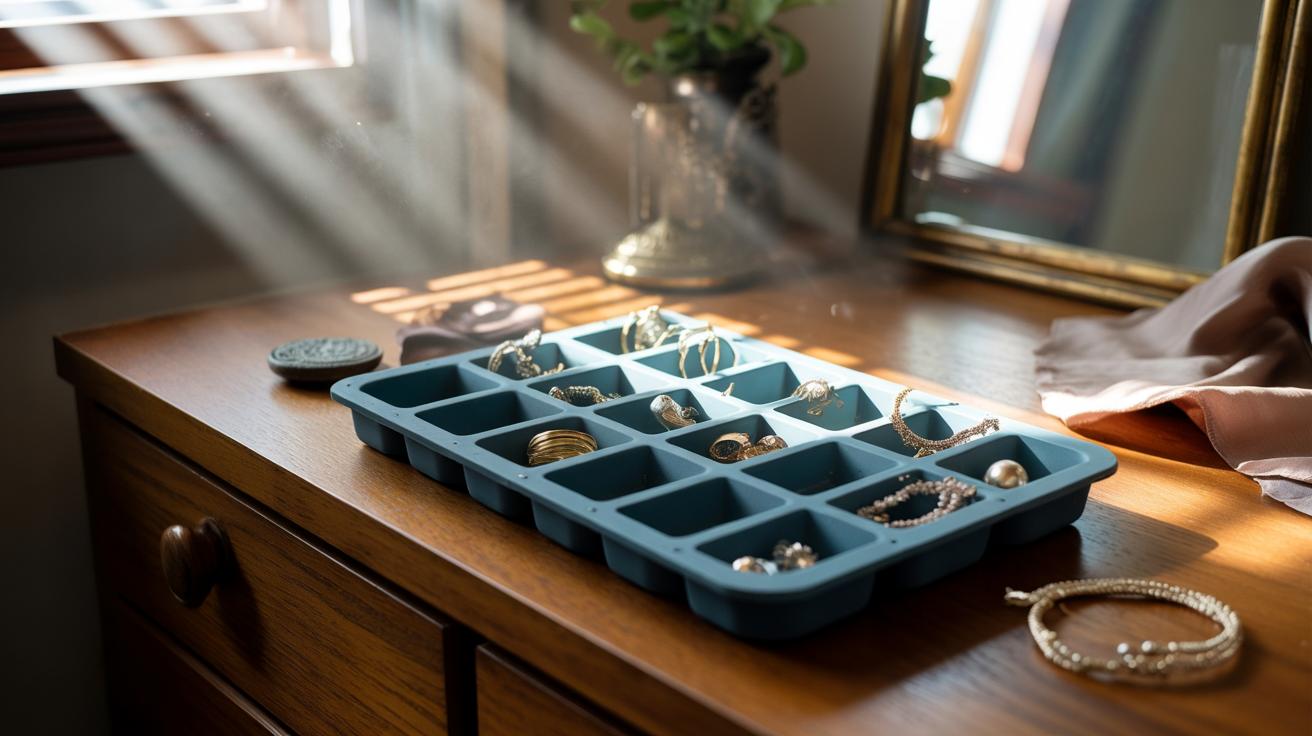
A standard tray offers 12–21 uniform compartments, ready-made for categorising rings, studs, and delicate chains. The genius lies in segmentation: each slot isolates metals to reduce abrasion, and reduces the chance of chains coiling around earring posts. Small, repeated spaces create a rhythm that prevents “just toss it in” habits. Silicone trays are slightly grippy, so pieces don’t skid when drawers open; rigid plastic trays stack neatly, useful for growing collections. Either way, visibility improves. You can line the base with felt or an anti-tarnish strip cut to size, then label the rim with a fine marker for swift recognition.
Consider ergonomics. Shallow wells suit studs and rings; deeper cubes corral chunky bangles or statement pendants. A two-tray system—one for everyday pieces, one for occasion wear—mirrors how you dress and reduces rummaging. Consistency is the quiet power here: return items to the same slots nightly and you’ll stop losing backs and butterfly clips. If you live with pets or share a flat, add a lidded tray to block dust and curious paws. Containment reduces maintenance and extends the life of your jewellery.
Sorting Strategies: Rings, Studs, and Chains
Start by grouping by type and frequency. Daily rings and studs deserve front-row slots; seasonal or sentimental pieces can live in the back row. Pop earring pairs into the same compartment with a spare back—they’ll never be orphaned. To prevent chain chaos, fasten clasps and coil each necklace in a loose circle, then set one per cube. One slot per item is the golden rule that keeps tangles out. If you own mixed metals, dedicate rows to silver, gold, and costume to avoid transfer of residues that speed tarnish.
Think in sets. Keep hoops with their charms, stacking rings by size order, and cufflinks by design. Spare stones, ear nuts, and repair bits deserve a labelled corner cube. If you’re time-poor in the morning, colour-code rows with a bit of washi tape along the tray edge—blue for work, red for evening, green for fitness-safe studs. A few seconds of sorting at bedtime pays back minutes the next day.
| Jewellery Item | Best Slot Type | Extra Tip |
|---|---|---|
| Stud Earrings | Shallow front-row cubes | Store pairs with a spare back |
| Rings | Mid-depth cubes | Group by metal or size for quick grabs |
| Necklaces | Single chain per cube | Fasten clasp and coil loosely |
| Bangles/Statement Pieces | Deeper end cubes | Line with felt to avoid scuffs |
Hygiene, Care, and Material Choices
Materials matter. Silicone is flexible and gentle on plating, ideal for delicate finishes. Rigid plastic is stack-friendly and easy to label, but benefits from a soft liner. Metal trays look chic but can accelerate tarnish unless lined. Never store silver in a humid bathroom; moisture is the enemy of shine. Slip a small silica gel sachet beneath the tray and replace it every few months. For sterling, tuck in anti-tarnish paper. Wipe pieces with a lint-free cloth before bed to remove lotions and perfume that can dull stones.
Cleaning is straightforward. Wash silicone trays with mild soap, rinse, and air-dry fully to avoid trapped moisture. Plastic trays respond well to a microfibre wipe and a cotton bud in corners. Rotate pieces occasionally to reduce pressure points on soft metals. If you’ve vintage costume jewellery, keep it away from harsh cleaners and store it separately; ageing glues are sensitive. A clean, dry tray is as protective as a pricey velvet casket—without the cost.
Travel and Small-Space Hacks
For weekends away, a lidded ice cube tray becomes a travel vault. Assign one cube per item, press a small square of cotton wool over each to stop rattling, and snap the lid shut. The rigid grid prevents tangles in transit, and customs checks are quicker when everything is visible at a glance. Protection, order, and speed—delivered by a £2 purchase. In tight flats, slide the tray into a desk drawer or stack two inside a wardrobe shelf. Add nonslip dots underneath to stop drifting when drawers open.
Security starts with discretion. A tray hides in plain sight, unlike glossy jewellery boxes that advertise value. If you need to lock things down, place trays inside a modest document box with a hasp. For renters, adhesive labels or removable washi tape preserve deposits while keeping systems clear. Sustainability also plays a part: repurpose old trays, or choose recycled plastic or plant-based silicone. Small design decisions accumulate into a calmer, more intentional routine.
In the end, the humble ice cube tray earns its place not in the freezer but on the dressing table, turning a jumble into a curated set. The repeating slots train good habits, speed choices, and protect finishes without the faff of velvet cases. Organisation isn’t about austerity; it’s about giving each piece the stage it deserves. As your collection shifts with seasons and taste, the layout adapts in minutes. Will you carve out a grid for your everyday favourites tonight, and if so, which row will become your go-to morning edit?
Did you like it?4.6/5 (23)