In a nutshell
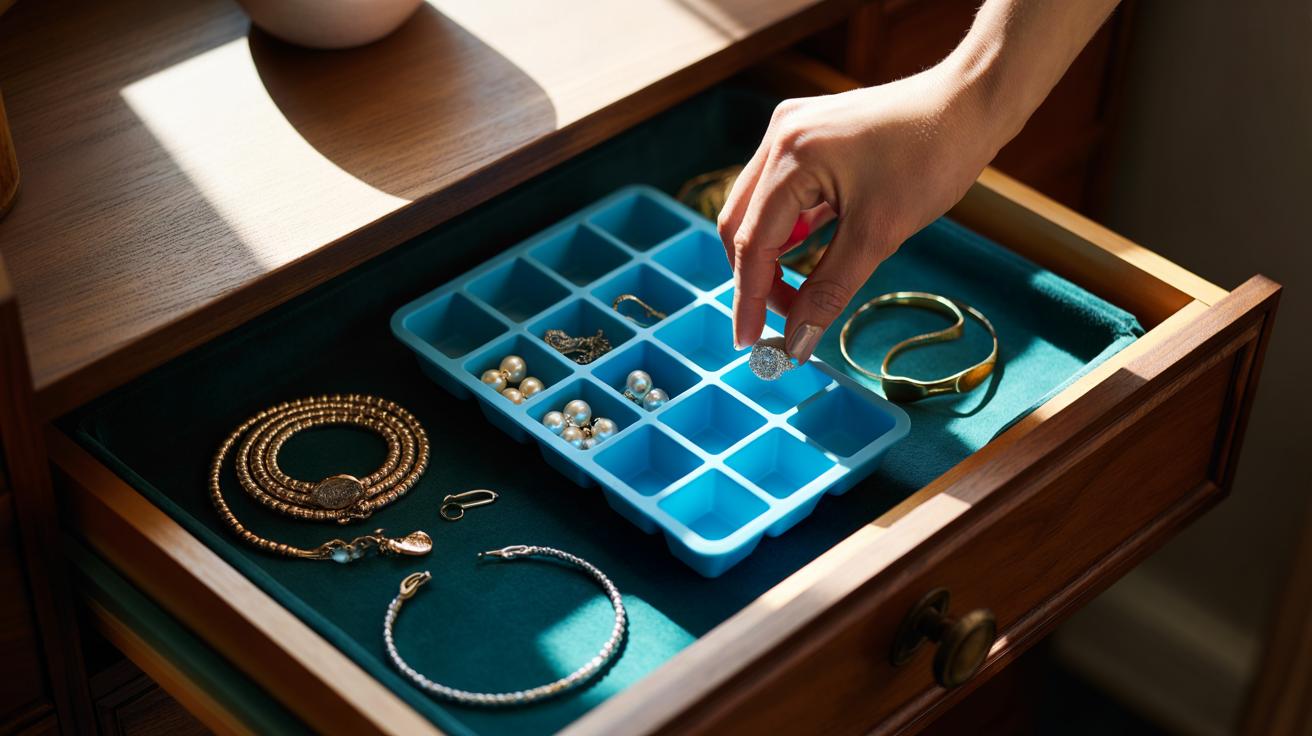
- 🧊 Use an ice cube tray to create individual compartments that stop chains, studs and bracelets from tangling and scratching.
- 🔍 Boost visibility and speed: each piece has its own cell, making missing backs and everyday favourites easy to spot and grab.
- 🧰 Choose the right tray: opt for silicone for grip or rigid plastic for structure, match cell depth to jewellery size, and add anti-tarnish tabs or felt dots for protection.
- 🗂️ Set up smartly: sort by type or metal, fasten clasps before coiling necklaces, place daily wear at the front, and use silica gel plus stackable trays for scalable storage.
- 🧼 Maintain sparkle: follow gentle cleaning routines, rotate pieces, keep pearls separate, and refresh linings to preserve finishes long-term.
Who knew the humble ice cube tray could be a jewellery hero? Drop one into a chaotic drawer and, in minutes, your chains, studs and bangles find their own quiet lanes. The secret is simple: individual compartments stop pieces from rubbing, knotting and scratching. It is a low-cost, space-savvy fix that beats rummaging for a missing earring back before the school run or a dinner reservation. Small divisions transform morning mayhem into effortless selection. Whether you favour delicate gold, chunky silver, or colourful costume finds, this tangle-free method adapts to your style, your space and your budget—without demanding a trip to a specialist store.
Why Compartments Defeat Tangles
Jewellery tangles because thin chains and hooks migrate as drawers open and close, catching on each other and building friction. An ice cube tray creates dozens of micro-zones that quarantine movement. Each cell acts like a parking bay: a bracelet can roll slightly but never cross into a neighbour’s lane, and a pendant cannot loop through another chain. Physical separation is the most reliable anti-knot strategy, more effective than improvising with tissue paper or leaving everything to dangle on a single stand. Slots also reduce metal-on-metal contact, curbing micro-scratches that dull gemstones and soften plating.
This grid layout improves visibility as much as it improves order. When every pair of studs has its own recess, you spot missing backs at a glance. The format suits varied collections: keep dangly earrings paired in one cube, stack rings in another, and coil fine necklaces individually. By preventing pieces from scraping and entwining, you extend their life and protect clasps, jump rings and delicate chains from stress.
Choosing the Right Tray for Your Jewellery
Not all trays are equal. Rigid plastic offers straight sides and crisp separation, while silicone trays provide gentle grip that stops items sliding when the drawer moves. Depth matters: 2.5–4 cm is a sweet spot for keeping chains contained without hiding them. Clear or pale colours help with visibility, and a lidded tray keeps dust away in open shelves. If you wear silver, consider placing anti-tarnish tabs under the tray; for heirlooms, line each cell with a dot of felt for added cushioning. Pick a grid that matches your jewellery, not the other way round. Wide cubes welcome bangles; narrower ones keep fine pieces crisp and separate.
| Jewellery Type | Ideal Cell Size | Material Fit | Quick Tip |
|---|---|---|---|
| Fine necklaces | Small, 3–4 cm | Silicone or lined plastic | Fasten clasps before coiling |
| Stud earrings | Small, shallow | Rigid plastic | Store pairs with backs attached |
| Rings | Medium | Any, add felt dot | Group by metal to avoid abrasion |
| Bangles/bracelets | Wide cells | Rigid plastic | One per cell to stop scuffing |
Set-Up Guide: From Messy Drawer to Museum Display
Start by emptying the drawer and cleaning it—dust accelerates dullness. Sort pieces by type: rings, studs, hoops, pendants, chains. Place the tray so its grid runs front to back, making the first row the easiest reach for everyday staples. Put the pieces you wear most in the front-left cells for muscle-memory access. Fasten a necklace clasp, lay the pendant in first, then coil the chain loosely around it; drop hoops and their locks as a pair; slot one ring per cell to stop scratching.
If your collection is large, allocate one tray per metal—gold-tone in one, silver in another—to prevent dissimilar metals rubbing. Slip a tiny silica gel sachet at the back to keep moisture in check. For travel days, lift out a row’s contents into a small resealable bag; when you return, each piece drops back into its cell without reshuffle. Label the tray edge discreetly with washi tape for categories if you share a drawer.
Stacking is simple: many trays nest neatly. Just ensure the upper tray doesn’t press on pendant settings; a sheet of soft felt between layers solves this. For a polished look, line the base of the drawer with velvet-effect paper so the grid appears intentional. The goal is a system you can reset in seconds, not a display you’re afraid to disturb.
Care, Cleaning, and Long-Term Protection
A clever organiser shines brighter when the jewellery does. Clean gold and platinum with mild soap and a soft brush; keep porous stones away from harsh chemicals. Silver prefers a tarnish cloth and low humidity, which is where that silica sachet earns its keep. Rotate pieces: if the same ring lives in the same cell for months, lift it weekly and wipe the spot beneath to prevent residue building. Gentle routines preserve both sparkle and plating. Replace worn felt dots and check silicone trays for dust that can transfer micro-abrasion to polished surfaces.
Seasonal edits help. In winter, move statement necklaces to deeper cells and bring studs forward; in summer, reverse the emphasis. If a cell feels cramped, it is—give that piece its own space. Avoid mixing sharp-edged chains with soft pearls; keep pearls in a separate, padded row. When gifting jewellery, add an ice cube tray to the present and you are giving longevity as well as style. The modest grid becomes a quiet guardian of clasps, stones and shine.
Repurposing an ice cube tray is a small act with outsized impact: every piece becomes easy to find, easy to protect and easy to love. The compartments halt tangles before they start, visibility curbs impulse rebuys, and gentle materials keep finishes pristine. It is a practical solution that looks neat, costs little and scales with your collection. A calm drawer invites you to wear what you own, rather than hunt for what you’ve lost. How might you tailor a tray—by metal, by occasion, by colour—to turn your jewellery drawer into a system that serves your routine every day?
Did you like it?4.3/5 (23)