In a nutshell
- 🧪 The tennis ball delivers elastic impacts that shear apart moisture-bonded clumps, boosting airflow in the drum and quickly restoring pillow loft.
- ⚙️ Method: check the care label, add 2 clean balls (in socks), choose low heat for down and low–medium for synthetic, pause mid-cycle to hand-fluff, and dry completely to avoid mould.
- 🔧 Settings by fill: down prefers gentle heat and frequent agitation; synthetic tolerates slightly higher heat; do not tumble memory foam or grain-filled pillows.
- 🔇 Practical tips: avoid dryer sheets, use light-coloured or well-worn balls to prevent dye transfer, and sock the balls to cut noise and protect fabrics.
- ♻️ Maintenance and efficiency: refresh pillows on air-only with balls between washes, spot-clean to limit wash cycles, and save energy thanks to improved airflow and faster drying.
Britons swear by an old laundry-room hack: pop a tennis ball into the tumble dryer and flat, clumped pillows re-emerge plump and cloud-like. The trick works because a simple bounce can do what heat alone cannot—break up sticky clumps fast, allowing air to circulate and fibres to lift. There’s nothing mystical about it; this is household physics in action. Still, technique and timing matter. Use the wrong heat, or the wrong pillow, and the result can be a miss. Handled correctly, a tennis ball turns a long, listless dry into a quick, loft-restoring cycle—without wrecking the fill.
The Physics of Fluff: Impact, Airflow, and Moisture
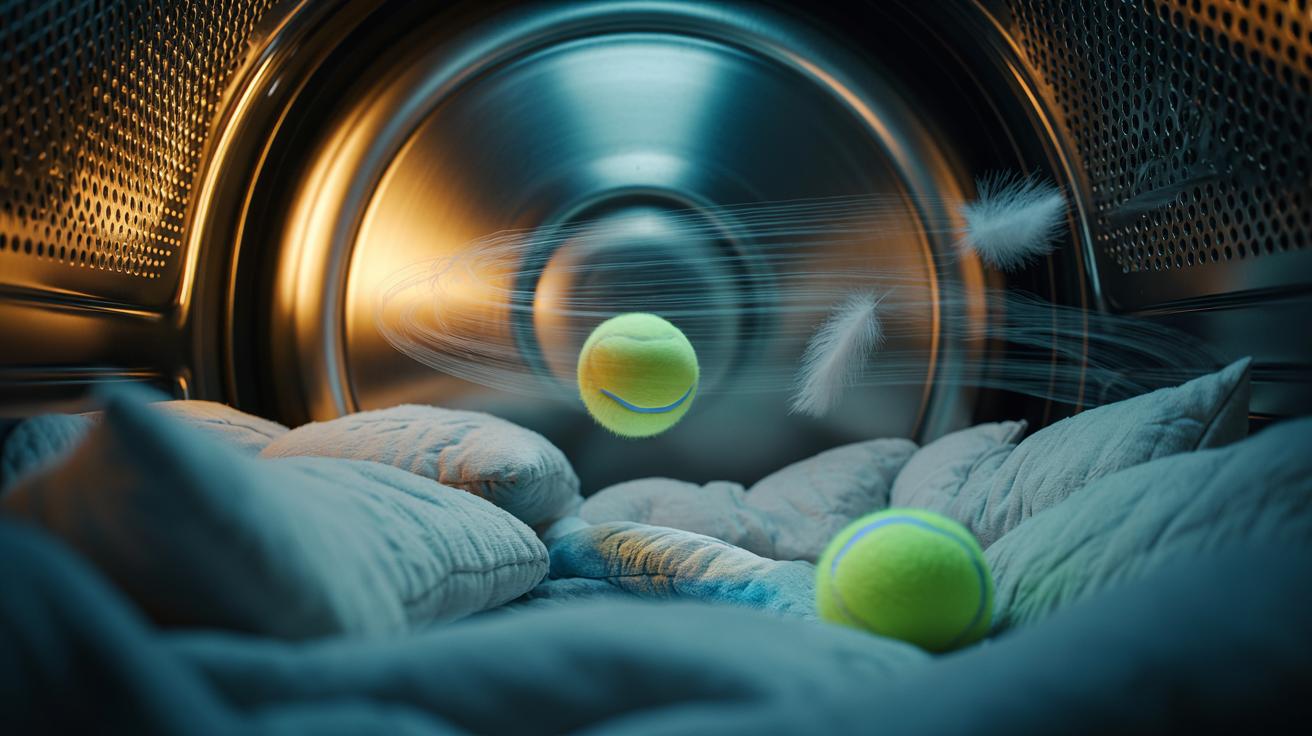
The secret lies in three forces: impact, airflow, and moisture control. As the drum spins, a tennis ball delivers frequent, elastic taps that shear apart fibre clusters. Those clusters are often glued by a thin film of water and residual detergent. The ball’s bounce injects short, sharp energy that disrupts these capillary bridges, freeing down plumes or synthetic tufts. Meanwhile, the ball keeps pillows from plastering to the drum wall, opening space for warm air to circulate. That circulating air dries the newly separated fibres faster, restoring loft and softness.
Think of it as a miniature combine harvester for your bedding: the ball threshes, the dryer aerates. With down, the effect is pronounced because delicate barbs tangle and mat when damp. With high-loft polyester, the ball prevents hot spots and helps the fill redistribute evenly between baffles. Impact plus moving air unglues moisture-bonded fibres quickly and safely when heat is kept sensible. The result is even, resilient puff without scorching or lingering damp.
How to Do It: Step-by-Step Drying Routine
Start with the label. If a pillow is tumble-safe, run a high spin on the washer to remove as much water as possible. Load one or two pillows, leaving ample space for circulation. Add two clean tennis balls—ideally placed inside white cotton socks to reduce noise and prevent dye transfer. Select low heat for down and low-to-medium heat for most synthetics. Dry for 15–20 minutes, pause to break up any stubborn clumps by hand, then resume. This pause-and-pummel rhythm accelerates drying and prevents the shell fabric from over-warming.
Avoid dryer sheets, which can coat down and attract dust. If odour is a concern, a clean towel in the drum helps wick residual moisture. Typical timings: 40–60 minutes for synthetics; 60–90 minutes for down, depending on load and machine. Check repeatedly: the pillow should feel uniformly warm and weightless, with no cool, dense patches. Always dry pillows completely to prevent mould and musty odour. Once dry, fluff and air on a rack for ten minutes to stabilise loft.
Down vs Synthetic: Settings, Noise, and Safety
Different fills demand different handling. Down thrives on gentle heat and frequent agitation; too much heat can make natural oils volatile and shorten lifespan. Synthetic hollowfibre and microfibre tolerate a touch more heat but clump when compressed against the drum. The tennis ball limits that compression. Noise is inevitable; socking the balls softens the racket. Do not tumble foam pillows or those with grain fills (buckwheat, millet)—they can deform or overheat. If colour transfer worries you, use aged, pre-washed balls or purpose-made dryer balls.
| Pillow Type | Heat Setting | Tennis Balls | Typical Time | Notes |
|---|---|---|---|---|
| Down/Feather | Low | 2–3 | 60–90 min | Pause to hand-fluff; avoid dryer sheets. |
| Synthetic (Polyester) | Low–Medium | 2 | 40–60 min | Check for hot spots; break clumps mid-cycle. |
| Memory Foam/Latex | Do not tumble | 0 | — | Air-dry only; tumbling can damage foam. |
If in doubt, err on lower heat and longer time—the ball supplies the mechanical action you need, not the thermostat.
Beyond the Laundry Myth: Science, Myths, and Alternatives
The idea isn’t a gimmick; it’s applied mechanics. That said, there are refinements. New, brightly dyed balls can mark white fabrics; use light-coloured or well-worn ones in socks, or switch to wool or rubber dryer balls. Clean trainers? Best avoided—they’re heavy, irregular, and can batter seams. A lightly damp flannel can add steam to relax fibres at the start, but always finish bone-dry. The bounce also saves energy: by improving airflow and preventing mats, it often shortens total cycle time, especially on efficient heat-pump dryers.
Care extends beyond the dryer. Wash pillows sparingly—spot-clean first—because repeated soaking encourages clumps. Between washes, a weekly ten-minute tumble with two tennis balls on air-only refreshes loft without heat. For allergy sufferers, use encasements and consider hypoallergenic fills that separate more readily. When a pillow stays stubbornly flat even after a ball-assisted dry, the fill has likely fatigued—replacement beats repeated resuscitation. As with all kit, store your balls dry and clean; a quick sudsy wash removes rubbery odours.
The humble tennis ball earns its place in the laundry for one reason: bounce breaks bonds that heat alone cannot. Those light, rhythmic impacts free stuck fibres, the drum supplies moving air, and your pillow regains its loft without scorching. The method is cheap, fast, and easy to repeat between washes. With sensible heat and a couple of well-socked balls, even rain-soaked bedding can dry fluffy, evenly, and on time. Have you tried this technique with different pillow types—and what tweaks, from timing to ball choice, delivered the best results in your home?
Did you like it?4.5/5 (22)