In a nutshell
- 🧼 Understand the culprits: tackle soap scum and limescale with targeted cleaners (vinegar or citric acid), avoid abrasives that scratch and make build-up worse.
- 💧 Build daily habits: cool rinse, quick squeegee, run the extractor fan 15–20 minutes, and use a microfibre cloth to prevent residue setting.
- 🧪 Use smart, gentle solutions: follow simple mix ratios, give cleaners contact time, and never mix vinegar with bleach; let chemistry do the work, not elbow grease.
- 🛡️ Add protection: apply hydrophobic coatings every 6–12 months and consider an inline filter or water softener to cut hard-water marks.
- 🌬️ Improve environment and design: boost ventilation, fix drips, prefer frameless enclosures, and keep tools handy—small tweaks deliver big, scrub-free clarity.
Your shower glass doesn’t have to be a battleground. It can stay crystal clear without you spending every Saturday morning scrubbing till your arms ache. The trick lies in prevention, clever routines, and choosing products that do the heavy lifting while you get on with your life. Hard water across much of the UK leaves limescale, soap leaves scum, and humidity glues both to glass. Tackle those three and you win. Small habits. Smarter chemistry. Subtle design tweaks. Daily 30-second routines beat weekly 30-minute scrubs. With the right setup, you’ll keep that showroom shine and protect seals and hardware, too, which saves money over the year.
Understand the Enemies: Soap Scum and Limescale
Two culprits make glass go cloudy. Soap scum forms when soap’s fatty acids bind to minerals and cling to surfaces, trapping dirt and body oils in a waxy film. Limescale is mineral residue, mostly calcium carbonate, left as hard water evaporates. They reinforce each other: scale creates a rough substrate; scum sticks better; clarity vanishes. The UK’s water map shows many regions rated hard or very hard, so your glass is under daily assault. Knowing what’s on the glass tells you how to get it off—safely.
Acidic cleaners like diluted white vinegar or citric acid dissolve limescale. Mild surfactants lift scum. Abrasives seem quick, but they microscratch glass and coatings, inviting faster build-up. Heat matters, too. Hot showers accelerate mineral deposition as steam condenses. So think chemistry, not elbow grease. Choose agents that match the mess, give them contact time, and wipe before residues dry into place. Gentle, targeted cleaning protects the glass long-term.
Daily Habits That Save You Hours
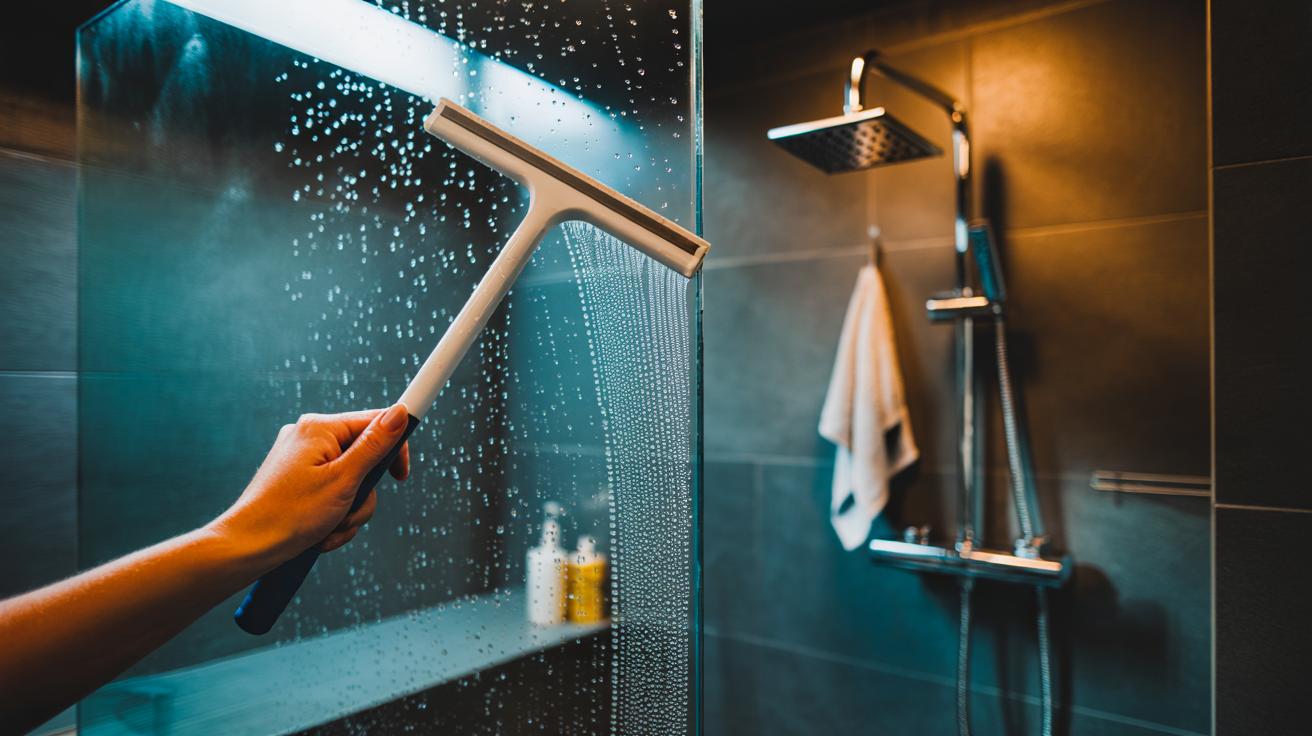
Make the end of each shower your maintenance window. It’s short. It’s effective. First, turn the dial briefly to cold and rinse the panels; cooler water reduces spotting as it dries. Next, use a squeegee from top to bottom. Thirty seconds is enough. Finally, crack the door and run the extractor fan for 15–20 minutes to lower humidity. Moisture control is half the battle. These three moves deny residue a chance to set, so tomorrow’s shower starts clean.
Keep a microfibre cloth hanging inside the enclosure and a small spray with a no-rinse, pH-neutral daily cleaner. Two spritzes on heavy-use zones, wipe, done. Swap bar soap for liquid body wash; fewer insoluble fats means less scum. Shave outside the cubicle. Rinse razors in the basin, not on the glass. Tiny decisions add up across a week. The less that touches the glass, the less you’ll ever need to scrub. Consistency beats intensity, every time.
Smart Products and DIY Solutions
Reserve strong chemistry for when it’s needed. For routine descaling, mix white vinegar 1:1 with warm water, spray generously, and leave for 5–10 minutes before wiping. Prefer a gentler smell? Use citric acid at 1 tablespoon per 500 ml. For scum, combine a drop of mild dish soap with warm water to cut oils without damaging seals. Add isopropyl alcohol (up to 10%) to speed drying and reduce streaks. Never mix vinegar with bleach—dangerous chlorine gas can form. Always test on a hidden corner, especially with coated glass.
Avoid abrasive powders and rough pads. They scratch and create haze that traps dirt. Soft tools win: microfibre, silicone-blade squeegees, non-scratch sponges. If your water is extremely hard, a monthly citric-acid soak of fittings helps prevent “drip trails” that run onto panels. Time the cleaner, not your biceps: give solutions the minutes they need, then wipe once, rinse, squeegee, and walk away. Let chemistry do the chore, not your shoulders.
| Solution | Mix Ratio | Target | Contact Time | Caution |
|---|---|---|---|---|
| White vinegar | 1:1 with water | Limescale | 5–10 mins | Don’t use with bleach; rinse metal trims |
| Citric acid | 1 tbsp/500 ml | Limescale, mild | 10–15 mins | Gentler smell; still acidic |
| Dish soap | 1 tsp/500 ml | Soap scum, oils | 2–3 mins | Rinse thoroughly for shine |
| IPA + water | 10% IPA | Streak reduction | None | Ventilate; flammable |
| Daily spray | Ready-made | Prevention | No rinse | Check coating compatibility |
Protective Coatings and Water Conditioning
Factory-applied or aftermarket hydrophobic coatings make water bead and roll off, taking minerals with it. That means fewer marks, faster drying, easier cleaning. Choose a bathroom-safe nano-coating rather than car waxes, which can yellow or become slippery. Apply to clean, dry glass, then cure per instructions. Reapply every 6–12 months, or when water stops sheeting. Coatings are not a cure-all, but they shift the routine firmly towards prevention. Always check your enclosure warranty before DIY treatments.
If you live in a hard-water area, consider an inline filter for the showerhead or a whole-house water softener. Softening reduces scale on glass and protects heating elements, taps, tiles, even laundry. Upfront cost, long-term payoff. Where softeners aren’t an option, a low-cost hack helps: finish each shower with a 10–20 second cold rinse; cooler water holds fewer minerals and slows evaporation marks. Combined with a squeegee, the effect is noticeable within days.
Ventilation, Temperature, and Design Tweaks
Humidity sets the stage for spots and streaks. Run a quiet, efficient extractor fan rated for your room size; look for a model with a humidity sensor so it doesn’t rely on memory. Keep the shower door ajar after use. Wipe door seals and tracks weekly to prevent biofilm that migrates onto glass. Fix dripping showerheads; those slow beads dry into vertical mineral lines that are stubborn to remove. Airflow is as important as cleaning.
Design choices help too. A frameless enclosure has fewer ledges where water sits, meaning fewer deposits. Install a small hook for your squeegee where you can reach it before stepping out—if it’s visible, you’ll use it. Replace squeegee blades every few months to avoid chatter marks. Prefer synthetic body wash over bar soap, and consider a water-saving showerhead that produces larger droplets; they run off faster and leave less mist on the glass. Small tweaks. Big difference.
Keep your shower glass clear by stacking the odds: smart chemistry, tiny daily habits, and a space that dries quickly on its own. Invest in a hydrophobic coating if you can, keep a squeegee to hand, and choose cleaners that match the mess rather than blasting everything with harsh abrasives. Five minutes of prevention each day beats a weekend of scrubbing. Your glass will gleam longer, your bathroom will smell fresher, and cleaning will shrink to a footnote. Which change will you try first—habits, products, or a design tweak you can fit this weekend?
Did you like it?4.5/5 (25)