In a nutshell
- 🧪 The science: acetic acid in vinegar reacts with calcium carbonate limescale, forming soluble salts and CO₂, enabling a streak‑free finish.
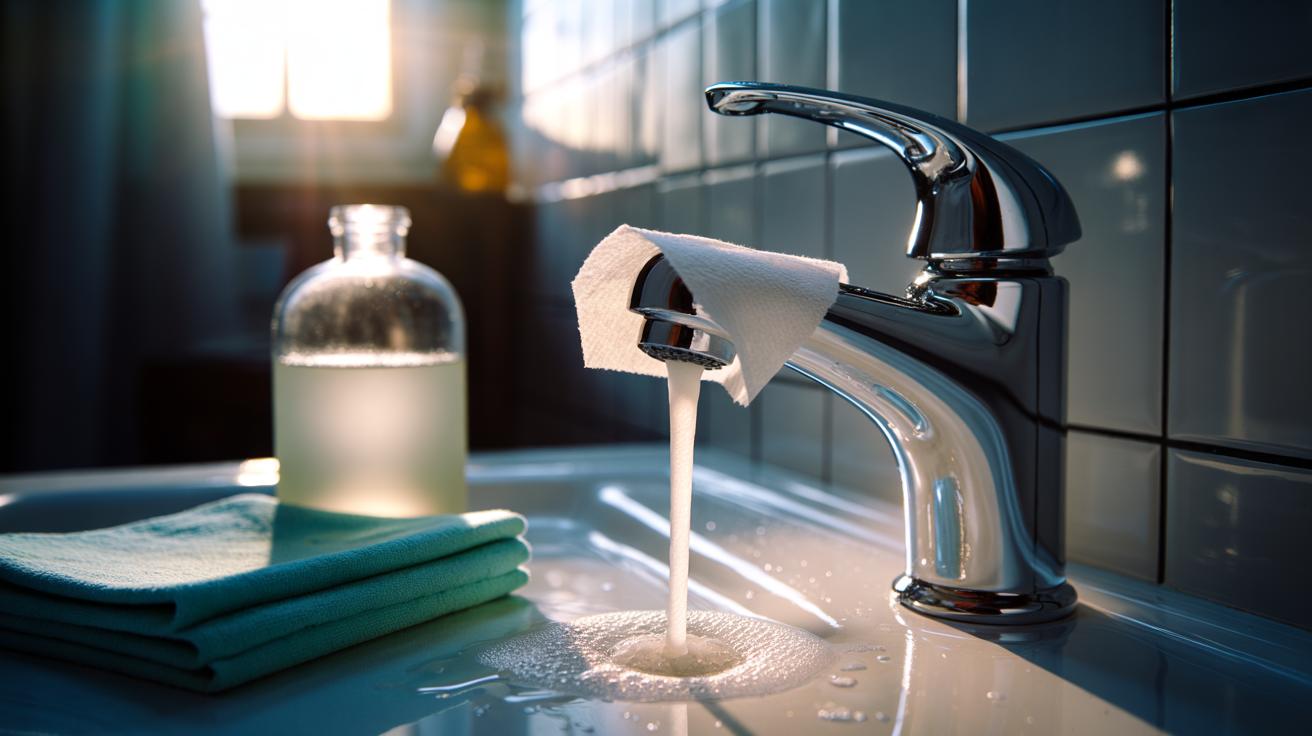
- 🧻 Method: soak a paper towel in white vinegar, wrap the tap 15–45 minutes (longer for heavy scale), then rinse, dry, and buff with microfibre.
- ✨ Results: the wrap ensures consistent dwell time and coverage, lifting deposits uniformly and preventing smears and haze.
- ⚠️ Safety & surfaces: suitable for chrome, stainless, enamel; avoid natural stone and delicate coatings; never mix vinegar with bleach.
- 🔁 Alternatives & prevention: use citric acid for sensitive finishes; repeat short soaks for severe build-up; wipe taps dry and consider softening to curb future scale.
Britain’s hard water leaves a stubborn calling card on bathroom fittings: chalky, grey-white limescale that dulls the sparkle and invites streaks. A humble pairing—white vinegar and a paper towel—cuts through that buildup with quiet efficiency, delivering a gleam that rivals pro cleaners at a fraction of the cost. The secret lies in acidity, contact time, and capillary cling. By soaking a towel in vinegar and wrapping it around your tap, you hold the solution in place long enough to dissolve the mineral crust. Used correctly, this low-tech method leaves chrome, stainless, and enamel shining, without smears or residue. Here’s how it works and how to get it right.
Why Vinegar and Paper Towel Work
The chalky deposits that crust over taps are primarily calcium carbonate, a mineral precipitated from hard water. Acetic acid in vinegar reacts with this carbonate, forming soluble calcium acetate, water, and harmless carbon dioxide. That fizz you sometimes hear is the gas escaping as the crust dissolves from the inside out. The challenge is keeping the acid where it needs to be for long enough. Enter the paper towel: it acts like a wick, hugging curves and threads, preventing evaporation and ensuring continuous contact with the scale.
Where sprays bead and run off, a soaked wrap provides consistent coverage, even on awkward joints at the base of the tap or around the aerator. The result is a uniform lift rather than patchy spots that cause streaks. Consistent dwell time equals consistent shine. Finish by rinsing away the dissolved salts and buffing the metal, and the surface reflects light cleanly instead of scattering it through microscopic residue.
Step-by-Step Method for Streak-Free Taps
– Turn off the water and dry the tap. Unscrew the aerator if possible to access hidden scale. Soak a paper towel in distilled white vinegar (5–8% acetic acid). Wrap the tap and base snugly. For heavy deposits, preheat the vinegar to lukewarm to improve wetting. Leave for 15–30 minutes in moderately hard areas; up to 45–60 minutes for very hard water regions in the South and East of England. Always spot-test on an inconspicuous area first if you’re unsure about the finish.
Remove the wrap and scrub gently with a soft brush or non-scratch pad. Rinse thoroughly with warm water to remove loosened residues. Dry immediately with a soft microfibre cloth, then buff using a second, dry cloth for that streak-free gleam. If light haze persists, a final wipe with diluted isopropyl alcohol or glass cleaner removes any remaining film. Refit the aerator, flush briefly, and admire the restored sparkle.
Chemistry in the Bathroom: Acid Meets Limescale
At its core, this is a classic acid–carbonate reaction. Acetic acid donates protons to calcium carbonate, breaking the solid matrix and producing soluble calcium acetate. As bonds reorganise, microscopic voids form and the crust weakens, which is why gentle brushing right after the wrap is so effective. The paper towel’s capillaries keep fresh acid diffusing into the scale while preventing rapid evaporation, so the chemistry runs to completion rather than stalling on the surface.
Mind the materials. Chrome, stainless steel, and vitreous enamel tolerate household vinegar well, but lacquered brass, natural stone (marble, limestone), and unlacquered nickel can etch. Never mix vinegar with bleach: acetic acid can release toxic chlorine gas from hypochlorite cleaners. Wear gloves if you have sensitive skin, ventilate the bathroom, and rinse thoroughly. Avoid abrasive pads that mar polished finishes; the shine you’re after is a smooth surface free of both scale and micro-scratches that catch the light.
When to Choose Alternatives and Pro Tips
For taps with delicate coatings or heritage fittings, a milder acid like citric acid (from lemon or as a powder solution) is often gentler while still effective. On severe buildup, repeat short wraps rather than one long soak to protect finishes. Use a soft-bristle toothbrush around the base and an old floss threader to clear aerator threads. Prevention beats cure: wipe taps dry after showers and consider a water softener or inline filter in very hard-water postcodes.
Choose the right strength and contact time from the guide below, then finish with a microfibre buff to banish streaks. If you prefer a commercial option, look for descalers listing acids such as citric, lactic, or formic, and follow label directions precisely.
| Acid/Product | Acetic/Citric % | Typical Contact Time | Best For | Avoid On |
|---|---|---|---|---|
| White vinegar | 5–8% acetic | 15–45 mins | Chrome, stainless, enamel | Natural stone, bare nickel |
| Cleaning vinegar | 6–10% acetic | 10–30 mins | Stubborn scale on hard-wearing finishes | Lacquered/brushed coatings |
| Citric acid solution | 5–10% citric | 20–60 mins | Gentler descaling, sensitive finishes | Freshly plated brass |
| Commercial descaler | Varies | As directed | Heavy, aged deposits | Unspecified or delicate surfaces |
The vinegar-and-paper-towel method wins because it is targeted, cheap, and chemically sound, using acidity and dwell time to dissolve limescale, then finishing with a careful rinse and buff to eliminate streaks. It’s a small habit that keeps taps brilliant and bathrooms feeling hotel-fresh without harsh fumes or hefty bills. Respect the material and the chemistry, and you’ll get showroom shine in minutes. What’s your toughest tap-cleaning challenge at home, and which approach—vinegar wrap, citric solution, or a pro descaler—are you keen to try next?
Did you like it?4.6/5 (25)