In a nutshell
- 🍋 The cleaning power comes from citric acid loosening residue via low pH and chelation, while peel oils like limonene help wet and lift greasy films.
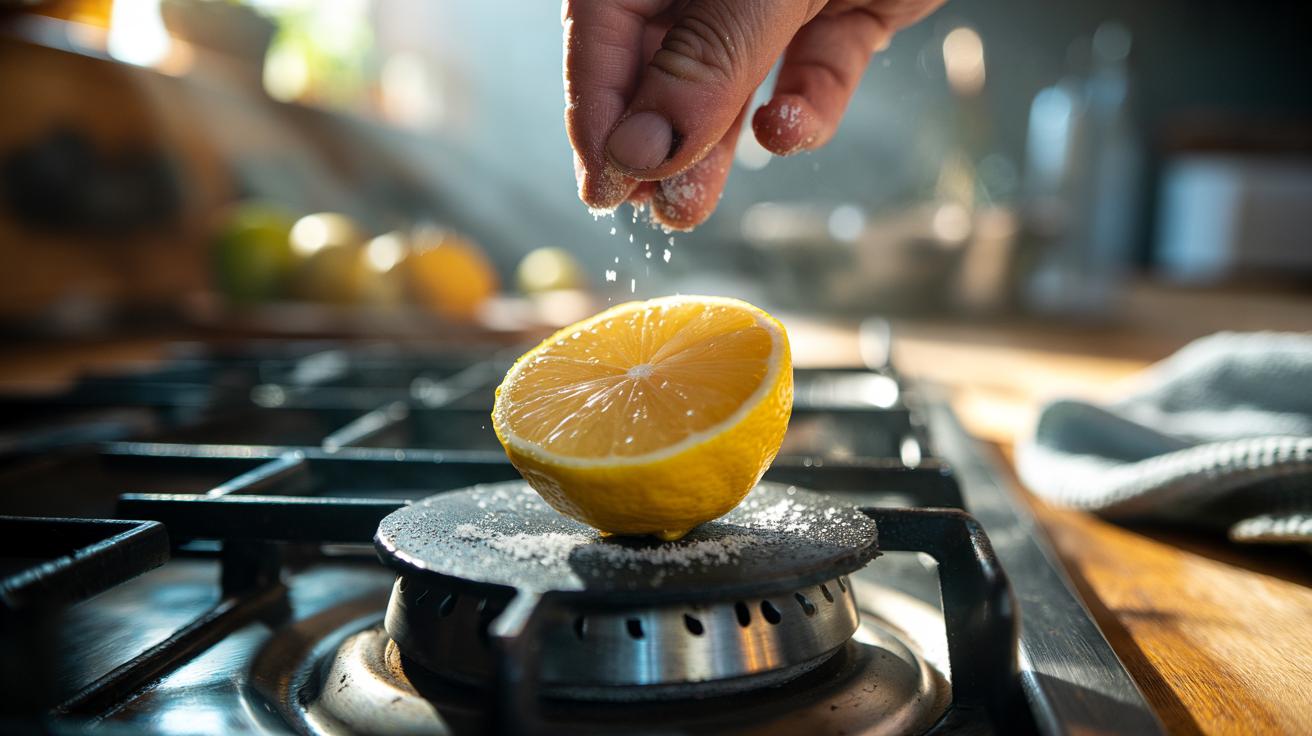
- 🧽 Method: rub a lemon half + coarse salt over cool hob rings, allow a 5–10 minute dwell on stubborn spots, then wipe, rinse, and dry with a microfibre cloth.
- ⚠️ Safety: avoid prolonged acid on aluminium and uncoated cast iron, keep liquids from ignition points, and never mix lemon with bleach.
- ⏱️ Practical wins: quick (often under 15 minutes), low-fume, and effective for everyday grime; salt adds gentle abrasion without scratching most enamel or stainless steel.
- 🌱 Cost and eco: roughly 30–50p per clean, minimal packaging, and compostable leftovers—an eco-friendly alternative to heavy-duty sprays for routine maintenance.
The humble lemon half has a place in every British kitchen, and not only in puddings or G&Ts. Used smartly, it becomes a fast, low-cost cleaner for dull, greasy hob rings and burner caps. The secret lies in the fruit’s natural citric acid, which loosens residues while the peel’s oils boost cutting power and leave a fresh scent. Add a shake of salt, and you have a gentle scourer straight from the pantry. A halved lemon can outshine a shelf of harsh sprays when tackling everyday film and splatter. Here’s how the chemistry works, how to apply it safely, and when lemons aren’t the right tool.
Why Lemon Acid Lifts Grease
Grease on hob rings is rarely pure oil; it’s a stubborn blend of oxidised fats, food sugars, dust, and metallic salts baked by heat. Citric acid tackles this composite grime in several ways. First, its low pH helps disrupt bonds between the deposit and metal, loosening the film so it wipes away more easily. Second, citric acid’s chelation pulls at mineral specks that anchor residue, softening the crust. Meanwhile, lemon peel contains limonene, a light solvent that improves the wetting of oils, giving your wipe a head start. Acid doesn’t “dissolve” pure oil on its own; it weakens the grime matrix so mechanical action can remove it cleanly.
Importantly, the lemon’s liquid carries loosened particles into your cloth rather than smearing them. A pinch of salt increases traction, acting as a fine abrasive that won’t gouge most enamel or stainless. Warmth also helps: if the hob is safely lukewarm (never hot), viscous fats relax and respond more readily to the acid-and-oil combo. The result is a subtle but effective one-two—chemical softening plus controlled scrubbing—without strong fumes or synthetic fragrances. For baked-on rings of brown, a second pass is often enough.
How to Clean Hob Rings with a Lemon Half
Begin with a cool appliance. Remove loose hob rings, burner caps, and trivets if your model allows. Wipe away crumbs to avoid scratching. Halve a fresh lemon and squeeze lightly to wet the cut face; sprinkle a little coarse salt onto the juicy surface. Press and rub the lemon across the metal in small circles, refreshing juice and salt as needed. For awkward edges, use the lemon’s point and rotate the fruit for a clean, grippy edge. Let the acid sit for 5–10 minutes on stubborn patches, then agitate again.
Rinse or wipe thoroughly with a warm, damp cloth, then dry to prevent water marks. A drop of washing-up liquid on your cloth after the lemon pass helps lift any remaining oily sheen. If you’re cleaning removable parts, you can rinse under the tap, then dry fully before reassembly. Finish with a quick buff using a microfibre cloth to revive the shine. Avoid soaking gas components; apply liquid purposefully and keep ignition points dry.
| Step | Tool | Contact Time | Purpose |
|---|---|---|---|
| Pre-wipe | Damp cloth | — | Remove loose crumbs |
| Lemon scrub | Lemon half + coarse salt | 1–2 minutes | Loosen and abrade film |
| Dwell | Lemon juice | 5–10 minutes | Soften baked-on residue |
| Wipe and dry | Warm cloth + microfibre | — | Lift residue, restore shine |
Safety, Materials, and When to Avoid Lemon
Most enamel and stainless-steel rings tolerate citrus well, but some finishes demand care. Avoid prolonged acid contact on bare aluminium and uncoated cast iron, which can darken or pit. If your burner caps are seasoned cast iron, stick to a light, brief wipe and dry immediately, or choose a neutral cleaner. Natural stone splashbacks near the hob—marble or limestone—are also sensitive; wipe any stray juice at once. Always spot-test on an inconspicuous area before committing to a full clean.
Mind your mixtures: never mix lemon with bleach (risk of toxic chlorine gas) and avoid pairing with strong alkaline powders at the same time—neutralisation reduces effectiveness. If you like a little fizz, apply lemon first, wipe, then follow with a tiny amount of washing-up liquid rather than bicarbonate. Keep liquids away from ignition points and electrical controls. Finally, dry metal thoroughly to prevent flash rust on worn spots or screws, and ensure all parts are fully dry before relighting a gas hob.
Cost, Time, and Eco Credentials
For everyday maintenance, a single lemon—around 30–50p—can refresh several hob rings and caps, often in under 15 minutes. Compared with branded degreasers, you cut packaging waste and avoid strong synthetic scents. The peel’s limonene offers natural deodorising, while citric acid takes on mineral smears that make grease cling. It’s a low-energy, low-tox approach that turns a perishable into a practical tool before composting.
There are trade-offs: lemons are perishable and imported seasonally, so keep them for light-to-moderate grime and combine with a drop of washing-up liquid where needed. For heavy carbon build-up, consider an occasional, targeted cleaner designed for your surface to avoid aggressive scrubbing. Use reusable cloths, ventilate the kitchen, and store remaining lemon (wrapped) for tomorrow’s touch-ups. The routine is simple: small, regular cleans trump infrequent deep scrubs—less effort, better shine, and fewer chemicals down the drain.
Used thoughtfully, a lemon half is more than a thrift tip: it’s a practical application of gentle chemistry that restores hob rings without the pungent cloud of heavy-duty sprays. With a pinch of salt and a few minutes of dwell time, citric acid and natural oils loosen the grime so you can wipe back to a clean, bright surface. Are you ready to give your hob rings a citrus reset this week—or will you try a side-by-side test to see how the lemon stacks up against your usual cleaner?
Did you like it?4.3/5 (24)