In a nutshell
- 🍋 Lemon juice’s citric acid reacts with limescale on contact, fizzing as CO₂ and forming soluble calcium citrate, which rinses away for instant brightness.
- 🔬 Twofold action: proton donation dissolves calcium carbonate, while chelation keeps freed calcium in solution; typical lemon pH ~2–3 speeds visible results.
- 🧰 Practical method: press a halved lemon onto deposits, allow dwell time of 5–20 minutes, soak aerators separately, then rinse and buff; don’t neutralise with bicarbonate.
- 🛡️ Safety and surfaces: brief contact is usually safe for chrome and stainless; avoid acids on marble/limestone and unsealed brass; never mix with bleach.
- 🔄 Smarter alternatives: a 5–10% citric acid solution for heavier scale, white vinegar for routine use, or targeted commercial descalers for severe build-up.
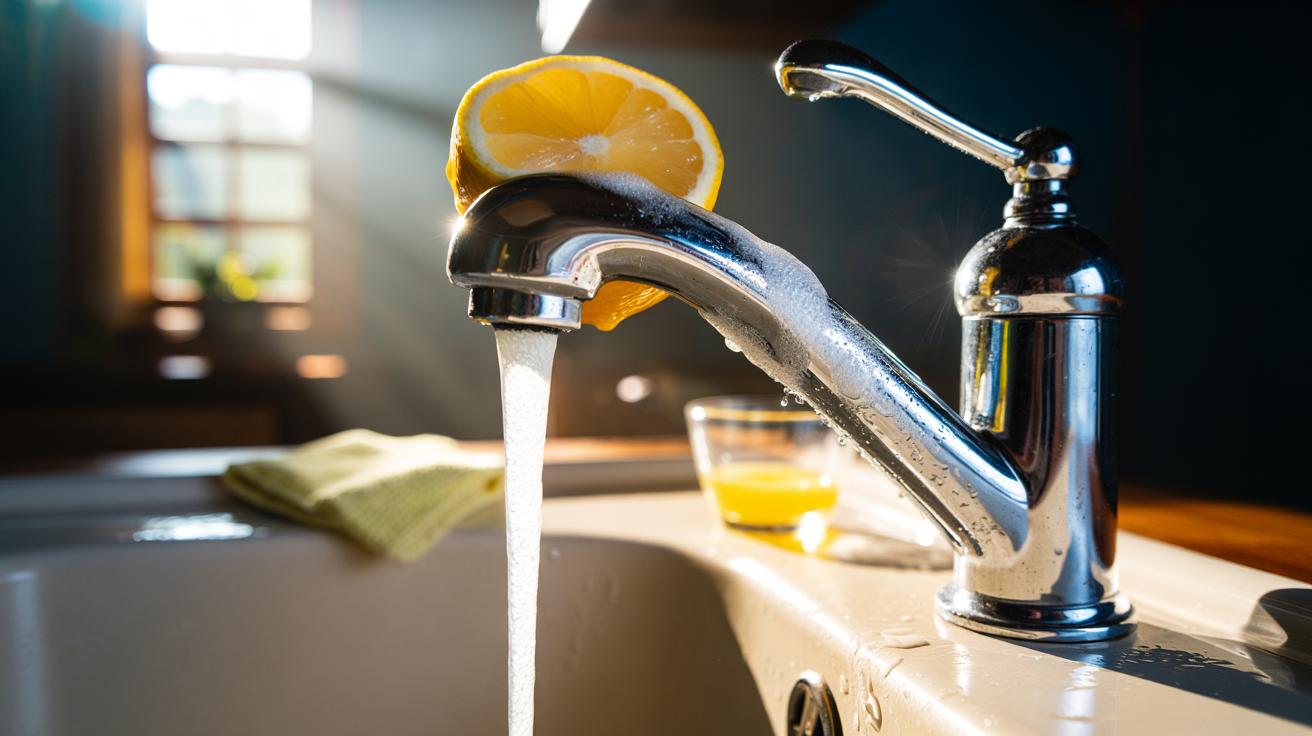
Hard-water halos around shiny chrome are a familiar nuisance in British bathrooms and kitchens. The culprit is limescale, a chalky crust that dulls taps, clogs aerators, and turns a glinting finish flat. Reach for a lemon and the revival feels immediate: fizz, brightness, and a clean glide under the cloth. That instant lift is not magic but chemistry. Lemon juice’s citric acid reacts with the mineral deposits that cling to metal, breaking them apart and washing them away. Because the reaction begins the second the acid touches the scale, the improvement looks dramatic on contact. Here’s why this everyday fruit works, how to use it, and when to choose something stronger.
Why Limescale Grips Your Taps
Many UK regions draw from hard aquifers rich in calcium and magnesium. When heated or left to evaporate on a surface, dissolved minerals precipitate as calcium carbonate, forming that stubborn white film. This crust grows layer by layer, creating a micro-rough texture that traps droplets and attracts soap residues, so the dullness compounds. On tap spouts and around bases, water sits longer, so deposits thicken fastest there. Over time, this build-up narrows aerators and disrupts flow patterns, making taps splashy or uneven.
Left alone, limescale hardens and becomes resistant to simple wiping. Mechanical scrubbing risks scratching plated finishes, especially on older fittings. To lift mineral deposits without damage, you need chemistry that dissolves them rather than abrades them. That is where mild acids excel: they convert insoluble carbonate into soluble salts and carbon dioxide, loosening the crust from the metal beneath. With the right acid and a short dwell time, the shine returns and the surface feels slick again.
How Citric Acid Breaks It Down
Citric acid, abundant in lemon juice, has two superpowers: it donates protons and acts as a chelating agent. The first role drives the classic acid–carbonate reaction. When citric acid meets calcium carbonate, it releases carbon dioxide bubbles and water, while forming calcium citrate, which is far more soluble and can be rinsed away. That fizz you see is visual proof the chemistry is working at the surface. Because the reaction starts instantly, lemon juice can appear to “melt” scale on contact, especially on thin films.
The second role, chelation, keeps freed calcium ions in solution so they don’t redeposit as the surface dries. Lemon juice typically sits around pH 2–3, acidic enough to attack scale but gentle on common tap finishes when used briefly. Warmer juice and light pressure improve speed by helping the acid reach pores in the crust. Dwell time matters: a few minutes for film, up to 20 minutes for crusts. Then rinse thoroughly to neutralise residual acidity.
Practical Steps: The Lemon Method That Works
Start with a fresh lemon, cut in half. For rims and spouts, press the cut face directly onto the deposit and twist, letting the pulp act like a sponge. Re-squeeze to refresh the citric acid and leave it to sit for 5–10 minutes for light haze, 15–20 for visible scale. On vertical areas, secure the half-lemon with a reusable elastic or hold it by hand. For aerators, unscrew and soak them in a small dish of lemon juice; you’ll see tiny bubbles as scale breaks down.
Wipe with a soft microfibre cloth, using a cotton bud for tight creases. Rinse generously with clean water and buff dry to prevent new spots. Do not mix lemon juice with bicarbonate of soda while descaling—bubbles look busy but neutralise the acid you need. If traces remain, repeat once rather than scrubbing with anything abrasive. A weekly 60-second wipe with diluted lemon juice helps stop fresh deposits taking hold and keeps the finish bright with minimal effort.
Surfaces, Safety, and Smarter Alternatives
Lemon juice is friendly to most chrome, stainless steel, and modern plated finishes when contact is brief. Avoid prolonged exposure on unsealed brass, nickel silver, or pitted plating, where acids may darken the metal. Never use lemon juice on natural stone such as marble or limestone—acids etch those surfaces permanently. Keep acids away from grout that’s already crumbling and from rubber gaskets for long soaks. Always test on a hidden spot first, and rinse thoroughly so no acidity lingers around seals.
For heavy build-up, powdered citric acid dissolved to 5–10% offers more predictable strength. White vinegar (acetic acid) also works but smells sharper and can be slower on thick carbonate. Commercial descalers often use sulphamic or formic acid for speed; keep them for severe cases and follow labels carefully. Never mix acids with bleach or chlorine-based cleaners—dangerous gases can form. The guide below shows typical performance and considerations.
| Option | Main Acid | Typical pH | Contact Time (Light Scale) | Chrome Safe | Notes |
|---|---|---|---|---|---|
| Lemon juice | Citric acid | ~2–3 | 5–10 min | Yes, brief | Natural scent; works on contact; rinse well |
| Citric acid solution | Citric acid (5–10%) | ~1.8–2.2 | 5–15 min | Yes, brief | Reliable strength; good for soaking aerators |
| White vinegar | Acetic acid (~5%) | ~2.4–2.6 | 10–20 min | Yes, brief | Effective but whiffy; may need longer |
| Commercial descaler | Sulphamic/Formic | ~1–2 | 3–10 min | Check label | Fast; reserve for severe deposits |
Lemon juice proves that a household staple can outsmart hard water. The acid–carbonate reaction and light chelation explain the eye-catching “on contact” clean, while smart technique prevents damage: controlled dwell time, soft cloths, and thorough rinsing. In a country where hard water is routine, a lemon can be a weekly ally—and a greener choice than harsh chemicals for day-to-day shine. Used thoughtfully, it restores brightness without abrasion or drama. Will you try the lemon method on your dull taps this week, or will a tailored citric acid soak become your go-to for keeping limescale at bay?
Did you like it?4.4/5 (24)