In a nutshell
- 🧪 Acetic acid in a simple vinegar wipe disrupts sticky residues binding grease; allow a 1–3 minute dwell time, use warmth and microfibre, and avoid neutralising mixes with bicarbonate.
- 🌿 Health and environmental upside: low VOCs, fewer irritants, septic-safe, less packaging waste, and quick evaporation that supports better indoor air quality.
- ✅ Where it wins: sealed worktops, stainless, glass, glazed tiles, and extractor-hood films; try a 1:1 vinegar–warm water mist with an optional drop of washing-up liquid for tougher smears.
- ⚠️ Limits: avoid natural stone, waxed or unfinished wood, seasoned cast iron, and delicate screen coatings; vinegar isn’t a reliable disinfectant—and never mix with bleach.
- 💷 Cost-speed edge: cheaper (~£0.50–£1/L), minimal residue and streaks, fast clarity; keep a specialist cleaner for baked-on carbon or stringent sanitising tasks.
The humble vinegar wipe has quietly become the go-to for cooks, cleaners, and lab-savvy home economists across the UK. It cuts through stovetop films, splashback smears, and extractor-hood tack within minutes, without the nose-prickling fumes of solvent-heavy sprays. Leaning on household acetic acid at around 5% strength, this old-school remedy offers speed, safety, and simplicity. For everyday grease, a warm cloth and vinegar often outperform pricier options because you can leave it to dwell, wipe once, and rinse lightly. Experts increasingly prefer it not only for results but for indoor air quality, budget, and waste reduction. Here’s why it earns their trust—and where it has limits.
Why Acetic Acid Breaks Down Grease Quickly
Grease clings because it’s hydrophobic and often bound to a sticky matrix of browned sugars, proteins, and mineral residues. Household vinegar’s acidity helps disrupt that matrix, loosening the film so fats release into the wipe water. It doesn’t behave like a detergent, but it reduces residues that “anchor” oil to steel, enamel, and ceramic. Warmth amplifies the effect: a slightly heated surface or a hot, wrung-out cloth improves fluidity, helping vinegar lift the grime. Give it a short dwell time—two to three minutes—before wiping; the chemistry needs contact to work. On fresh splatters, this contact can be seconds. On oxidised, sticky films, two passes usually suffice.
There is another quiet advantage: compatibility. Vinegar works with plain water and microfibre, and a single drop of washing-up liquid can supply surfactants for stubborn patches. Do not rely on fizzing “science fair” mixes of bicarbonate and vinegar for degreasing; the reaction neutralises cleaning power. Instead, use vinegar solo for the break-down phase, then rinse. This straightforward method avoids residues that can attract new grime and minimises the elbow grease required on glass, stainless steel, and glazed tiles.
Health and Environmental Upside of a Vinegar Wipe
Professionals increasingly prioritise indoor air quality. Many heavy-duty degreasers rely on solvents, quaternary ammonium compounds, or strong alkalines that can irritate lungs and skin. Vinegar, by contrast, offers low-VOC cleaning with a familiar food-grade profile. In small kitchens, that means less sting to the nose and fewer lingering odours. Allergy advisers also appreciate the simpler ingredient list, which reduces exposure to sensitising additives, dyes, and perfumes. For parents, pet owners, or anyone with asthma, the switch can be an immediate comfort—especially on frequently handled surfaces like fridge doors and cupboard pulls.
There’s a footprint story too. A litre of supermarket white vinegar is cheap, widely available, and effective at low doses, which cuts packaging and cupboard clutter. It’s septic-safe, avoids persistent biocides, and rinses clean. Pairing vinegar with a washable microfibre cloth reduces disposable wipes and paper towel use without sacrificing speed. Because it evaporates quickly and leaves minimal film, you can clean and cook again without the chemical aftertaste. For many households, that blend of safety, sustainability, and practicality is decisive.
When Vinegar Wins—and When It Doesn’t
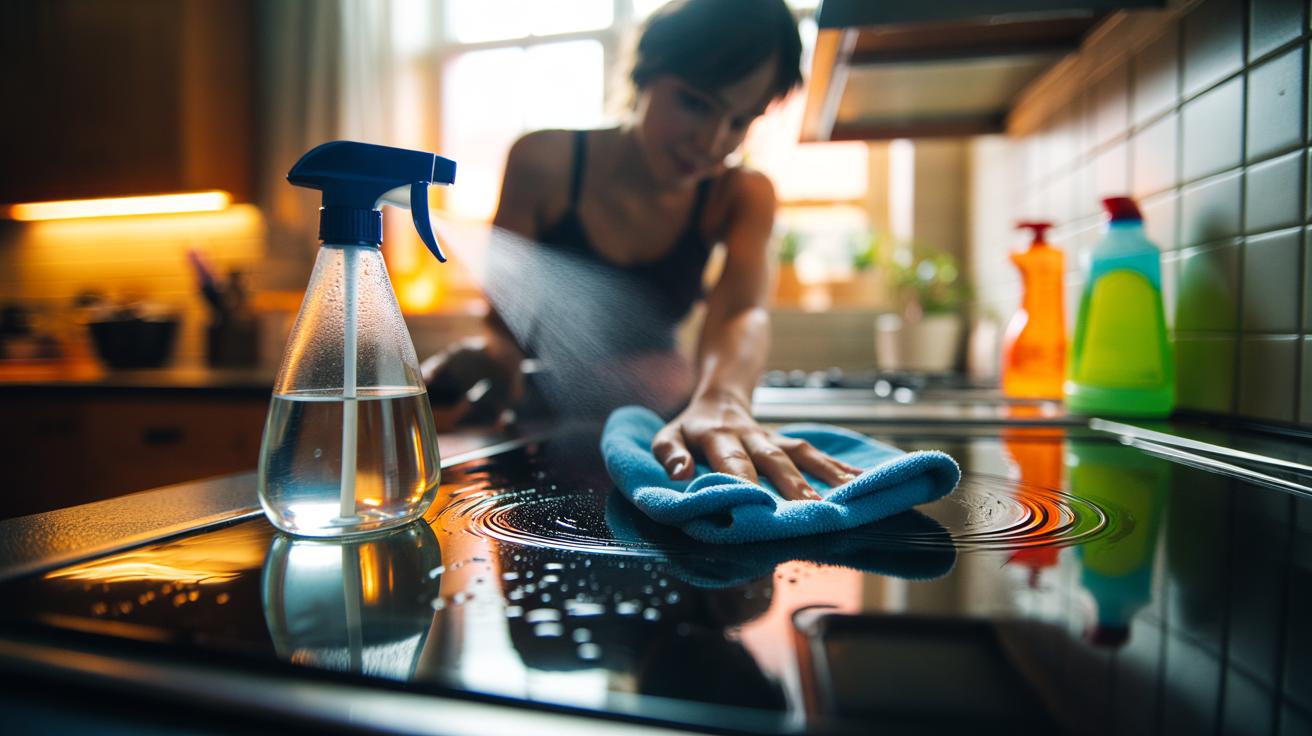
Use vinegar on sealed worktops, glazed tiles, ceramic hobs, stainless splashbacks, and glass oven doors. It excels at post-fry films, extractor-hood residues, and sticky fingerprints. For best results, mist a 1:1 mix of vinegar and warm water, wait a minute, then wipe with firm pressure; finish with a rinse or a dry buff. A tiny drop of washing-up liquid in the mix boosts performance on stubborn smears. On ovens with baked-on polymerised grease, plan two cycles: soften with warm vinegar, scrape with a plastic blade, then re-wipe.
There are no-go zones. Do not use vinegar on natural stone—marble, limestone, and many granites can etch. Avoid waxed or unfinished wood, cast-iron seasoning, aluminium with delicate finishes, and phone or TV screens with oleophobic coatings. Vinegar is not a broad-spectrum disinfectant; it reduces some microbes but won’t reliably tackle viruses like norovirus. If sanitising is required after raw meat, use a food-safe disinfectant as directed—never mix with bleach. For dried egg spills or heavy fats, start with warm soapy water; protein coagulates in acid and can grip harder if you begin with vinegar.
Cost, Speed, and Results: A Quick Comparison
Beyond chemistry, experts judge products by time saved, residue left behind, and risk. On those counts, the vinegar wipe often wins. It’s inexpensive, easy to apply with household kit, and quick to rinse. Many stronger formulations need protective gloves, extended ventilation, or multiple passes to remove perfumed films that show as streaks on glass and steel. With vinegar, clarity arrives fast because there’s little to no surfactant scum. On routine cooktop cleaning, that means fewer steps—and less temptation to postpone the chore.
| Feature | Vinegar Wipe | Harsh Degreaser |
|---|---|---|
| Typical dwell time | 1–3 minutes | 30 seconds–5 minutes (per label) |
| Cost (UK, per litre) | ~£0.50–£1.00 | ~£3.00–£5.00 |
| Odour/VOCs | Low, dissipates quickly | Moderate to high; may linger |
| Residue risk | Minimal; easy rinse | Potential film; extra buffing |
| Surface compatibility | Most sealed surfaces; avoid stone | Varies; check label per surface |
| Disinfection | Limited | Often stronger; handle with care |
On everyday grease, the balance of cost, comfort, and clarity tilts toward vinegar. Experts still keep a specialist product on hand for oven carbon or food-safety disinfection, but the default wipe for splashbacks and hobs is increasingly the simple acidic solution.
The verdict is pragmatic: a vinegar wipe delivers fast, repeatable results with little fuss, lighter odour, and fewer caveats than many cabinet staples. Its acetic acid content helps loosen the bonds that make grease stubborn, while its simplicity keeps routines sustainable. Use it where it shines, skip it where chemistry or surface dictates caution, and you’ll clean more often with less effort. For your own kitchen, which surfaces could you switch to vinegar this week—and where would you still reserve a targeted cleaner to get the best of both worlds?
Did you like it?4.6/5 (27)