In a nutshell
- 🌞 Use baking soda to neutralise odours and sunlight to dry and refresh fibres, reducing mustiness without chemicals.
- 🧹 Follow a clear routine: vacuum thoroughly, sieve a light layer of baking soda, let it sit 1–3 hours in sun and airflow, then vacuum again.
- ⚠️ Mind safety: avoid adding water, limit direct sun on memory foam/latex, and wear a mask if dust-sensitive during vacuuming.
- 🌬️ Prioritise ventilation: crack windows for cross-breeze; even winter sun in the UK works if humidity is low.
- 🗓️ Maintain regularly: refresh quarterly (monthly in damp homes), rotate or flip the mattress, and use a breathable protector.
When a mattress starts to smell a bit stale or feel heavy with winter damp, you don’t need fancy sprays or costly services. Two humble allies do the heavy lifting: baking soda and sunlight. Their partnership is quietly powerful, drawing out trapped moisture, neutralising odours, and lifting the sort of household mustiness that builds in British homes sealed against the chill. This method is chemical-free and costs pennies. It also fits around real life. A few hours on a bright day, a vacuum, a box of bicarbonate of soda, and a clear patch by a sunny window. The result? A fresher, drier bed that genuinely smells like nothing at all.
Why Baking Soda and Sunlight Work
Baking soda (sodium bicarbonate) doesn’t just mask smells. It reacts with acidic and basic odour molecules, helping to neutralise them rather than perfume them. It’s mildly alkaline and slightly abrasive, which lets it absorb oils and wick light moisture from the upper fibres of your mattress cover. Think of it as a dry sponge that doubles as a deodoriser. Used dry, it avoids the cardinal sin of mattress care: adding water that can sink inward and feed mould.
Then comes sunlight. Natural light delivers gentle warmth and a dose of UV-A and UV-B that helps reduce surface microbial load while encouraging evaporation. Heat plus moving air lifts damp from the cover and comfort layers. Dust mites hate dry, bright conditions; their numbers dip when humidity drops and fibres warm. Sun plus air circulation is your best free dryer and hygienist. Even in the UK, a few luminous hours through glass make a meaningful difference, especially when windows are cracked for cross-breeze.
There’s a pragmatic bonus: both tools are passive. While baking soda sits and binds odours, sunlight and airflow do the drying. No scrubbing. No fragrances. No residues to irritate skin. Use them together and you create a one-two punch—deodorise, then thoroughly air. It’s simple, low risk, and repeatable, which is exactly what home care should be.
Step-by-Step Refresh Routine
Strip the bed completely and launder linens separately. Fit the upholstery tool to your vacuum and make slow, overlapping passes across the entire surface, including the sides and piping. Pay extra attention to head and foot zones, where sweat and skin flakes collect. Vacuuming first matters—removing grit stops baking soda from caking and lets it contact the fabric properly. If your mattress is double-sided, flip it now; if not, rotate it 180 degrees to expose fresh zones to light and air.
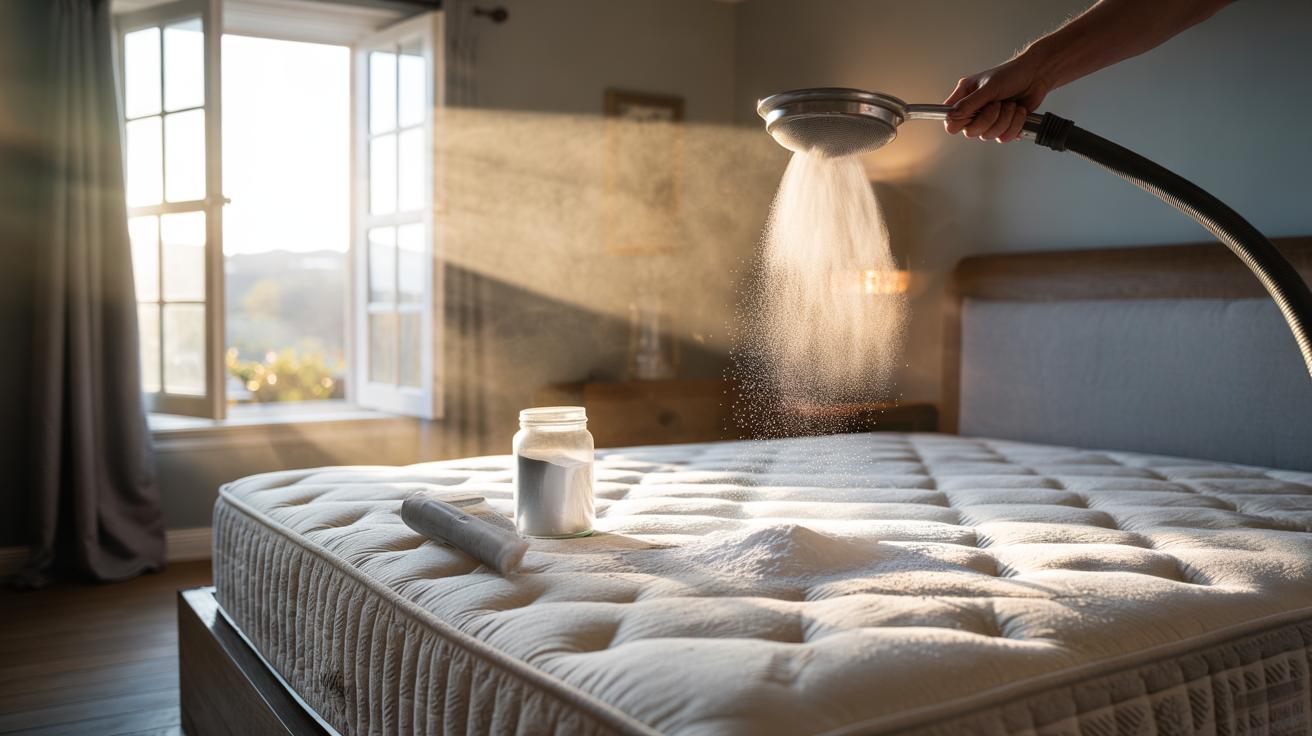
Using a sieve, dust a fine, even layer of baking soda over the surface—enough to whiten it lightly without burying the fabric. For most UK mattresses, 100–250 g is plenty. Gently brush it in with a clean, dry soft brush to distribute into the knit. Leave it to work for 1–3 hours. If the day is bright and dry, position the mattress near a sunny window or balcony door to catch sunlight and a breeze. Never add water—moisture is the enemy of a healthy mattress.
Vacuum thoroughly again, moving slowly to lift all powder from seams and tufts. Rotate or flip and repeat on the other side if accessible. Allow at least 30–60 minutes of airing after vacuuming, windows open if possible, to purge fine dust and humidity. Replace the protector and sheets only when the surface feels crisp and fully dry. Small habit, big pay-off: set a reminder to do this quarterly, monthly if you live in a damp flat or sleep hot.
| Mattress Size | Baking Soda (approx.) | Dwell Time | Ideal Sun Window |
|---|---|---|---|
| Single | 100–150 g | 1–2 hours | 11:00–15:00 |
| Double | 150–200 g | 2–3 hours | 11:00–15:00 |
| King/Super King | 200–250 g | 2–4 hours | 11:00–15:00 |
Safety Notes, Stain Caveats, and Seasonal Timing
Most mattresses welcome light and air, but a few caveats keep things safe. Memory foam and latex don’t love prolonged, intense sun; expose the cover to light but avoid baking the core for hours on end. If your cover is removable, unzip it and sun the fabric while airing the inner core in shade with airflow. When in doubt, prioritise ventilation over heat. Always vacuum slowly afterwards to remove all powder, especially around embroidered logos and handles where residue hides.
Stains are another matter. This routine is designed to refresh, not remove set stains. Resist the urge to dab with water or vinegar—liquid can drift inward and nourish mould. For fresh accidents, blot dry only, apply a light baking soda veil, wait, and vacuum; anything beyond that needs targeted, minimal-moisture treatment or a professional. Allergy sufferers should wear a mask during vacuuming; you’ll stir fine dust before the room clears. Keep pets out until the final clean is done.
Timing is everything. In the UK, pick a crisp, low-humidity day—cold sun in February can outperform a muggy August afternoon. Open windows for cross-ventilation. Aim for the brightest, driest hours to harness UV and airflow. As a rule, refresh quarterly; more often if you sleep with the window closed, have wall insulation that traps humidity, or use heavy duvets. Add a breathable mattress protector and rotate your mattress every two to three months to even wear and keep fibres lively.
With a box of baking soda, a bright window, and a patient afternoon, you can reset your mattress to neutral—no perfume, no damp, just clean, rested fibres. The method is frugal, reliable, and gentle on materials, which means it’s gentle on you as well. Build it into your seasonal clean and your bed will both smell and feel better for longer. When the next sunny spell appears between showers, will you give your mattress a dry spa day and see how much fresher your sleep can be?
Did you like it?4.6/5 (29)