In a nutshell
- 🧪 Newsprint absorbs moisture fast thanks to hydrophilic cellulose fibres and capillary action, drawing damp from leather and linings for even, gentle drying.
- 👞 Stuffing holds shape by providing adjustable mechanical support in the toe box and vamp; use firm-but-not-tight packing to prevent creases without stressing seams.
- ⚖️ Choose the right method: newspaper is the quick “first responder,” cedar shoe trees are best for daily form and storage, while silica gel excels in travel and enclosed spaces.
- 🧼 Safe, practical tips: avoid glossy inserts, guard against ink on pale linings, replace damp paper every 30–90 minutes, keep at room temperature (avoid heat), and brush suede before/after drying.
- 🌍 Low-cost and sustainable: reuse sheets until they lose spring, then recycle; pairing newspaper with shoe trees maximises drying speed, odour control, and long-term shape retention.
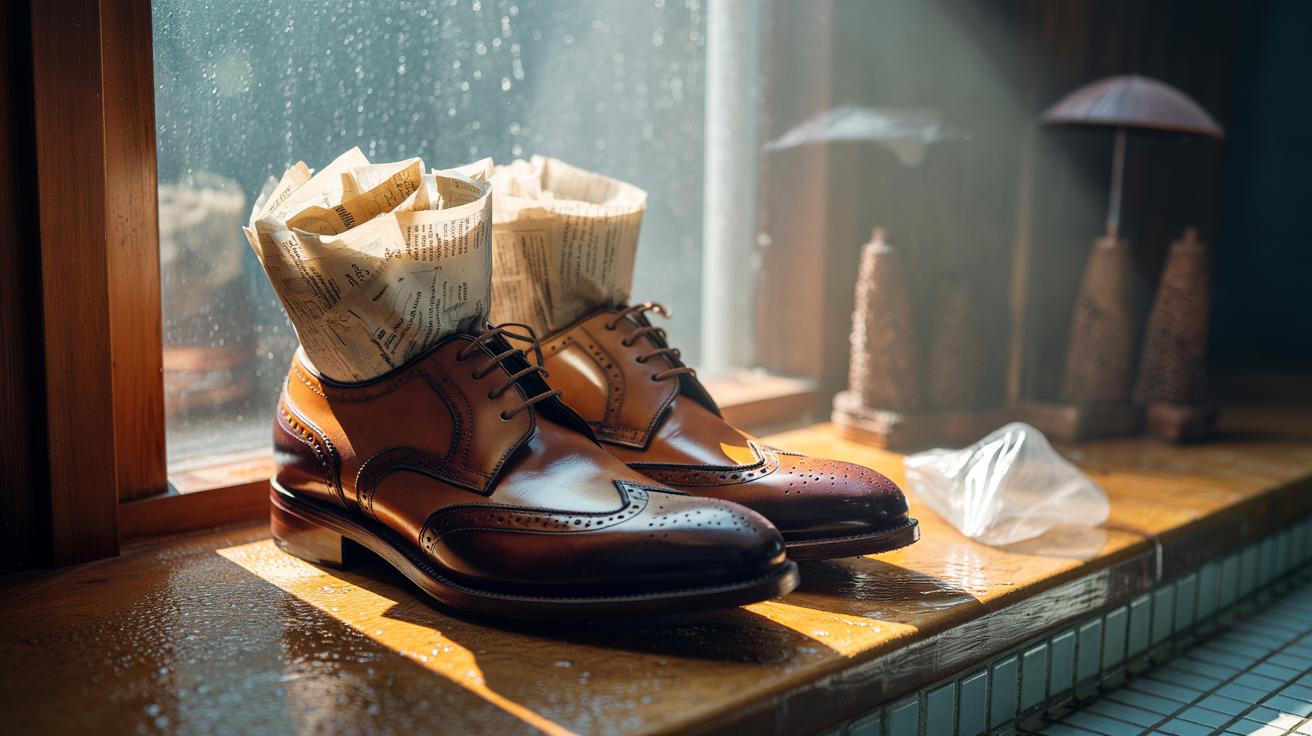
It’s the unglamorous secret in many British hallways: a crumple of yesterday’s headlines tucked into damp brogues or muddy trainers. This humble act is more than a tidy habit; it is a mini science lab. Newsprint soaks up moisture, tames odour, and props up uppers while leather cools and contracts. Done properly, newspaper stuffing dries footwear evenly and preserves its silhouette between outings. In an age of specialty kits and gadgetry, it remains a low-cost, low-impact method that works astonishingly well. Here’s why the method is so effective, how to do it safely, and when you might still pick a cedar tree or a silica sachet over the morning’s crossword.
Why Newspaper Works: The Science of Absorption
Newspaper is built from intertwined cellulose fibres, which are naturally hydrophilic. That means they attract and hold water molecules through hydrogen bonding. When you push loose balls of newsprint into a damp shoe, the dense tangle of fibres wicks sweat and rainwater by capillary action, pulling liquid away from the leather and lining. Dry paper draws dampness out of leather faster than ambient air alone, especially in the confined space of the toe box where evaporation is slow. Because newsprint is thin and porous, air still circulates, speeding evaporation without brute heat.
There’s also physics at play. Crumpling increases surface area, creating myriad contact points with the shoe’s interior. Each compressed fold acts like a miniature sponge, soaking up moisture and trapping odour-causing compounds. As the paper absorbs water, it spreads moisture across a broader area, reducing local saturation that can lead to mildew or salt tide-marks. The result is quicker, gentler drying that keeps leather supple and prevents the hard, brittle feel that follows aggressive heat.
Holding Shape: Mechanical Support Inside the Shoe
Beyond drying, newspaper is excellent mechanical support. When stuffed deliberately into the toe box and guided along the vamp, it resists collapse as wet fibres swell and then relax. Correctly packed newspaper preserves the last-like silhouette without stressing seams. Start by loosely balling sheets to the size of a small orange, then place one deep into the toe so it pushes outward against the leather, not downward against the sole. Add smaller wads along the forefoot and instep, tracing the natural curve and smoothing potential crease lines with your thumbs.
Resist the urge to overpack. Excess pressure can stretch stitching or distort the heel counter. Aim for gentle, even resistance that mimics a shoe tree’s contour. For boots, extend stuffing up the shaft to prevent the accordion effect as they dry. If you want to finesse the crease line on dress shoes, insert a folded strip along the vamp before filling the rest; it acts as a splint that encourages a clean roll rather than a sharp fold. Balanced tension is the trick: firm enough to hold form, soft enough to avoid deformation.
When to Use Newspaper vs Shoe Trees: A Practical Comparison
Newspaper is brilliant straight after a wet commute or a match on sodden grass. It drinks up moisture quickly, then yields to the shoe’s structure as it dries. Cedar or plastic shoe trees, by contrast, offer consistent shape and long-term storage, with cedar adding mild deodorising oils. Silica gel excels when space or weight is limited, such as in luggage. Think of newspaper as the first responder, shoe trees as the steady custodian, and silica as the lightweight assistant.
| Method | Moisture Absorption | Form Support | Cost | Reusability | Best Use |
|---|---|---|---|---|---|
| Newspaper | High, fast wicking | Good, adjustable | Very low | Limited (replace when damp) | Post-rain drying; shaping while drying |
| Cedar Shoe Trees | Moderate | Excellent, stable | Medium–high | High | Daily maintenance; storage |
| Silica Gel | Very high (by weight) | Poor | Low–medium | High (rechargeable) | Travel; enclosed spaces |
For leather dress shoes, many use newspaper immediately after wear, then switch to trees overnight. Trainers and football boots tolerate heavier stuffing during muddy clean-ups, when bulk drying matters most. If you can only choose one, newspaper wins on versatility and speed, while trees win on day-to-day elegance. Mixing methods gives the best of both worlds.
Tips for Safe, Sustainable Stuffing: Ink, Hygiene, and Drying Times
Most modern UK newsprint uses low-rub, often vegetable-based inks, but caution is wise with pale linings. Slip a piece of plain tissue or an unprinted margin against white leather to avoid any transfer. Avoid glossy supplements and heavily coloured inserts; their coatings hinder absorption. Replace paper as soon as it feels clammy—usually after 30–90 minutes—then restuff with fresh sheets until dry. Quick changes prevent musty odours and stop moisture migrating back into the upper. Keep shoes at room temperature; radiators or hairdryers can crack leather and warp adhesives.
For suede, brush gently before stuffing to lift the nap and after drying to restore texture. Sprinkle a pinch of bicarbonate of soda inside for odour control, keeping it away from raw leather edges. Let salt-stained winter shoes dry slowly, then wipe with a slightly damp cloth to lift residue. Reuse paper until it loses spring, then recycle it. Shoe care that starts with yesterday’s paper is both frugal and circular, cutting waste while extending the life of your footwear.
Newspaper stuffing endures because it respects materials: it wicks damp, supports shape, and does both with minimal fuss. A few pages can spare leather from cracks, suede from slump, and trainers from that tell-tale sogginess after a downpour. Consistency matters more than kit—swap damp paper promptly, shape with intention, and only reach for heat as a last resort. This low-tech ritual keeps shoes crisp, comfortable, and ready for the next outing. Will tonight’s headlines earn a second life in your shoes—or would you combine paper with trees to build a routine that suits your climate, commute, and collection?
Did you like it?4.4/5 (27)