In a nutshell
- 🌬️ A daily ten‑minute window flush dilutes indoor pollutants, lowering CO2, VOCs, humidity, and fine particulates for fresher air.
- 🧪 The science: maximise Air Changes per Hour (ACH) with full openings and cross‑ventilation, achieving rapid exchange with minimal heat loss.
- ⏱️ UK timing tips: air early or late, avoid rush hour, pick post‑rain in pollen season, combine with extract fans, and ventilate securely.
- 🛡️ Health and comfort gains include sharper focus, fewer headaches, reduced mould and dust mites, and faster dispersal of cooking odours.
- 🏠 Energy‑savvy strategy: use short, intense bursts, then close windows and draw curtains to retain warmth while protecting materials and furnishings.
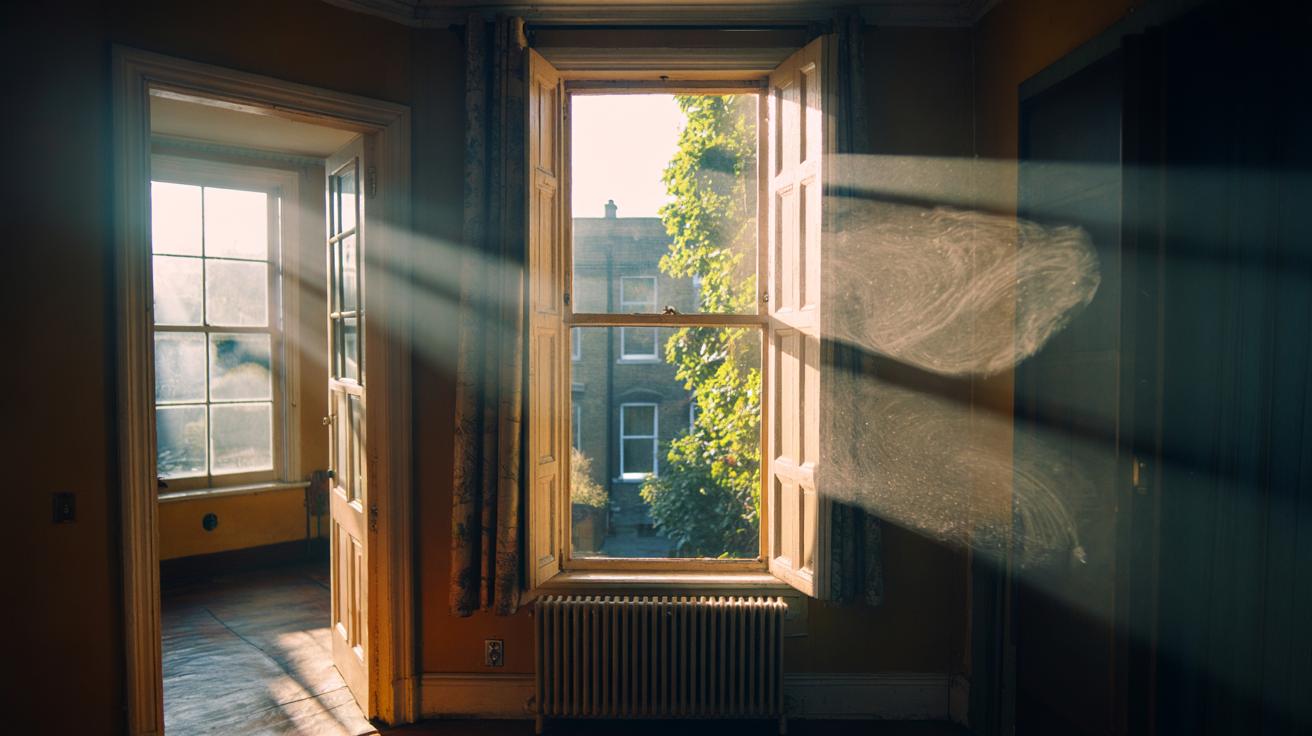
It sounds almost quaint, even old‑fashioned, but there’s a thoroughly modern reason to crack a sash and let fresh air in. A simple habit — opening windows for ten minutes a day — can transform the way your home feels, smells, and functions. Kitchens, bedrooms, and home offices trap a cocktail of gases and particles as we cook, clean, and breathe. The result? Stale air, lingering odours, and a subtle fog of CO2 and volatile organic compounds (VOCs). Ten focused minutes can make a measurable difference. Short, controlled bursts of ventilation sweep contaminants out without draining all your hard-won heat. Done right, it’s quick, quiet, and surprisingly effective.
How Stale Indoor Air Builds Up
Modern homes are brilliantly sealed. That’s great for energy bills, but it can trap pollutants. Everyday activities steadily elevate CO2, vapour, and fine particulates from cooking, candles, cleaning sprays, and even furnishings releasing VOCs. Add shower steam, drying laundry, pets, and human breath, and you’ve got a persistent indoor haze. The tell-tales are familiar: misted windows, dull headaches, a musty note by morning. What feels like “cosy” can actually be under-ventilated air that slows concentration and aggravates allergies. Children’s rooms and small home offices are particularly prone because of size and constant occupancy.
Left unchecked, damp air encourages mould, dust mites, and that stubborn bathroom bloom that never quite fades. Even low-level pollutants interact: humid air makes odours cling and fine particles linger longer. Open windows for a deliberate ten minutes and you interrupt this build-up. You dilute contaminants. You lower humidity peaks after showers and supper. Short. Sharply timed. Effective. In one sweep, the room’s background air returns to neutral.
The Science of the Ten-Minute Flush
Think of your room as a box. Replace the stale air inside with fresher air outside and you change the exposure. Engineers call it air changes per hour (ACH). With wide-open windows and a door ajar, even a modest breeze drives rapid exchange. Create cross‑ventilation — two openings on opposite sides — and the effect multiplies. For many UK rooms, ten minutes of full opening can approach one whole air change, sometimes more if the wind is helpful. The principle is simple: big openings, short duration, maximum flow; then close up to keep warmth.
| Room Size (m³) | Window Strategy | Estimated Exchange in 10 min |
|---|---|---|
| 30 (small bedroom) | One window fully open | ~0.5–1 air change |
| 50 (living room) | Two opposite openings | ~1–2 air changes |
| 75 (open-plan) | Cross‑ventilation + door | ~1 air change |
What does that mean in practice? A fast flush reduces CO2, dilutes VOCs and cooking aerosols, and drops humidity spikes that feed condensation. It’s the difference between air that feels heavy and air that feels light. A minor routine with outsized returns.
When and How to Ventilate Safely in the UK
Timing is everything. Early mornings or late evenings often bring cleaner outdoor air and calmer streets. In pollen season, pick cooler, damp intervals after rain. Urban dwellers? Avoid the rush-hour plume; a ten‑minute window once traffic ebbs works wonders. During winter, opt for short, intense bursts rather than a constant trickle of ajar hinges. This minimises heat loss while still clearing moisture and pollutants. If security is a concern, ventilate rooms you can supervise, or use restrictors and cross‑ventilate internally by opening doors to a well-aired space.
Practical tips help. Open windows fully, not a sliver, to maximise flow. Pair kitchen and bathroom fans with your window routine for a quick humidity knock‑down. Keep internal doors open during the flush to sweep corridors and cupboards. Mind safety: secure pets, move papers, and never leave candles or hobs lit while airing. Sensitive to outdoor pollution? Check a local air‑quality app, then schedule your ten-minute ritual for a cleaner hour. Small habit. Big payoff.
Benefits You Can Feel: Health, Comfort, and Focus
The gains are tangible. Lower CO2 supports sharper thinking and steadier mood — handy for home office days and revision nights. Reduced humidity curbs condensation on glazing, shrinking the risk of mould and dust mites that aggravate asthma. Cooking smells disperse faster, soft furnishings hold fewer odours, and that stale morning breathiness lifts. People often report fewer headaches, better sleep quality, and quieter sinuses when daily airing becomes routine. A few minutes of moving air changes how a room feels on the skin: fresher, drier, calmer.
There’s a materials dividend too. Timber frames and paint finishes fare better in steadier moisture conditions; electronics dislike damp. By flushing VOCs from new furniture and cleaning products, you ease that showroom tang that lingers after redecorating. If you’re energy‑conscious, pair airing with smart heat: open wide for ten, then close windows and draw curtains to trap warmth. The arithmetic stacks up. You’re not heating the garden; you’re skimming off pollutants and locking comfort back in.
In the end, the idea is elegantly simple: a daily ten‑minute opening acts like a reset button for your home’s indoor air quality. It breaks the cycle of trapped moisture and accumulated pollutants without demanding gadgets, noise, or fuss. Regular, short bursts of fresh air deliver cleaner rooms, clearer heads, and happier lungs. It’s a journalist’s favourite kind of advice — practical, low‑cost, evidence‑friendly. Will you try scheduling a quick window ritual this week, and if you do, which room will you refresh first?
Did you like it?4.3/5 (25)