In a nutshell
- 🌀 Establish a gentle cross‑flow of air: door gap or ajar door, micro‑open window (1–2 cm), and a timed extractor fan to clear steam.
- 📉 Aim for 50–60% RH: run the fan for 20–30 minutes post‑shower; moving air removes the moist boundary layer and prevents condensation.
- 🚫 Avoid common mistakes: don’t seal the door, don’t fling windows wide in winter, and keep trickle vents unblocked; squeegee tiles to halve drying time.
- 🔧 Set‑up essentials: ensure a 10–15 mm door undercut, use a fan run‑on timer or humidity sensor, and verify airflow with a simple hygrometer.
- 🧰 For stubborn rooms: consider a continuous‑running fan, a compact dehumidifier, or PIV; upgrade sealant and moisture‑resistant paint for layered defence.
Bathroom mould thrives on stale, moist air. Tackle the cause and you win the war, not just the battle. The simplest fix? Create a small, steady cross‑flow of air every time you bathe. That means a controlled inlet for fresh air and a defined outlet for damp air, held long enough to drop humidity back to safe levels. It’s quick to set up and costs next to nothing. Done right, it works in winter, in windowless rooms, in rentals. Think ritual, not gadget: gentle airflow in, stronger airflow out, for 20–30 minutes after steam appears. Your tiles stay dry, grout stays white, and the mirror clears faster too.
The Airflow Trick, Simply Put
The trick has three moving parts. First, supply air. Either leave the bathroom door slightly ajar—about a hand’s width—or rely on a 10–15 mm door undercut if privacy is non‑negotiable. Second, extract. Run the bathroom fan on a timer or humidity sensor for at least 20 minutes after you finish. Third, if you’ve got a window, crack it open just 1–2 cm, not wide. That’s it. Small opening, steady fan, short routine—big result.
Why so specific? A narrow window gap prevents rooms from chilling, which would cool surfaces and invite condensation. A slightly open door gives your fan the “make‑up air” it needs to pull steam out effectively. No door gap equals starved fan and lingering moisture. The run‑on time ensures the air change continues until relative humidity (RH) falls below mould‑friendly territory. Try it once and you’ll notice the mirror clears faster; stick with it and mould stops forming behind the shampoo bottles.
Why It Works: Moisture, Pressure, and Surfaces
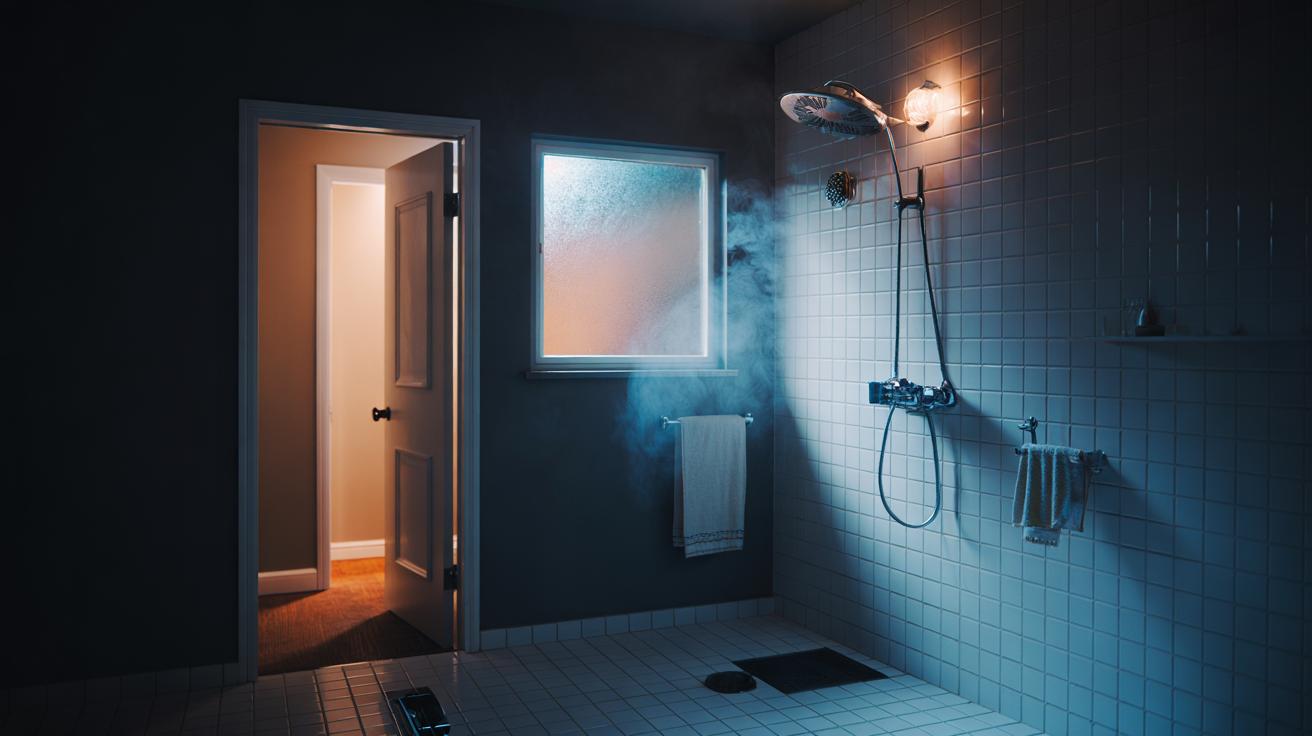
Mould doesn’t appear because the shower was hot. It appears because moist air hangs around long enough to touch cooler surfaces—paint, grout, silicone—where water condenses and feeds spores. The fan creates slight negative pressure, dragging damp air towards an exit. The door gap or ajar door provides a calm inlet that stabilises the flow. Add a micro‑open window and you build a gentle cross‑draught that sweeps steam off surfaces before it can cool and cling.
There’s a threshold effect. Keep RH below roughly 60% for most of the day and mould struggles. Allow RH to sit at 70–80% for hours and it wins. Air movement matters because moving air, even if cool, strips the moist boundary layer from tiles and mirrors faster than heat alone. UK Building Regulations Part F recommend extraction rates of 15 l/s for intermittent fans or 8 l/s for continuous ones; your routine helps your kit actually reach those numbers. The result is fewer wet corners, fewer food sources for fungi, and a bathroom that dries in minutes, not hours.
Step‑by‑Step Setup for Any Bathroom
Start with the door. Check there’s a visible undercut—about 10–15 mm. If not, keep the door slightly open during and after showers, or ask a joiner to trim a sliver from the bottom. Next, set your fan. Many models have an internal run‑on timer; aim for 20–30 minutes. If it includes a humidity sensor, set it around 60–65% RH. No sensor? A cheap digital hygrometer will guide you: stop the fan when RH returns to near room levels. Finally, use your window wisely. Micro‑vent only; a narrow crack is enough.
Make it a habit: fan on as the water heats, door ajar, window micro‑open, run‑on after you leave. Squeegee tiles and glass to remove bulk water; it halves drying time. Consistency beats intensity: a small daily airflow ritual prevents the weekly bleach battle. The following quick guide helps lock in settings:
| Element | Target Setting | Why It Matters |
|---|---|---|
| Fan run‑on | 20–30 minutes | Completes air changes after you leave |
| Window opening | 1–2 cm (micro) | Aids cross‑flow without chilling surfaces |
| Door gap | 10–15 mm or ajar 5 cm | Supplies make‑up air to the fan |
| Humidity target | 50–60% RH | Below mould‑growth comfort zone |
Common Mistakes and Quick Fixes
Closing the door fully while the fan runs is mistake number one. The fan strains, airflow stalls, and moisture lingers. Fix: create an inlet. Mistake two is flinging the window wide in winter. That chills walls and mirrors, increasing condensation when the hot shower hits. Fix: micro‑vent only, then let the fan do the pulling. Mistake three: blocked trickle vents and towel piles that never dry. Fix: open vents, rotate towels, and dry bathmats elsewhere if the room stays humid.
Cleaning helps but doesn’t solve the cause. Use an anti‑mould spray to reset surfaces, then keep humidity down. Check for hidden culprits—leaky cisterns, dribbling taps, cracked sealant. Airflow can’t beat a leak, but with sound plumbing it prevents the daily mini‑monsoon from settling on cold grout lines. If noise puts you off, replace a rattly fan with a quiet, continuous‑running model; they sip power yet keep RH stable. A five‑minute squeegee and the cross‑flow routine outperform any fancy paint in the long run.
Extra Tools for Stubborn Bathrooms
Some rooms fight back—north‑facing walls, tiny windows, no external vent. Add tools carefully. A continuous‑running fan (7–10 l/s on trickle, 15 l/s on boost) keeps background moisture low without the whoosh. A compact desiccant dehumidifier helps in winter flats with poor vents; place it outside the bathroom door to avoid soaking noise. Positive Input Ventilation (PIV) can work for whole‑home damp, but it’s a bigger step and needs a clear path for stale air to leave.
Surface defences still help. Insulate the coldest external wall if feasible; even lining paper and thermal paint can nudge the dew point away from grout. Replace perished silicone, which harbours spores, and upgrade to washable, moisture‑resistant paint. Think layers of defence: airflow first, then warmth, then finishes. If you rent, you can still run the routine, use a silent fan with a plug adapter, and keep a pocket hygrometer to prove the difference to your landlord when discussing upgrades.
A mould‑free bathroom isn’t a miracle; it’s a habit anchored to physics. Give moist air an easy way in and a sure way out, keep it going for a short, reliable window of time, and you change the room’s climate in your favour. The payoff is visible: clear mirrors, fresh‑smelling towels, no black crescents on sealant. Small airflow, big gains, all year. What will your version of the cross‑flow routine look like in your home, and which tweak—door, fan, or window—will you try first this week?
Did you like it?4.5/5 (25)