In a nutshell
- 🧊 Freezing shifts gum below its glass transition temperature (Tg), turning it brittle so it fractures and lifts cleanly without pulling carpet fibres.
- 🛠️ Use an ice cube press: seal cubes in a bag, press 2–4 minutes, test a corner, then slide a thin scraper to lift; re-freeze any residue and blot sparingly with isopropyl alcohol if needed.
- ⏱️ Best kit and timing: gel packs for larger spots, a thin, blunt scraper, and 2–5 minutes of contact; watch for dyed gum stains and loop-pile snags—patience beats force.
- 📊 Compared methods: the ice cube press offers lowest fibre risk and eco impact; solvents need colour tests and add VOCs; steam can set stains; freeze sprays work fast but use propellants.
- 💼 Call pros for deep, wide, antique wool, or heavy dye-transfer cases; typical UK costs are £60–£120 for spot visits or £25–£45 per area; keep a gum kit and documented steps for consistent results.
It is a domestic drama every household knows: a flattened crescent of chewing gum welded into the pile of a favourite rug. The quickest fix being shared by hard-nosed caretakers and fastidious landlords alike is the simple ice cube press. It exploits physics, not chemicals, freezing gum until it fractures away from carpet fibres. By switching the gum from stretchy to brittle, removal becomes a swift, low-risk lift rather than a messy smear. In this guide, we unpack why freezing works so well, show the exact technique to copy, and assess tools, timings, and when to call in a professional.
Why Freezing Makes Gum Crack Off Clean
Chewing gum behaves like a rubber band at room temperature because its base includes elastomers such as polyisobutylene and styrene-butadiene. Push it below its glass transition temperature (Tg), and those polymer chains lose mobility, shifting from elastic to glassy. The result is brittleness. That brittle transformation weakens both the gum’s internal cohesion and its adhesion to fibres. When you pry, the gum fractures instead of stretching, lifting in flakes or plates rather than pulling down into the pile. Crucially, household carpets—nylon, polyester, or wool—do not embrittle in the same way at ice temperatures, so the textile resists damage.
There is another win: cold shrinks gum slightly, easing the micro-grip on tufts. Add firm, even pressure with ice and you create a cold sink that penetrates quickly. Freezing changes the gum from elastic to brittle, allowing it to shatter away cleanly. With a thin scraper you can tease the edge and pop off the mass in one motion, limiting fibre distortion and avoiding coloured smears.
How to Use an Ice Cube Press on Carpet
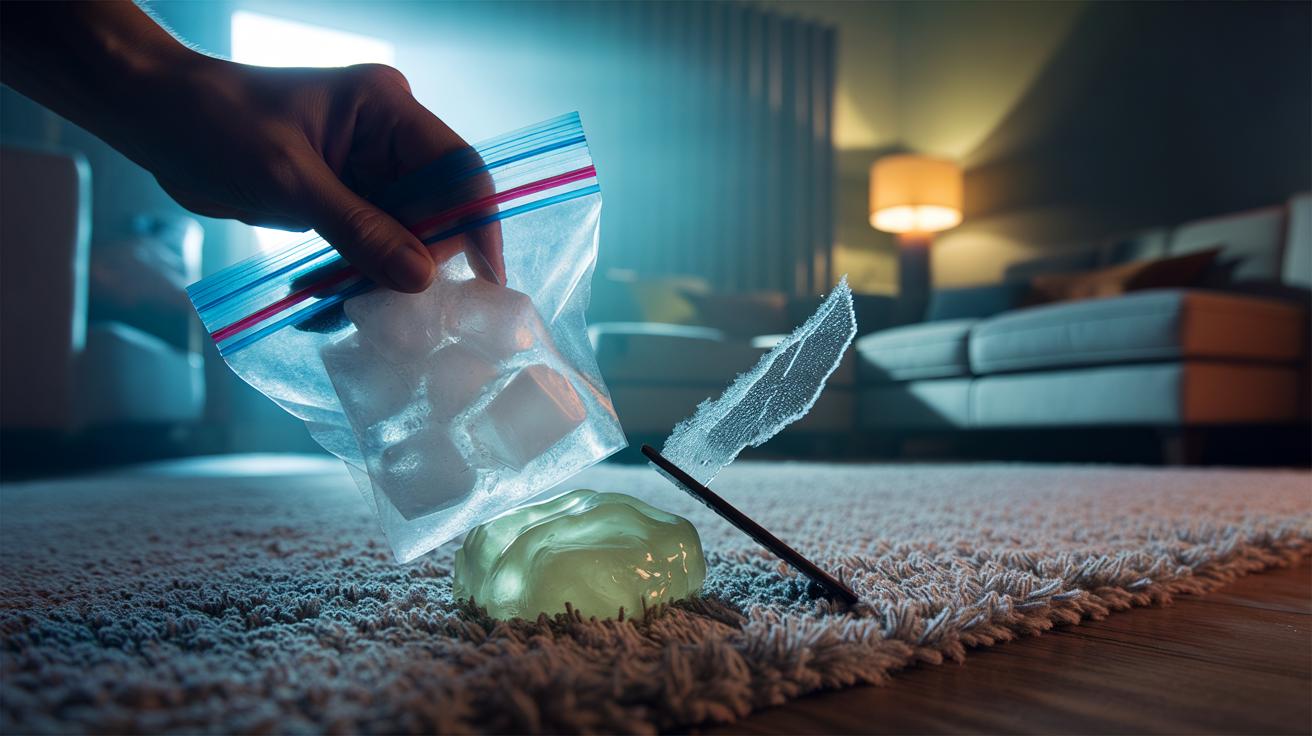
First, isolate the spot. Scoop away any loose debris and gently lift splinters at the edges with a plastic card. Place several ice cubes in a small food bag to keep meltwater off the pile. Press the bag flat over the gum and apply a broad, cool weight—a spoon back, chilled metal spatula, or inverted mug. Maintain firm pressure for 2–4 minutes, replacing cubes as needed. Keep the area cold and dry; puddles slow chilling and risk wick-back stains. You are aiming for a stop-start, crunchy feel under the tool.
Test a corner. If it snaps rather than stretches, begin the lift: slide a thin scraper between gum and pile, working from the outside in. As flakes release, collect them promptly so softened pieces do not re-adhere. For any residue, re-freeze in ten-second bursts and repeat the flick. Only if a faint shadow remains should you spot-treat: dab a tiny amount of isopropyl alcohol on a cloth and blot, then neutralise with plain water. Never saturate the backing—minimal moisture prevents marks and odours.
Tools, Timing, and Troubleshooting
You do not need a gadget, but the right kit helps. A sealable bag of cubes acts as a clean, conforming press; a reusable gel pack from the freezer works even better for broad gum patches. Use a thin, blunt scraper—a palette knife or plastic razor blade—to guard tufts. Typical contact time is 2–5 minutes; thick deposits or dense wool may need 6–8. If gum turns glossy and stretchy, it is warming up—re-apply the cold press and wait. Patience is safer than force when fibres are at stake.
Watch for two pitfalls. Brightly dyed gum can leave a tint; tackle the bulk cold, then blot with diluted white vinegar or an enzymatic spotter tailored for food dyes, patch-tested first. Second, loop-pile carpets snag easily—work strictly under the gum, never upward against loops. For comparison, here is how common approaches stack up:
| Approach | Contact Time | Risk to Fibres | Eco Impact |
|---|---|---|---|
| Ice cube press | 2–5 minutes | Low if scraped gently | Very low; no solvents |
| Solvent spotter | 1–3 minutes | Moderate; colour test needed | Moderate; VOCs |
| Steam/heat | 30–90 seconds | Higher; can set stains | Low; energy only |
| Freeze spray | 5–15 seconds | Low; very localised | Moderate; propellant |
When to Call a Professional and What It Costs
Most domestic gum blobs bow to the ice method in minutes. Call a pro if the gum has been stamped deep into a loop-pile or antique wool, covers a broad stair tread, or carries heavy dye transfer after removal. Technicians use controlled freeze sprays, micro-scrapers, and post-spot neutralisers that equalise pH and sheen. In the UK, expect gum removal to be bundled into a spot-clean visit at £60–£120, or included during a room clean from £25–£45 per area. Always ask for fibre-safe methods in writing.
For landlords and facilities teams, prevention still pays. Entrance mats catch dropped gum before it reaches carpet, and signage near lifts reduces incidents. Keep a small gum kit—zip bag, gel pack, scraper, white cloths—in the cleaning cupboard. Document the process: patch test, freeze, lift, residue control, dry and groom. Clear steps mean consistent results across staff and sites. Follow-up grooming with a spoon or brush aligns tufts and restores appearance.
An ice cube press proves that smart physics beats harsh chemistry: chill, crack, lift, and the carpet forgives the mishap. The method is quiet, inexpensive, and safe for common fibres, making it ideal for homes, rentals, and busy offices alike. With a few cubes, a scraper, and a steady hand, gum goes from menace to minor inconvenience in minutes. How could you adapt this cold technique for tricky spots like stair nosings, car mats, or deep shag piles without compromising the fibres?
Did you like it?4.3/5 (21)