In a nutshell
- 🧠 Understand the fibre: Wool’s keratin relies on flexible hydrogen bonds that can be reset with controlled heat and moisture; avoid felting by steering clear of high heat, alkaline products, and agitation.
- ♨️ Master the hot water dip: Use 40–50°C water with wool wash, soak 5–8 minutes, support the garment’s weight, blot not wring, then reshape flat with rust-proof pins and dry away from radiators.
- 🌫️ Shape with steam: Hover 1–2 cm on the wool setting with a pressing cloth, work in brief steam–shape–cool cycles, support heavy areas, and let cooling set the new bonds for lasting recovery.
- 🛡️ Prevent stretch and know when to get help: Fold, don’t hang, rotate wears, wash cool with wool-specific detergents, dry flat, and consult a professional for cashmere, heirlooms, or severe distortion.
- 🧰 Build a care kit and expect real results: Keep a thermometer, pressing cloth, and rust-proof pins; this gentle routine restores sleeves, hems, and rib bounce while preserving the jumper’s character.
In British wardrobes, few items carry as much quiet loyalty as a well-worn wool jumper. Yet after a drizzly commute or a hasty hang on the back of a chair, that faithful knit can slump, sleeves lengthening and hems waving. The solution is surprisingly gentle. By pairing a controlled hot water dip with targeted steam, you can coax wool fibres to remember their original shape without harsh tugging. This isn’t boiling or brute force; it’s a careful reset that respects the nature of the fibre. Below, we unpack the science, a step-by-step routine, and prevention tactics that keep knits resilient through winter and beyond.
Why Wool Stretches and How Heat Helps
Wool is built from keratin—protein chains linked by hydrogen bonds and sturdier disulphide bridges. When a jumper becomes wet or bears weight, those temporary bonds ease apart, letting stitches slide and lengths creep. Left to dry under tension, the elongated state can set. Heat and moisture are not villains here; used correctly, they unlock the fibre’s flexibility so it can be guided back. Think of it as reopening a clasp, arranging the shape, then letting the clasp close again. The goal is controlled relaxation, not aggressive shrinkage.
There’s a tightrope: wool’s cuticle scales can interlock when exposed to high heat, agitation, and alkaline detergents, a process known as felting. That’s the irreversible, doll-sized jumper nightmare. The sweet spot is warm—not boiling—water and gentle handling, followed by steam that allows stitches to lift and settle. If you respect temperature and motion, wool will reward you with a graceful reset. Understanding this balance lets you intervene early, especially on stretched cuffs, drooped shoulders, and bagged elbows.
Step-by-Step: The Hot Water Dip
Set up a basin with 40–50°C water (a thermometer helps; you should feel heat, not scald). Add a teaspoon of wool wash or a pea-sized drop of hair conditioner to lubricate fibres. Turn the jumper inside out, lower it slowly, and support the weight with both hands. Do not agitate, knead, or swirl. Leave for 5–8 minutes so hydrogen bonds relax. If needed, replace a little water to keep the temperature steady. Lift with palms under the knit, letting water drain without stretching. A quick, cool rinse is optional if you used conditioner and want a cleaner finish.
Lay the jumper flat on a towel, roll it into a soft cylinder, and press—don’t twist—to blot. Transfer to a dry towel or blocking board. Reshape: align shoulder seams, pat cuffs shorter, square the hem, and encourage width where length has grown. Use rust-proof pins at the edges if needed, placing them horizontally along stitch lines. Never wring a wet wool jumper. Allow to dry at room temperature away from radiators or direct sun, flipping once. This calm ritual often restores proportion in one session.
Steam Power: Coaxing Fibres Back Into Shape
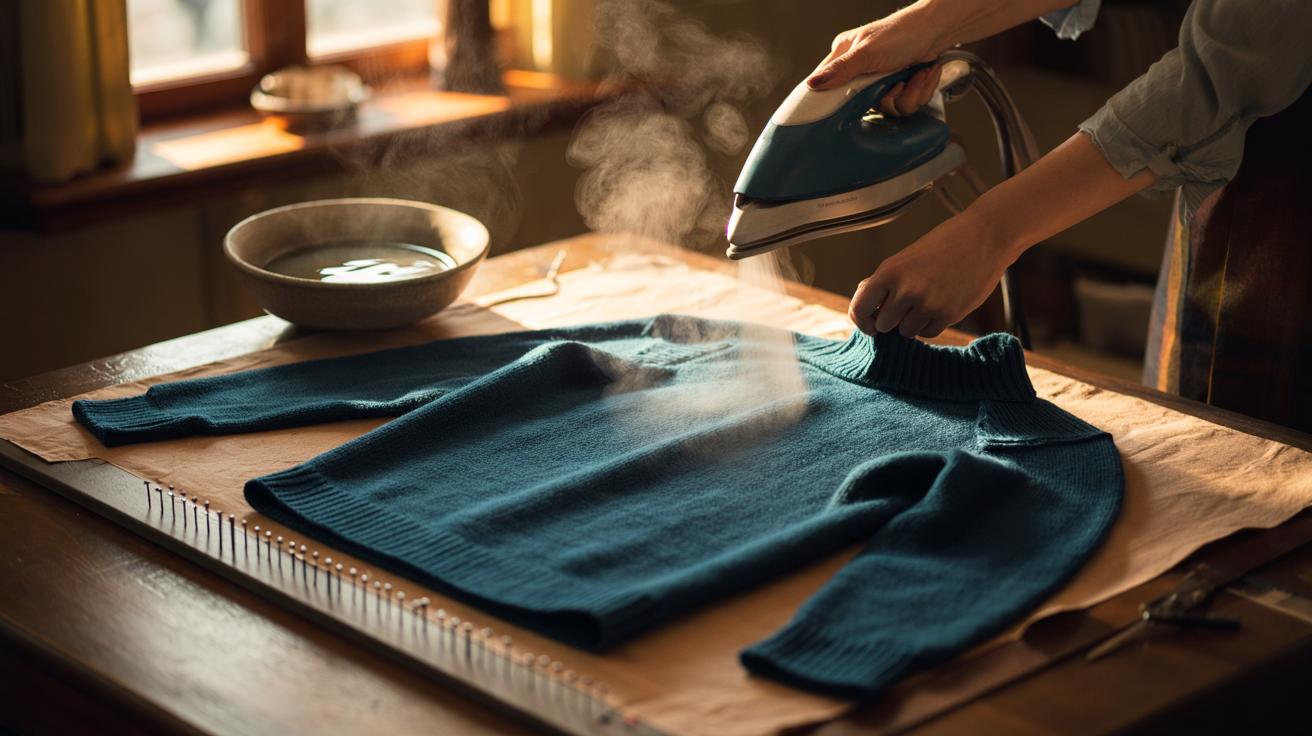
Steam is precision for stubborn sag. With a garment steamer or an iron set to the wool setting, hover 1–2 cm above the fabric and feed moisture into the knit without pressing the soleplate. Place a pressing cloth over delicate or fuzzy yarns. As steam floats through, gently pat and nudge areas back—the cuff rib, the shoulder cap, the neckline. Always test on a hidden seam first. You’re aiming for lift and recovery, not flattening. Dark knits appreciate a light hand to avoid sheen from pressure.
Allow each steamed area to cool fully before moving the garment; cooling is when hydrogen bonds set in the new position. Work in short cycles: steam, shape, cool, assess. For heavy jumpers, support the body on a table rather than letting it dangle. Where sleeves have crept, steam while gently compressing length toward the armhole, then pin and cool. A final, brief pass of steam across the whole piece evens the fabric, restoring that soft, springy hand.
Prevention and When to Call a Professional
Prevention starts at storage: fold knits, don’t hang. Rotate wear so fibres rest between outings, and wash infrequently with cool water and wool-specific detergents. Dry flat on a towel-topped rack, reshaping early. For travel, roll rather than fold to avoid crease stress. Weigh down hems with water, not gravity: if you spot a droop after rain, lay the jumper flat immediately. Handle wool most carefully when it’s wet, as fibres are most vulnerable. For heirlooms, complex cables, or luxury blends like cashmere, a specialist cleaner offering wet-cleaning and knit blocking is sensible. If you see felting or severe distortion, bring in a pro before experimenting.
A quick reference helps keep temperatures, times, and handling aligned with fibre safety. Keep notes on each garment—yarn type, gauge, and what worked—so future refreshes are faster and more accurate. Small, consistent care prevents big rescues, preserving drape, elasticity, and colour depth season after season.
| Technique | Temperature | Time | Handling Notes |
|---|---|---|---|
| Hot water dip | 40–50°C | 5–8 minutes | Support weight, no agitation, blot not wring |
| Steam hover | Wool setting | Short bursts | Hover 1–2 cm, use pressing cloth, cool to set |
| Dry flat/block | Room temp | 12–24 hours | Pin edges, reshape ribs, avoid radiators |
Handled with respect, wool is forgiving. A measured hot water dip and feather-light steam session can revive stretched sleeves, tame a wandering hem, and return bounce to tired ribs—all without erasing character. The trick lies in temperature control, minimal movement, and patience while fibres cool and set. Keep a thermometer and a pressing cloth with your laundry kit, and treat reshaping as routine maintenance rather than emergency surgery. Which jumper in your drawer deserves this gentle reset first, and how will you adapt the method to its yarn, weight, and story?
Did you like it?4.4/5 (20)