In a nutshell
- 🧼 Why soap slips: Surfactants create a slick film that reduces friction, and smooth, rounded bars act like self-lubricating objects in wet hands.
- 🧲 Rubber band effect: Adds texture, breaks the water/lather layer, and creates a raised pinch point; natural rubber or silicone delivers high grip on wet skin.
- 🛠️ Practical setup: Use 3–6 mm bands, place one or two as “grip zones,” choose silicone hair ties for latex allergies, and pair with a draining soap dish to prolong bar life.
- 🧽 Hygiene and safety: Slide and rinse under the band weekly, replace perished bands, and boost control for children and people with reduced grip strength.
- 🌍 Cost and sustainability: Penny-cost, low-waste fix that outperforms bulkier accessories; the article’s comparison shows high grip benefit at minimal environmental impact.
In bathrooms across the UK, a bar of soap is a familiar sight—and an equally familiar nuisance when it rockets out of wet hands. A simple solution has quietly emerged from the world of everyday fixes: stretch a rubber band around the bar. It costs pennies, requires no tools, and transforms a slippery pebble into a thing you can actually hold. This small tweak boosts grip without changing your routine or the soap you love. Here’s how it works, why it’s so effective, and what to consider if you want to adopt this neat trick in your home, gym bag, or travel kit.
Why Soap Gets So Slippery
Bar soap is designed to lower water’s surface tension through surfactants, helping dirt and oils rinse away. That chemistry is great for cleaning, but it creates a thin, slick film on the soap itself. When your hands are wet, a boundary layer of water and lather forms between skin and bar, acting like lubrication. The smoother the bar, the fewer “anchors” for your fingers to catch. Rounded edges and a polished finish only intensify the slide, especially under running water. In effect, a wet bar of soap behaves like a tiny, self-lubricating object.
Grip depends on friction, and friction drops when surfaces are separated by liquid. With soap, the combination of water, dissolved fats, and surfactants reduces the shear resistance your skin can apply. Add a bit of rotational force as you lather and the bar squirms free. Temperature and bar composition also play a role; warmer water softens the surface, creating a more slippery film. The solution isn’t to fight chemistry, but to interrupt it—strategically.
How a Rubber Band Restores Grip
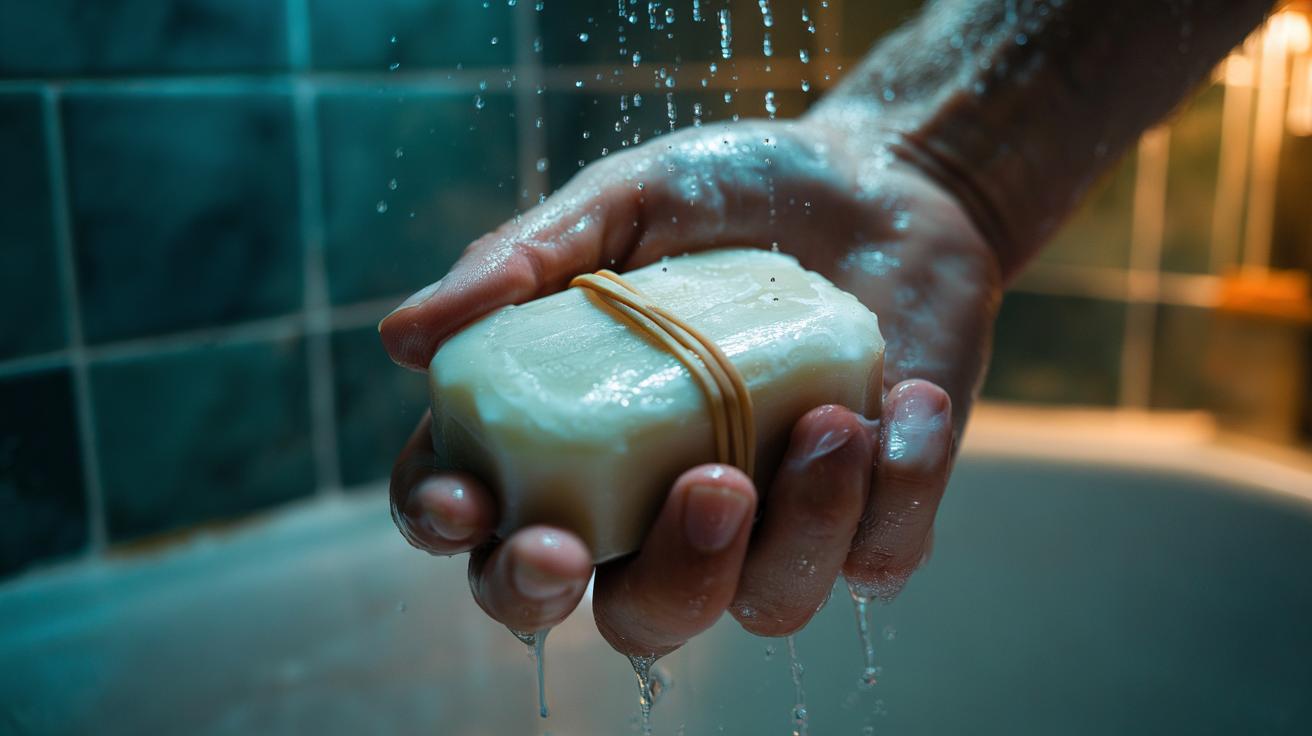
A plain rubber band does three clever things at once. First, it adds texture. The band’s ridges act like tyre tread, creating tiny contact points that bite into your fingertips. Second, it displaces that slick water-and-lather film, putting skin back in touch with a high-friction surface. Third, it changes the bar’s geometry by adding a raised “belt” you can pinch. By breaking the lubrication layer and adding a tactile edge, the band restores control without fuss.
Materials matter. Natural rubber or silicone has a high coefficient of friction against wet skin, so your grip feels secure even when the bar is fully lathered. Because the band flexes, it also absorbs small movements, reducing the twist that often sends soap spinning. The effect is immediate: you feel where the bar is in your hand, and you can slow it down under the tap instead of chasing it.
Placement helps. One band across the middle is a quick fix, but two bands—spaced like stripes—create extra “grip zones” that suit different hand sizes. If the bar sits in a dish, the bands also act as anti-slip bumpers, keeping it from skidding across glazed ceramic or stainless steel.
Practical Tips for Bathroom Use
Choose bands 3–6 mm wide; thinner bands can cut in, thicker ones may slip off as the bar shrinks. For sensitive skin or latex allergies, opt for silicone hair ties—they’re durable, hypoallergenic, and grippy. Stretch the band gently to avoid cracking the bar, and seat it in a shallow groove if the soap has moulded ridges. Two evenly spaced bands deliver the best balance of control and comfort for most hands. If your soap is very smooth, rough it lightly with a flannel once to help the band stay put for the first few washes.
Keep hygiene in mind. Rinse under warm water to prevent residue building under the band, especially with hard-water limescale. Replace a perished band promptly; a fresh one grips better and looks tidier. In a shared bathroom, use distinct colours to identify bars. For people with arthritis, tremor, or reduced grip strength, this low-tech tweak can make washing safer by reducing unexpected drops. Pair it with a draining soap dish so the bar dries evenly and lasts longer between showers.
Cost, Sustainability, and Hygiene
This is a classic low-cost, low-waste fix. A single band can outlast several bars of soap, and silicone options endure steamy bathrooms without cracking. You avoid plastic-heavy dispensers and keep using solid bars, which ship efficiently and often come in minimal packaging. By extending a bar’s usable life and preventing wasteful breaks, the band improves value as well as grip. For allergy concerns, avoid natural latex and pick silicone; it’s easy to sanitise and safe for sensitive skin. If a band discolours, swap it—function matters more than aesthetics.
Compared with other grip helpers—soap sleeves, mesh bags, or switching to liquid—this hack wins on simplicity. It takes seconds to fit, works with most brands, and doesn’t change the lather you like. Cleanliness is straightforward: once a week, slide the band, rinse the groove, and let the soap dry. The result is a calmer, safer sink or shower, especially for children and anyone with limited dexterity.
| Option | Upfront Cost | Waste | Grip Benefit |
|---|---|---|---|
| Rubber band on bar | Pennies | Minimal | High |
| Soap sleeve/holder | Low–medium | Moderate | Medium–high |
| Mesh soap bag | Low | Low | Medium |
| Liquid soap pump | Medium | High (plastic) | High, but different format |
Sometimes the smartest fixes are the simplest. A humble rubber band turns a slippery bar into a steady companion, improving grip, reducing drops, and keeping your bathroom routine pleasantly uneventful. It respects the things many of us value: low cost, low waste, and a touch of ingenuity. If you love the feel and fragrance of solid soap, this tweak lets you keep it without the slip. Will you try the banded-bar trick, or do you swear by another low-tech hack that makes everyday washing easier and safer in your home?
Did you like it?4.6/5 (23)