In a nutshell
- 🧂 A salt soak boosts water’s ionic strength, nudging loose dye toward the fibre and promoting dye exhaustion, which helps stop colours running—especially on new cottons.
- 🧪 Works best on cotton/linen with direct/reactive dyes; has limited impact on denim indigo and won’t fix polyester (disperse dyes), wool/silk (acid dyes), or pigment prints.
- 📝 Practical method: do a colourfastness test, soak 20–30 minutes in 1 tbsp (15–20 g) salt per litre of cold water, rinse clear, then wash inside out on a cool, gentle cycle with a colour-care detergent and air dry.
- ⚠️ Key caveats: vinegar isn’t a universal fixer; avoid heat, high pH, and heavy agitation; don’t long-soak delicate animal fibres; use colour-catcher sheets for mixed loads.
- 🧰 Beyond salt: try cationic dye fixatives for stubborn bleeders, deploy colour-catcher sheets, and prefer a targeted pre-soak over repeated treatments; professional cleaners can apply stronger fixers if needed.
It sounds like folk wisdom, but a small sprinkle of salt really can help stop colours running in the wash. The trick isn’t magic; it’s chemistry. New garments, especially richly dyed cottons, often carry loose, unfixed dye from the factory. When these molecules meet water, they wander—and transfer onto anything nearby. A brief salt soak can coax wayward dye to bond more tightly or to flush out safely before your first proper wash. Used correctly, salt supports colourfastness; used blindly, it won’t fix every fabric or dye class. Here’s how it works, when to use it, and the practical steps that protect your wardrobe from an avoidable bleed.
Why Salt Helps Dyes Stay Put
Salt’s power lies in ionic strength. Many dyes used on cotton and linen are anionic (negatively charged). In water, they tend to repel from similarly charged fibres and remain mobile. Dissolved sodium chloride shields those charges, encouraging dye “exhaustion”—the movement of dye from water onto the fibre surface—so less colour stays free to swim into the wash. With some cotton colourants (notably direct and certain reactive dyes), adding salt helps tighten the interaction, reducing the chance of early bleeding. Think of it as nudging dye to settle down rather than letting it roam. That nudge won’t reverse poor manufacturing, but it often improves first-wash stability.
There are limits. Polyester relies on disperse dyes, which sit within the fibre and aren’t guided by salt. Wool and silk typically carry acid dyes, which respond to low pH rather than sodium chloride. And prints that sit on the surface—pigment prints, foil finishes—have different chemistry entirely. Salt does not “create” permanent bonds on every fabric; it helps the right dyes on the right fibres. Understanding those pairings will save you time, clothes, and disappointment.
A Step-by-Step Method for New Clothes
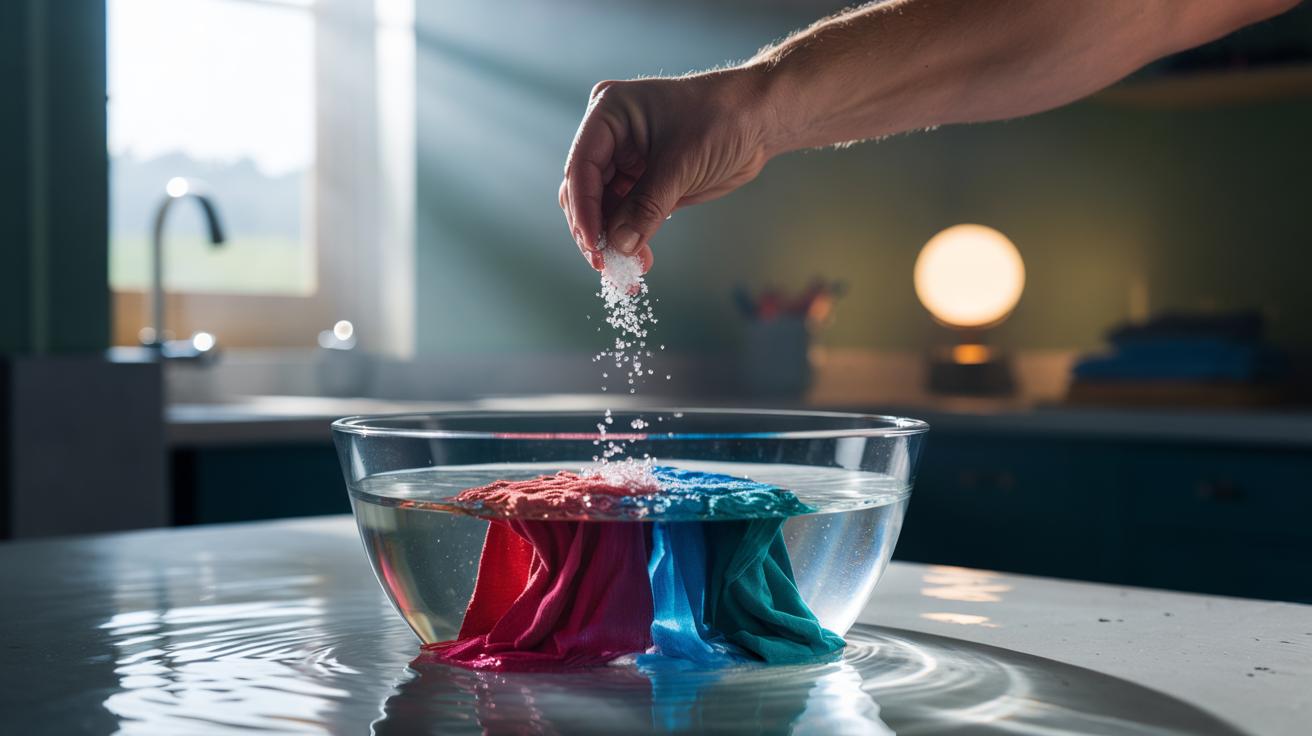
Start with a quick colourfastness test. Dampen a white cloth with cool water and press it firmly on an inside seam for 30 seconds. If the cloth takes on colour, do a salt pre-soak. Use 1 tablespoon (15–20 g) of table salt per litre of cold water, dissolving fully before submerging the garment. Soak for 20–30 minutes, gently agitating once or twice to keep dye moving evenly. Always dissolve salt completely; never pour dry salt straight into your washing machine.
Rinse the item in cold water until the water runs clear or nearly clear. For the first wash, turn the garment inside out, wash it with similar colours on a cool, gentle cycle, and add a colour-catcher sheet if you have one. Choose a colour-care detergent without optical brighteners for darks and brights. Heat sets stains and encourages dye migration, so keep temperatures low.
Skip the tumble dryer on that first wash; air dry away from direct sunlight to minimise fade. For particularly intense shades—inky denim, crimson cotton—repeat the soak once more if your bleed test still shows transfer. If the dye continues to gush, consider a dedicated dye fixative product before the next wash.
When It Works—and When It Won’t
Salt is most helpful for cellulosic fibres—cotton and linen—dyed with direct or reactive systems common in mass-market apparel. It can curb early bleeding, or at least push loose dye out in a controlled soak rather than over your laundry pile. For denim, the effect is modest: indigo sits near the surface and abrades off by design, so smart washing habits matter more than chemistry. If a garment was poorly fixed at the mill, no home trick will deliver industrial-grade fastness—but you can still limit the damage.
| Fabric | Typical Dye | Salt Effective? | Better Tactics |
|---|---|---|---|
| Cotton/Linen | Reactive/Direct | Often helpful | Salt soak; cool wash; colour-care detergent |
| Denim (Indigo) | Indigo (surface) | Limited | Wash separately; inside out; air dry |
| Polyester | Disperse | No | Cool cycles; colour-catcher sheets |
| Wool/Silk | Acid | No | Mild acidic rinse; specialist detergent |
| Printed Tops | Pigment/Plastisol | No | Gentle wash; avoid friction and heat |
Beware persistent myths. Vinegar won’t fix most cotton dyes; its acidic pH can help stabilise some wool and silk colours, but it’s not a universal answer. Do not salt-soak delicate animal fibres for long periods, and never mix brights with lights “to test them” in the machine. Keep first washes short, cool, and low on mechanical action, and you’ll avoid most mishaps.
Beyond Salt: Professional Fixing and Care
For stubborn bleeders, look to cationic dye fixatives sold to consumers. Products marketed as “dye fixative” (for example, Rit ColorStay Dye Fixative) form a polymer net around dye molecules, reducing their tendency to migrate. Follow the label closely and test on a hidden area. In the UK, colour-catcher sheets from brands like Dr. Beckmann or Dylon help trap stray dye during mixed loads, useful after any fix attempt. Heat, high pH, and heavy agitation are the trio that make colours run—dial all three down.
Everyday habits pay off. Use cool water, don’t overload, and select detergents formulated for brights and darks. For denim, wash sparingly; for gymwear polyester, salt won’t help, but short, cold cycles will. Environmentally, minimise repeated salt use: a single, targeted pre-soak is sufficient for most garments. If a favourite still leaves its mark, a professional cleaner can apply fixatives you can’t buy on the high street, offering a last line of defence without sacrificing the shade you loved.
The science is clear: a modest dose of salt can steady certain dyes on new clothes, especially cottons, and shift excess colour safely down the drain before it attacks your wash. Pair that with cool water, gentle cycles, and the right detergent, and your wardrobe stays vivid for longer. Not every fabric responds, and reckless heat will undo the best intentions. Armed with this know‑how and a tablespoon of NaCl, which item in your laundry basket will you test first—and what result will you look for to judge success?
Did you like it?4.5/5 (22)