In a nutshell
- 🍅 Use ketchup to lift tarnish and restore copper to a showroom shine in under 10 minutes, relying on pantry ingredients instead of harsh cleaners.
- 🧪 The science: mild acids—acetic acid and citric acid—plus a touch of salt dissolve oxidation gently, while ketchup’s clingy texture ensures controlled, even contact.
- ⏱️ Method: apply a thin layer for 5–7 minutes, massage with a soft sponge, rinse warm, dry thoroughly, and buff; spot-repeat for specks and avoid tin-lined interiors.
- ⚠️ Cautions: avoid steel wool, bleach, and ammonia; don’t exceed 10 minutes on antiques; skip lacquered pieces and always test a hidden patch first.
- 🧴 Aftercare: protect the shine with beeswax or mineral oil, store pieces dry, and use quick 2-minute refreshes to prevent heavy patina while preserving desirable antique character.
Put down the specialist polish and step away from the wire wool. There’s a humble hero in your fridge that can turn lifeless, brown-streaked pans into gleaming centrepieces: ketchup. Thanks to its balanced blend of acids and salt, this pantry staple can lift oxidation and revive copper in minutes. Used correctly, it restores shine without harsh scrubbing, fumes, or a pricey shopping trip. Below, I lay out the science, the exact method, and the pitfalls to avoid, so you can go from tarnished to triumphant during a single kettle boil. Expect a showroom sheen in under 10 minutes—and the satisfaction of a clever, sustainable win.
Why Ketchup Works on Copper
The magic is chemistry. Ketchup contains acetic acid from vinegar and citric acid from tomatoes, both mild enough to be kitchen-safe yet effective at loosening the dark film of oxidation that dulls copper. This gentle acidity selectively dissolves tarnish without scratching the metal beneath, making it ideal for quick refreshes between deep cleans.
There’s also a small but useful abrasive element: salt. When you gently massage ketchup across a pot, the salt grains help nudge away stubborn spots while the acids break down cuprous oxide, the brownish layer you can see and feel. Crucially, this combination is far less aggressive than bleach-based cleaners or scouring pads.
Another advantage is control. Ketchup clings to vertical surfaces, so it stays where you spread it, ensuring even contact and fewer streaks. That means you can target patches, avoid delicate areas, and achieve a consistent finish without guesswork.
Step-by-Step: from Dull to Dazzling in Under 10 Minutes
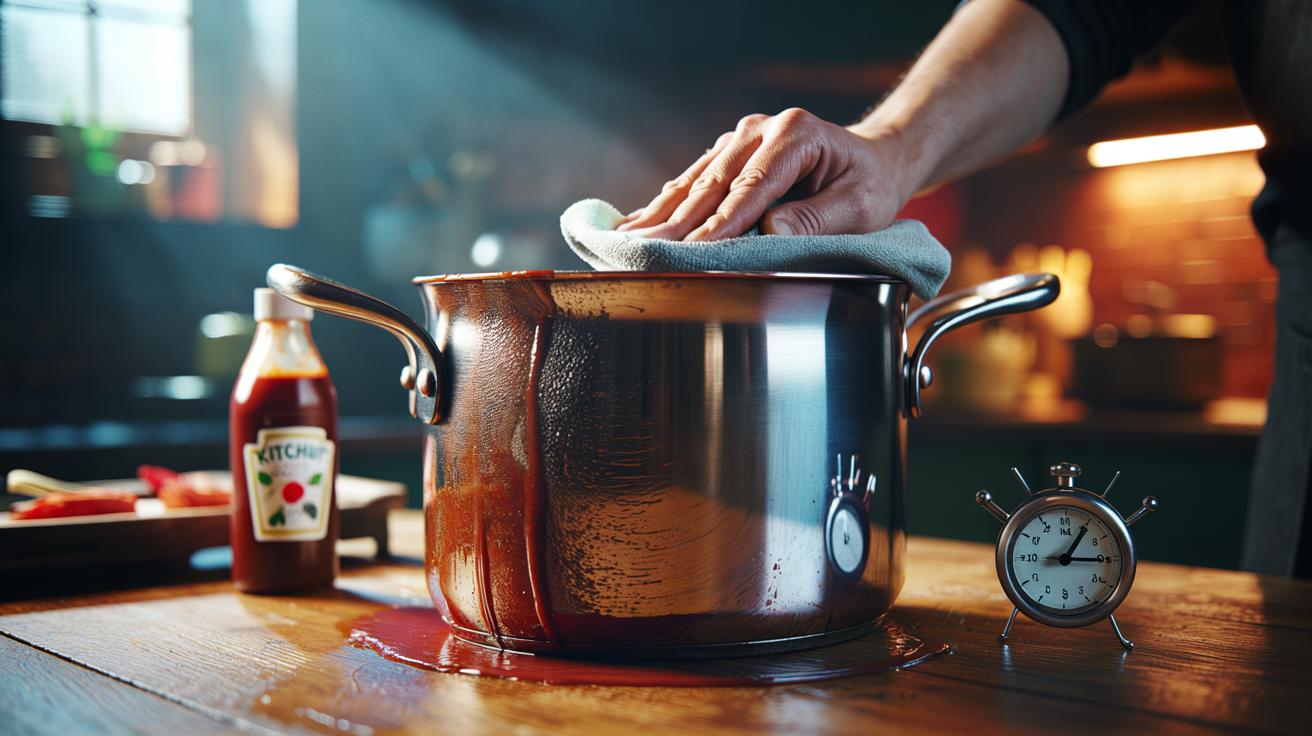
Start with a cool, dry pot. Wipe off grease so the ketchup touches metal, then squeeze on a thin, even layer—no need to drown it. Set a timer for 5–7 minutes; the contact time does the heavy lifting. If the pan is badly tarnished, go to the top of that range. Don’t exceed 10 minutes on antique or thin-gauge copper to avoid etching.
Using a soft sponge or microfibre cloth, massage in small circles. You’ll see brightness return almost immediately. Rinse with warm water, then dry thoroughly—water spots leave marks on freshly cleaned copper. For a final flourish, buff with a clean, dry cloth to amplify the shine. If a few dark specks persist, repeat on those patches only. Keep ketchup away from tin-lined interiors; stick to the exterior or to solid-copper items without sensitive coatings.
For everyday maintenance, a 2-minute refresh is enough: dab, wait, rinse, dry. Little and often prevents heavy patina build-up and preserves that headline-grabbing gleam.
What You Need and What to Avoid
This is a low-equipment clean, but the right tools make it faster and safer for your cookware. Choose non-scratch materials and avoid products that can gouge, pit, or discolour copper. The aim is to lift oxide, not remove the metal itself. Below is a quick at-a-glance guide to kit and cautions.
| Item | Use | Notes |
|---|---|---|
| Ketchup (standard, not chunky) | Acidic cleaner to dissolve tarnish | Spread thinly; 5–7 minutes contact |
| Soft sponge or microfibre cloth | Gentle agitation | Avoid scourers to prevent scratching |
| Old toothbrush | Detailing around handles and seams | Light pressure only |
| Warm water and dry towel | Rinse and finish | Dry promptly to prevent water spots |
| Avoid: steel wool, bleach, ammonia | These can damage copper and coatings | May pit metal or strip finishes |
Optional extras include a dab of bicarbonate of soda for an ultra-mild boost on stubborn specks—mix a pinch into the ketchup directly on the spot. When in doubt, test on a hidden area first.
Handling Antiques and Coated Copper
Not all copperware is created equal. Many saucepans are tin-lined or stainless-lined inside; that interior should stay out of the ketchup zone. Clean only the exterior copper and rinse carefully at the rim to protect the lining. If a piece has a clear lacquer, do not use ketchup—clean the lacquered surface with mild soap and water instead.
For antiques with prized patina, go conservative. Patina isn’t dirt; it’s a valued surface character. Spot-clean only the heavy tarnish, keeping some depth of colour for authenticity. If you’re unsure whether a piece is lacquered or simply aged, use a tiny test patch behind a handle: if it becomes sticky or patchy, stop.
After cleaning, you can extend the shine with a whisper-thin film of beeswax or food-safe mineral oil on the exterior. This barrier slows oxidation from air and moisture. Store copper dry and uncovered—trapped humidity accelerates tarnish.
With the right touch, ketchup earns its place as the speed-clean champion for copper: cheap, safe, and startlingly effective. The science is sound, the method is simple, and the results are reliably radiant—often within a tea break. Keep acid contact brief, avoid abrasive tools, and protect linings or lacquer, and your pans will repay you with a glow that begs to be displayed. Ready to try the fridge-door fix and watch your cookware sparkle? What copper piece will you revive first, and how will you style it on show once it’s gleaming again?
Did you like it?4.9/5 (20)