In a nutshell
- 🔬 Tarnish forms as silver sulphide (Ag2S); a hot bath with baking soda and aluminium foil creates a galvanic cell that drives a redox reaction, restoring metal without abrasion.
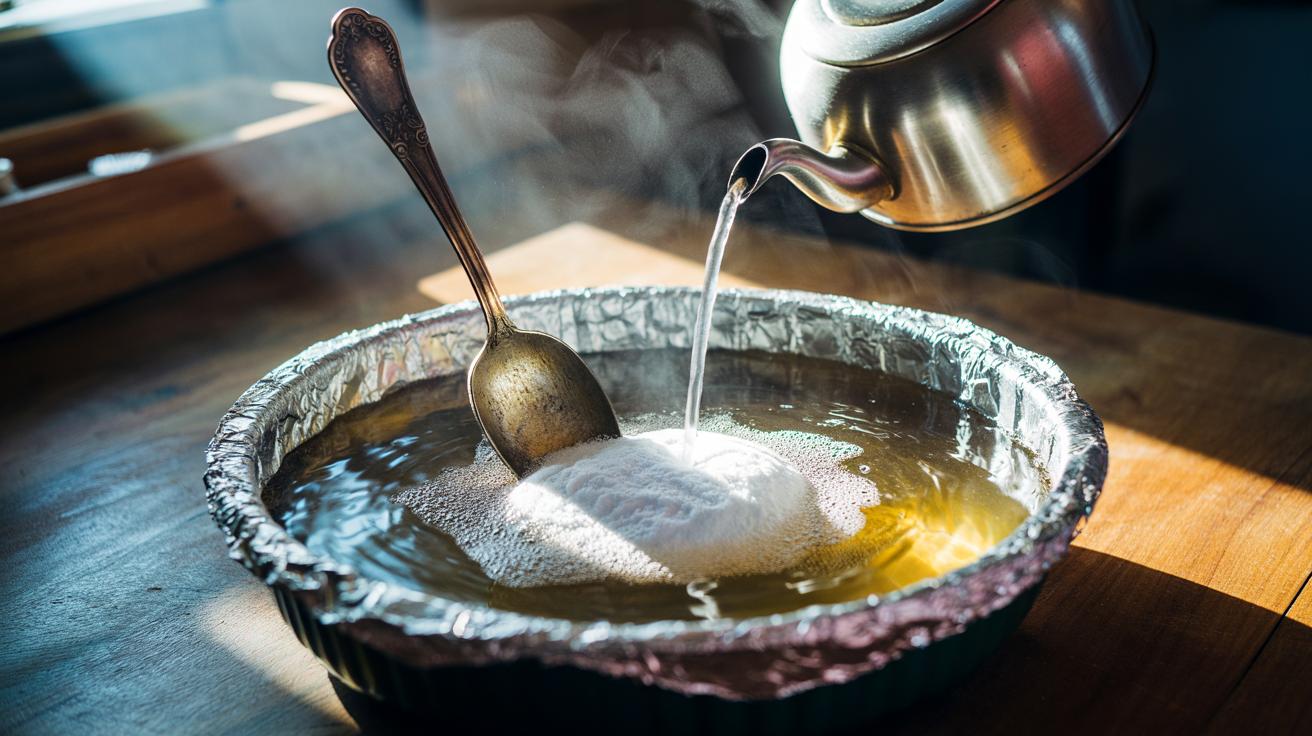
- 🧪 Method: line a heatproof dish with foil, add 1–2 tbsp baking soda per litre, pour in near-boiling water, ensure direct contact with foil, wait 2–10 minutes, then rinse and dry thoroughly.
- ⚙️ Success factors: maintain high water temperature, adequate electrolyte, and firm foil contact; reposition items or repeat short cycles for heavy tarnish rather than scrubbing.
- ⚠️ Precautions: avoid pieces with porous gems (pearls, opals), enamel, or glued/filled handles; skip lacquered items and ventilate for the faint sulphur smell.
- 🧼 Aftercare: minimise exposure to sulphur-rich foods, dry immediately, store with anti-tarnish strips or silica gel, consider microcrystalline wax, and use quick maintenance baths to keep the shine.
In countless British kitchens, a humble pairing—baking soda and kitchen foil—has become a reliable fix for blackened teaspoons and dulled heirlooms. The trick is not magic; it’s applied chemistry at work on tarnish that forms when silver meets airborne sulphur. Set the right conditions and the dark silver sulphide film surrenders, revealing the original lustre beneath. This is a non-abrasive clean that preserves intricate detailing and precious plating. Understanding why it works helps you get consistent results, avoid accidental damage, and appreciate the ingenious simplicity of a process powered by a kettle, a pinch of sodium bicarbonate, and a sheet of aluminium.
Why Silver Tarnishes and How the Foil Method Works
Silver’s enemy is sulphur. In everyday air—especially near wool, rubber bands, cosmetics, or eggs—trace hydrogen sulphide reacts with silver, forming a thin, dark film of silver sulphide (Ag2S). Traditional polishes remove this film by abrasion, which can thin fine detailing over time. The baking soda-and-foil method instead uses a redox reaction that transfers sulphur from the silver to the aluminium. In hot water containing sodium bicarbonate, the aluminium acts as a sacrificial metal. Electrons flow across the contact between silver and foil, effectively “reducing” the tarnish back to metallic silver while aluminium becomes oxidised.
In chemical shorthand, sulphide on the silver is converted while aluminium captures the sulphur as aluminium compounds. Heat speeds up the reaction and the bicarbonate provides the electrolyte that carries ions. The key mechanism is galvanic coupling: the two metals touching in an electrolyte create a tiny cell that drives electron transfer. Because the tarnish is transformed rather than rubbed away, carved edges, hallmarks, and filigree emerge crisp and intact.
Step-by-Step: Safe, Effective Cleaning at Home
Line a heatproof glass or ceramic dish with aluminium foil, shiny side up, and lay your silver pieces so they touch the foil. Sprinkle in 1–2 tablespoons of baking soda per litre, then pour over freshly boiled water to submerge the items. Within a minute you may smell faint sulphur; light tarnish often clears in 2–5 minutes, heavier patches in 10. Lift pieces with tongs, rinse in warm water, and dry immediately with a soft microfibre cloth. Ensure every item makes firm contact with the foil—no contact, no reaction. Avoid crowding so water circulates and heat remains uniform.
| Variable | Recommended Range | Why It Matters |
|---|---|---|
| Water temperature | Near-boiling (90–100°C) | Heat accelerates redox and ion movement |
| Baking soda | 1–2 tbsp per litre | Provides electrolyte; buffers solution |
| Contact with foil | Continuous, firm contact | Completes the galvanic circuit |
| Time in bath | 2–10 minutes | Prevents overexposure of non-silver parts |
| Items to avoid | Porous gems, enamel, cemented handles | Heat and alkalinity may damage adhesives or stones |
| Finish care | Rinse and dry promptly | Stops residue spots and water marks |
Do not use this method on jewellery with pearls, opals, or glued settings, nor on knives with filled or hollow handles. For silver-plate, keep sessions short and gentle, repeating if needed. If tarnish persists in crevices, reposition the item for better foil contact and refresh the hot solution rather than scrubbing.
Science Notes: Redox, Potential Differences, and Limits
The driving force behind this clean is the difference in electrode potentials between silver and aluminium. Silver prefers to exist as metal; aluminium readily oxidises. In the presence of an electrolyte and heat, electrons flow from aluminium to the silver sulphide layer, returning it to elemental silver. The aluminium, meanwhile, oxidises and associates with sulphur. While the neat textbook potentials are defined for simple ions, the principle holds: the reaction is energetically favourable and proceeds rapidly when the foil and silver touch in hot alkaline water.
There are boundaries. If silver is coated with lacquer, the electrolyte cannot reach the tarnish. Very thick, long-neglected sulphide layers may require repeated cycles. Because the process preserves metal, it will not erase scratches, only the dark film that hides the shine. Expect a faint “eggy” aroma as sulphur compounds release; good ventilation helps. If areas remain dull, it’s usually a contact issue or a case for a fresh, hotter bath rather than stronger chemicals.
Care After Cleaning: Preventing Tarnish Return
Freshly brightened silver repays a little aftercare. Rinse off food residues promptly—eggs, onions, and some condiments are rich in sulphur. Dry thoroughly; moisture invites reaction. Store pieces in closed drawers or tarnish-resistant cloth pouches with anti-tarnish strips or silica gel to keep humidity low. Avoid rubber bands and wool felt, which off-gas sulphur compounds. Regular gentle use actually slows tarnish: the light friction and frequent washing keep films from establishing.
For display items, a whisper-thin layer of microcrystalline wax can slow oxidation without altering appearance. Polishes with abrasives should be a last resort for stubborn spots, not routine maintenance. If you love the soft patina in recessed patterns, clean selectively: the foil method can remove that intentional shading, so mask areas with tape or choose shorter baths. Periodic quick baths—rather than marathon rescues—keep upkeep minimal and metal loss negligible.
Handled thoughtfully, the baking soda-and-foil method is a model of practical chemistry: quick, inexpensive, and kind to fine silver. It turns the kitchen into a small electrochemistry lab, restoring shine by moving electrons rather than wielding elbow grease. The key is control—heat, contact, and time—and respect for materials like stones or adhesives that dislike hot alkaline water. With a little routine care, your cutlery and keepsakes will stay bright far longer between cleans. Which piece in your collection will you revive first—and what care habits will you adopt to keep that mirror finish glowing?
Did you like it?4.5/5 (21)