In a nutshell
- 🧪 Combines baking soda (sodium bicarbonate) and lemon juice (citric acid) for gentle abrasion and brief effervescence that lifts grime from grout, safely brightening lines on glazed ceramic and porcelain.
- 🍋 Mix and apply: a 3:1 baking soda:lemon ratio to a peanut‑butter thickness; spread into grout, dwell 5–10 minutes, scrub with a medium brush, then rinse warm and wipe with a microfibre cloth—repeat light cycles rather than heavy scouring.
- ⚠️ Safety and surfaces: avoid unsealed natural stone; do not mix with bleach or ammonia; patch-test first. Epoxy grout needs more mechanical action. For mould, rinse then apply 3% hydrogen peroxide separately—never in the same container.
- 💷 Cost and eco edge: ingredients cost pennies, with low odour and biodegradable credentials, offering a practical alternative to harsher proprietary cleaners while preserving grout integrity.
- 🔒 Lasting results: once fully dry, apply a penetrating grout sealer, then maintain with monthly paste cleans, a post-shower squeegee, and ventilation to deter moisture-driven staining.
In homes from Victorian terraces to new-build flats, stained grout can make pristine tiles look tired. A reliably effective fix sits in the cupboard: a baking soda and lemon juice paste that lifts grime and revives lines between tiles. This simple mixture exploits mild chemistry and fine abrasiveness to dislodge soap scum, limescale haze, and kitchen splatters without harsh fumes. It’s a low-cost method that is gentle on glazed ceramic and porcelain yet tough on embedded dirt. With the right ratio, patience, and a firm brush, you can restore the crisp contrast that makes walls and floors look newly installed—and keep it that way with light maintenance.
What’s in the Paste and Why It Works
The paste pairs sodium bicarbonate—better known as baking soda—with the citric acid naturally present in lemon juice. Baking soda provides a fine, non-scratching grit that helps scrub grout pores. Citric acid loosens mineral deposits and soap residues, while the brief fizz from the acid–alkali reaction helps lift particles to the surface. This dynamic softens stains without the harshness of bleach or strong acids. Crucially, grout is a porous cement-based material, so a cleaner that can penetrate slightly, emulsify residues, and then rinse clean is ideal. Because the chemistry is mild and short-lived, the paste is forgiving, provided you avoid prolonged soaking and rinse thoroughly.
The result is a balance of mechanical and chemical action: the grains of baking soda disrupt films, the acid cuts through alkaline deposits, and the reaction’s effervescence agitates grime. Lemon’s natural solvents also help disperse oily splashes. For most bathroom and kitchen grout lines, this combination achieves visible brightening within minutes, setting a strong base for sealing or routine upkeep.
How to Mix and Apply the Paste
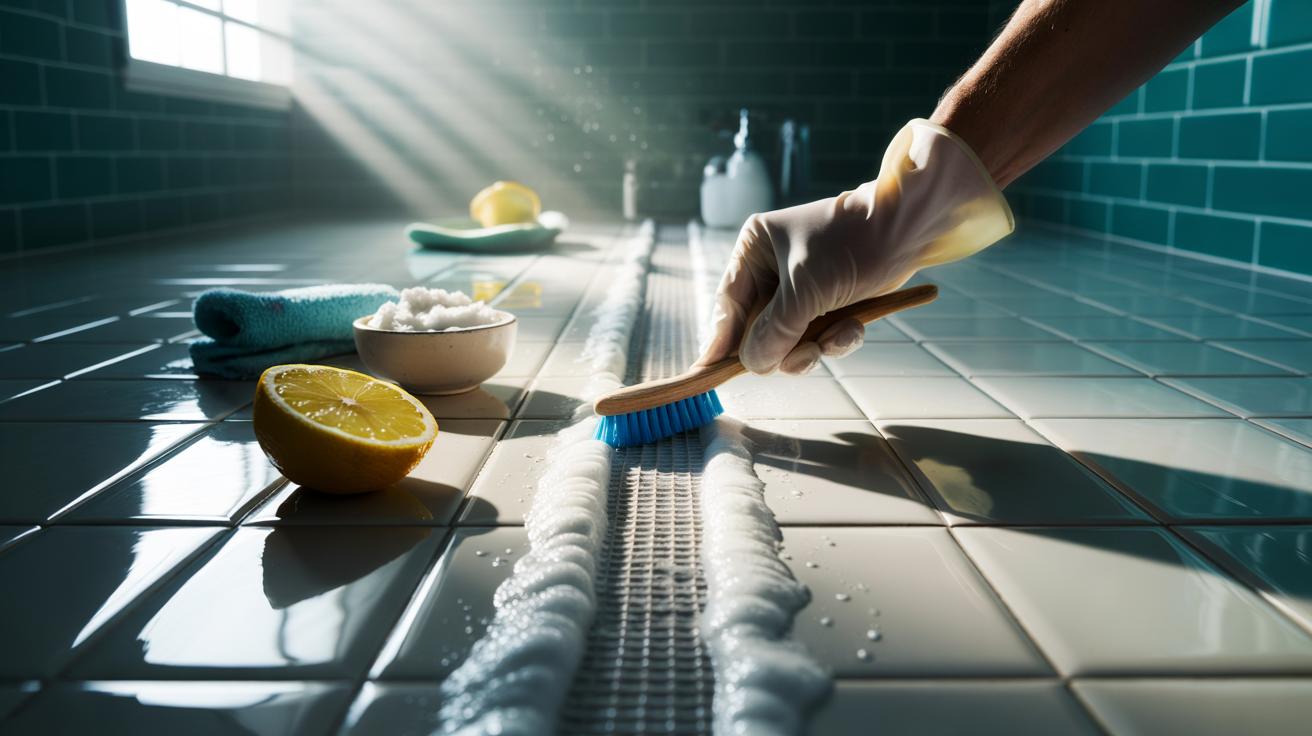
For a spreadable paste, start with three parts baking soda to one part fresh lemon juice by volume—about 3 tablespoons to 1 tablespoon. If needed, add a few drops of water to reach peanut-butter thickness. Test on an inconspicuous spot first. Apply along grout lines with a small spatula or an old toothbrush, pressing the paste into pores. Leave it to work for 5–10 minutes; do not let it fully dry. Scrub with a medium-stiff brush in short, crosswise strokes, then rinse thoroughly with warm water. Wipe tiles with a microfibre cloth to prevent residue haze. For heavy build-up, repeat once more rather than scrubbing aggressively.
Important cautions: avoid unsealed natural stone such as marble, limestone, and travertine, as citric acid can etch. For these surfaces, use a pH-neutral stone cleaner instead. Do not mix the paste with bleach or ammonia. Wear lightweight gloves if you have sensitive skin, and keep the room ventilated. The goal is controlled dwell time, firm but not forceful scrubbing, and a complete rinse so no gritty film is left behind.
| Step | Ratio/Tool | Dwell Time | Scrub Pressure | Rinse/Finish |
|---|---|---|---|---|
| Mix | 3:1 baking soda:lemon | — | — | — |
| Apply | Toothbrush/spatula | 5–10 minutes | Light | — |
| Scrub | Grout brush | While damp | Medium | — |
| Rinse | Warm water | Immediate | — | Microfibre wipe |
Safety, Surfaces, and What to Avoid
Grout type matters. Cementitious grout responds well to the paste; epoxy grout, which is less porous, may need more mechanical action and shorter dwell. On glazed ceramic and porcelain tiles, the paste is safe; on natural stone, skip the lemon and use plain baking soda with water—or better, a stone-safe cleaner. Never combine acidic cleaners with bleach: mixing them can release hazardous chlorine gas. Keep children and pets away during cleaning and rinse the area thoroughly before the floor is walked on.
For mould staining, try baking soda followed by 3% hydrogen peroxide applied after rinsing (do not mix in the same container). The fizz helps lift spores from pores. If grout remains patchy, it may be time for a deep clean with steam, then resealing. A penetrating grout sealer applied after the lines are fully dry makes future cleans quicker and reduces water absorption that encourages recurring stains.
Cost, Sustainability, and Performance Compared
A small batch costs pennies: supermarket bicarbonate of soda and one lemon will cover an average bathroom. Compared with many proprietary sprays, the paste avoids harsh odours and excess plastic. Its low toxicity and biodegradability make it a savvy choice for homes aiming to cut chemical load. In performance terms, the paste excels on soap scum, light limescale film, and oily marks. For heavy rust or deep tannin staining, a specialist cleaner may be faster, but the paste remains a strong first-line option that preserves grout integrity.
Commercial cleaners can be effective, yet they often rely on stronger acids or chlorine and need careful handling. The baking-soda-and-lemon method trades a little waiting time for control and safety, particularly in small, poorly ventilated bathrooms. Used monthly, it keeps grout bright without aggressive scouring. Pair it with a squeegee habit and regular ventilation to starve mildew of moisture, reducing the need for harsher interventions and prolonging the life of both tiles and grout lines.
Done patiently, a baking soda and lemon paste can make dulled grout spring back to a crisp, consistent colour that flatters tiles and lifts the whole room. The trick is a workable ratio, a short dwell, a brisk scrub, and a meticulous rinse. Follow with sealer for staying power, and adopt light weekly maintenance—warm water, a drop of washing-up liquid, and a microfibre cloth. You’ll spend less time battling build-up and more time enjoying the clean. What stubborn grout challenge will you tackle first, and how will you tailor the method to your tiles?
Did you like it?4.4/5 (29)