In a nutshell
- 🧪 The vinegar spray works because acetic acid lowers surface pH, dissolving limescale and breaking biofilm; allow 10–15 minutes dwell time for best results.
- 🧼 Method: saturate surfaces, wait, gently scrub, rinse, and buff dry; add a little washing-up liquid for better wetting and use separate hydrogen peroxide for stubborn grout stains (never mixed).
- 🚫 Safety: never mix vinegar with bleach (risk of chlorine gas); avoid on natural stone, limit contact on cement grout, and rinse chrome/stainless promptly; always spot-test.
- 🌬️ Prevention: squeegee after showers, run the extractor for 15–20 minutes, keep relative humidity under 60%, fix leaks, reseal grout, and use a 1:1 maintenance mist weekly.
- ✨ Payoff: a fast, frugal way to lift mildew and soap scum, restoring clarity to glass and tiles while extending the time between deep cleans.
It’s the no-nonsense hack that cleaners swear by: a simple vinegar spray that melts away bathroom mildew and soap scum without harsh fumes or pricey formulas. The secret is acidity. Household white vinegar (about 5% acetic acid) lowers surface pH, loosening mineral bonds and breaking up the gummy films that trap dirt and moisture. A few misted passes, a brief wait, and a light scrub can lift grime that usually demands elbow grease. Used correctly, vinegar can make tiles gleam and seals look new in minutes. Here’s the science behind the trick, the precise method, and smart safety guidance so you can clean quickly—and keep the mould from returning.
Why Vinegar Works on Mildew and Grime
Vinegar’s active ingredient, acetic acid, disrupts the sticky biofilm that helps bathroom mould and bacteria cling to grout, silicone, and glass. That acidic environment also dissolves limescale and the calcium salts in soap scum, weakening the crust that locks grime in place. Once that matrix is softened, brushing lifts it cleanly. Allow a full 10–15 minutes of contact time before scrubbing to give the acid time to work. Warming the vinegar slightly (never to boiling) can boost performance because reactions speed up with heat and films soften more readily.
There’s a vital distinction: vinegar is a powerful cleaner, not a registered biocide. It can reduce light mildew staining on the surface but won’t always eradicate deep-rooted mould in porous grout or behind failed sealant. That’s where re-sealing, re-grouting, or a specialist mould treatment may be needed. Used weekly as a maintenance spray, however, vinegar hugely improves hygiene, clarity of glass, and the feel of tiles by removing the film that makes a bathroom look dull.
The Step-by-Step Vinegar Spray Method
Gather a spray bottle, white vinegar (5% acidity), a soft nylon brush or non-scratch pad, microfibre cloth, and gloves. For better wetting, add 1 teaspoon of washing-up liquid per 250 ml. Ventilate well. Warm the vinegar to hand-hot in a jug of warm water for a mild boost. Never mix vinegar with bleach or any product containing chlorine. Remove loose dust or hair so the acid can reach the film directly.
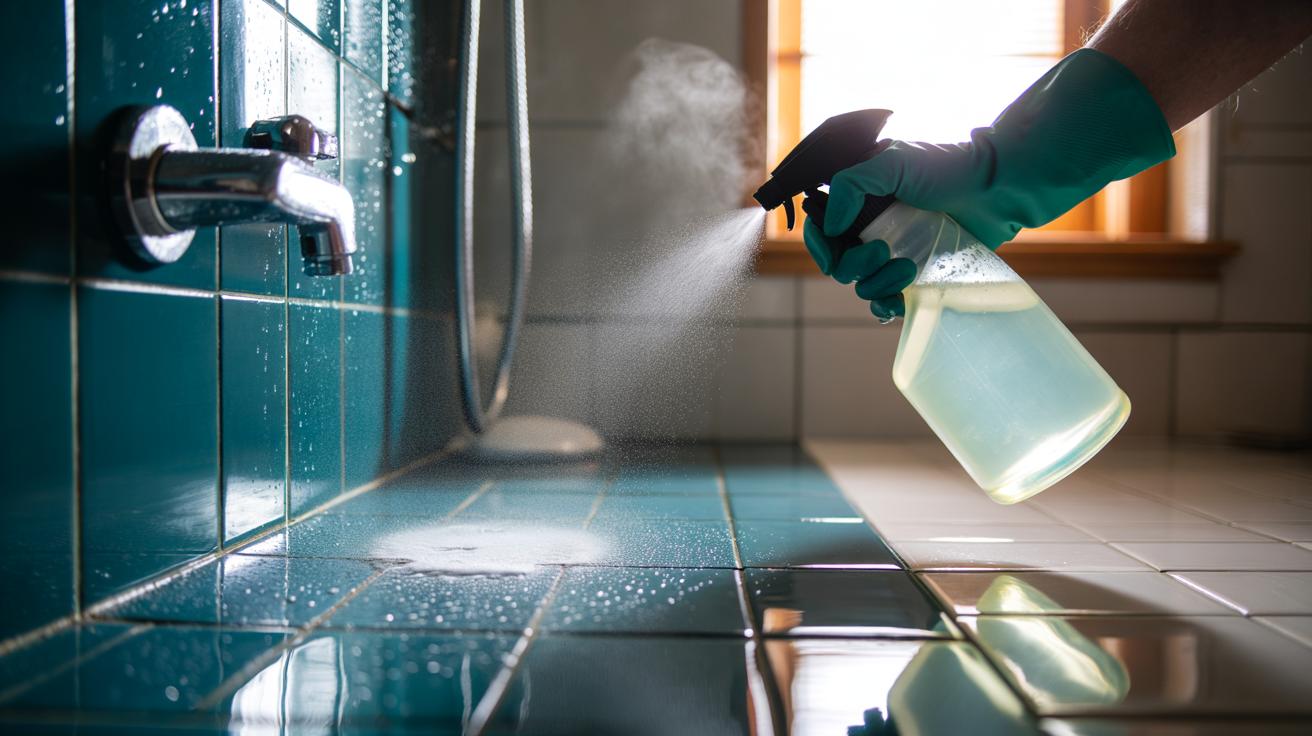
Saturate the target area until it looks evenly glistening. Let it sit for 10–15 minutes, especially on glass doors, taps, and grout edges where scum accumulates. Agitate gently with the brush; you should feel the drag vanish as the biofilm lifts. Rinse thoroughly with warm water to carry away residues, then buff dry with microfibre for a streak-free finish. For stubborn grout shadows, follow with a separate pass of 3% hydrogen peroxide (never mixed with vinegar) and a dedicated grout brush.
Tip for shower screens: a final mist of diluted vinegar (1:1 with water), wiped dry, can slow fresh spots by neutralising minerals in hard water. Keep a small bottle by the shower to make this a 30-second habit.
Surface Safety and When Not to Use Vinegar
Acids can etch or dull sensitive materials. Skip vinegar on natural stone such as marble, limestone, and travertine; acids can permanently mark the polish. Avoid unsealed or cement-rich grout for prolonged soaks, and do not leave vinegar sitting on cast iron or mild steel. Chrome and stainless taps tolerate vinegar well, but rinse thoroughly to avoid streaks on polished finishes. Silicone sealant is generally safe, yet old or degraded beads may need a gentler touch and prompt rinsing.
Always spot-test an inconspicuous area, limit contact time on delicate surfaces, and rinse, then dry. If you’re unsure, switch to pH-neutral cleaners or a manufacturer-recommended product. Do not combine vinegar with bleach or products that may contain hypochlorite: the reaction creates toxic chlorine gas. If heavy black mould persists in porous grout or behind seals, remove and replace the affected materials for a lasting result, then maintain with periodic light acid cleaning.
| Surface | Vinegar Use? | Notes |
|---|---|---|
| Glass & Ceramic Tile | Yes | Great on limescale and soap scum; rinse and buff. |
| Chrome/Stainless Taps | Yes, short contact | Rinse promptly; polish dry to prevent water marks. |
| Silicone Sealant | Yes, gentle | Limit dwell time; avoid aggressive scrubbing on old sealant. |
| Cement Grout | Caution | Short contact only; rinse well; consider sealing grout. |
| Natural Stone (Marble, Limestone) | No | Use pH-neutral stone cleaner; acids can etch. |
Prevention: Keep Mildew From Coming Back
The best cleaner is dry air and quick drainage. After each shower, squeegee glass and tiles from top to bottom—this 60-second habit removes the water film that mould loves. Run the extractor fan during bathing and for 15–20 minutes afterwards; in windowed bathrooms, crack a window to improve airflow. Keep relative humidity below 60% with a compact dehumidifier if condensation lingers. Fix drips, re-silicone joints that trap moisture, and store bottles on a caddy so the ledge can dry.
Adopt a light-maintenance routine: once or twice a week, mist a 1:1 vinegar-and-water spray on glass, taps, and grout edges, then wipe dry. This prevents biofilm rebuild and slows mineral spotting in hard-water areas. Consider sealing grout with a penetrating sealer every 12–24 months, which buys crucial time for water to evaporate. Launder shower curtains and mats regularly, and keep the curtain fully extended between showers so it dries flat, not crumpled.
Used wisely, the vinegar-spray trick is a fast, frugal way to reset a tired bathroom: the acidity unlocks grime, the rinse carries it away, and a brief dry-down stops the scum from coming back. Keep safety in mind—never mix vinegar with bleach—and respect delicate surfaces with short contact and good rinsing. Pair the method with smart ventilation and daily squeegeeing, and the sparkle lasts. Which spot in your bathroom would benefit most from a 10-minute vinegar reboot, and what routine could you adopt to keep it gleaming week after week?
Did you like it?4.4/5 (20)