In a nutshell
- 🎯 Oven odours stem from acidic fumes (e.g., acetic and butyric acids) and oily residues that condense on enamel and gaskets, then re-release when reheated.
- ⚗️ A baking-soda paste works via neutralisation: sodium bicarbonate converts acids into non-volatile salts, with mild abrasion and adsorption helping to lift films.
- 🧪 Method: Mix 3:1 baking soda to water, optionally add a tiny drop of washing-up liquid, apply 3–5 mm, leave for 8–12 hours, then wipe clean and gently warm to dry.
- 🛡️ Safety: Gentle on enamel and chrome; avoid prolonged contact with bare aluminium, don’t mix with commercial oven cleaners, and take care around vents and catalytic liners.
- ♻️ For persistent smells, check and replace worn door gaskets, use a high-heat/pyrolytic cycle for non-acidic residues, and maintain freshness with a bowl of activated charcoal between uses.
Open an oven after a roast and a sharp, acrid tang often greets you. Those persistent smells are not just “burnt food”; they are volatile acids and smoky by-products that cling to enamel and metal. A simple kitchen standby—the baking-soda paste—can strip out the odour at its source. Rather than masking smells, it chemically disarms them. Because sodium bicarbonate is a mild base with buffering power, it reacts with acidic vapours and residues, turning them into far less pungent salts while loosening grime for easy wipe-down. Here’s how the paste works, why it’s safe on most oven interiors, and the exact method UK households use to reclaim a fresh-smelling cooker without harsh chemistry.
Why Ovens Smell: The Chemistry of Acidic Fumes
When fats, marinades, and sauces hit hot metal, they break down. Vinegar-based glazes drive off acetic acid, buttery spills release butyric acid, and browning reactions generate aldehydes and ketones. These compounds vaporise, then condense on cooler parts of the cavity, where they linger and off-gas for days. The key is their acidity: many of the nastiest notes come from proton donors that sting the nose even at tiny concentrations. Reheating reactivates them, so yesterday’s casserole can scent tonight’s bake.
Because oven interiors are typically enamel and steel, they don’t react with acids themselves but act as staging posts for films of oily, acidic residue. Vent channels and door gaskets trap these molecules, creating a slow-release odour source. Traditional air fresheners or citrus wipes perfume the air but leave the chemistry untouched. To silence the smell, you need a reaction that neutralises acidity and breaks the film—precisely what bicarbonate excels at.
How a Baking-Soda Paste Works: Neutralization and Adsorption
Sodium bicarbonate (NaHCO₃) is a mild alkali with a solution pH around 8.3. In contact with an acid (HA), it performs a classic neutralisation: NaHCO₃ + HA → NaA + H₂O + CO₂. That carbon dioxide fizz is a visible cue that odour-causing acids are being converted into stable, less volatile salts. This is why the paste removes the smell rather than covering it up. The water in the paste dissolves thin films of acidic grime; bicarbonate ions mop up protons; the resulting sodium salts don’t reek and wipe away easily.
The paste’s texture also matters. Dry bicarbonate particles are micro-porous and slightly abrasive, so the layer both softens residues chemically and disrupts them mechanically—without scratching enamel. A modest “buffer” effect keeps the local pH gently alkaline even as acids arrive, extending its capacity to handle successive whiffs released when you warm the oven. Trace surfactants from a drop of washing-up liquid can improve wetting of greasy corners, but the real engine is neutralisation backed by light adsorption on the powdery surface.
Step-By-Step: Mixing, Applying, and Timing the Paste
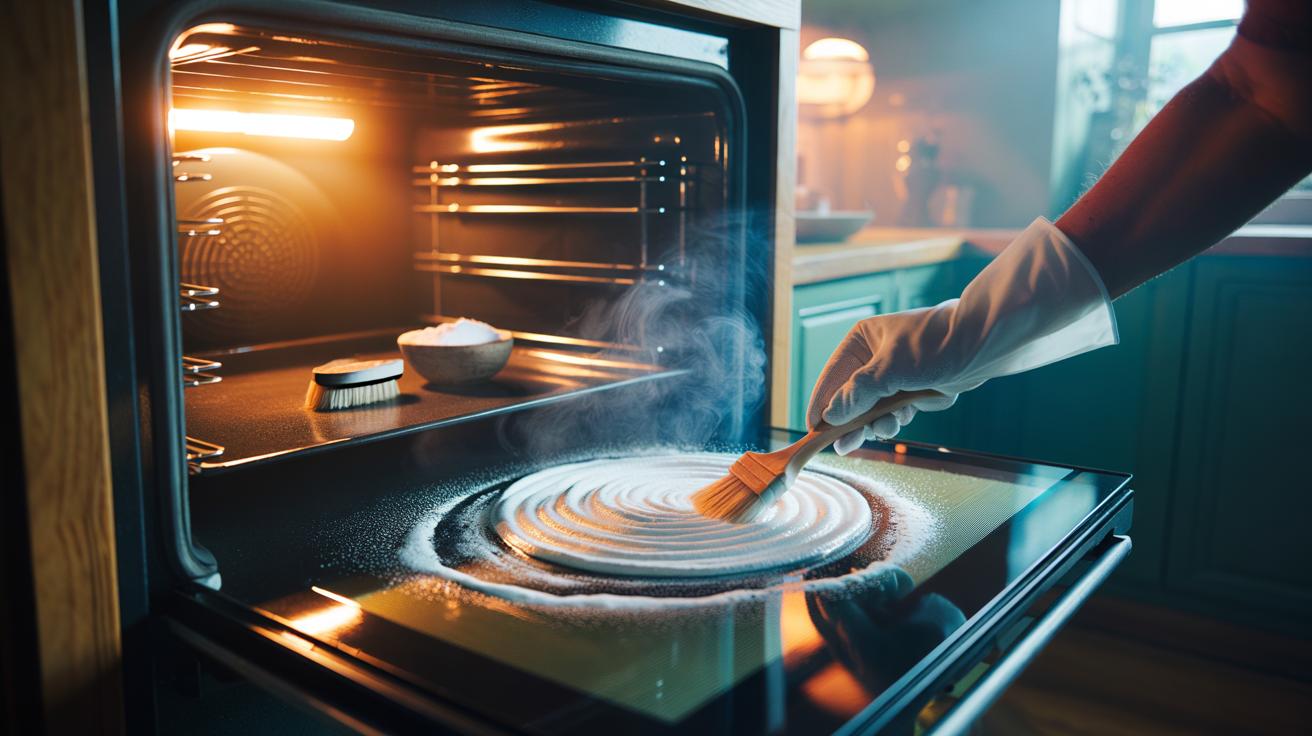
Make a spreadable paste by mixing 3 parts baking soda with 1 part water (by volume). For caked-on grease, add a pea-sized drop of mild washing-up liquid per tablespoon to help wetting. Switch the oven off and cool fully. Remove racks, then smear a 3–5 mm layer across walls, floor, and the inside of the door, avoiding heating elements and vents. Leave it for 8–12 hours so the chemistry can run to completion while the paste stays moist enough to mobilise residues. Wipe with a damp microfiber cloth, rinse the cloth often, then buff dry. A 10–15 minute low-temperature warm-up (50–80°C) helps drive off any remaining moisture and odours; ventilate the kitchen as you do so.
| Goal | Ratio / Setting | Dwell Time | Notes |
|---|---|---|---|
| Odour neutralisation | 3:1 bicarbonate:water | 8–12 hours | Targets acidic fumes |
| Heavy grease | + tiny drop surfactant | Overnight | Improves wetting, not essential |
| Quick freshen | Thin slurry | 1–2 hours | Repeat if odour persists |
Safety, Materials, and When to Try Something Else
Bicarbonate is gentle on enamel and chrome-plated racks, which makes it a smart default for most UK ovens. Avoid scrubbing bare aluminium trays with thick alkaline paste, as prolonged contact can dull the surface. Check manuals for catalytic liners; they are generally safe with mild alkalis, but harsh scraping ruins their coating. Never mix bicarbonate with commercial oven cleaners; rinse surfaces before switching products. Keep paste out of door vents and away from fan housings; the goal is surfaces that you can wipe clean without leaving granules behind.
If smells return quickly, look beyond chemistry. Old door gaskets can harbour fats; replacement often cures “mystery” odours. Spills that soaked beneath floor panels or into insulation are a job for professional service. For smoke taints and non-acidic residues, run a manufacturer-approved high-heat or pyrolytic cycle, then repeat a light bicarbonate treatment to finish. A bowl of activated charcoal placed in the cold oven between uses can maintain freshness once you’ve done the deep neutralisation.
The humble baking-soda paste earns its reputation because it engages the problem at a molecular level. By neutralising acidic fumes and loosening grime, it breaks the feedback loop of reheating and re-smelling, returning your cooker to a clean, neutral baseline. The method is simple, low-cost, and gentle on typical oven materials, yet powerful enough to tackle the tang of vinegar glazes and burnt-on butter. When odour is driven by acids, bicarbonate is the right tool. What lingering kitchen smell would you most like to defeat next—and where could this neutralising approach make the biggest difference in your home?
Did you like it?4.6/5 (24)