In a nutshell
- 🧪 The science: bicarbonate of soda uses high-surface-area adsorption and a mild alkaline buffer effect to neutralise VOCs and moisture-borne odours—no perfume, just clean neutrality.
- 🛏️ Overnight method: Sieve on 100–200g for a double (more for strong smells), massage lightly, leave 8–12 hours, then vacuum slowly with an upholstery tool and air the room.
- 🐾 Stubborn smells: Pre-treat biological spots with an enzyme cleaner, cut humidity with a dehumidifier, and repeat cycles; never mix vinegar and baking soda on the mattress.
- 🛡️ Safety and eco: Non-toxic, fragrance-free, and gentle on most textiles; minimise dust for allergy sufferers, avoid wet mattresses, and choose this low-cost, low-waste alternative to aerosols.
- ✅ Ongoing care: Rotate/flip if allowed, use a washable protector, schedule monthly light shakes and seasonal deep cleans, and deploy a HEPA vacuum for smoke residues.
Your mattress is a quiet archive of everyday life: perspiration from hot nights, a splash of coffee, the faint trace of yesterday’s perfume. When those layers combine, they produce a stale bouquet that washing the sheets won’t shift. Enter the low-cost hero of the cleaning cupboard: baking soda—or, as many in the UK still call it, bicarbonate of soda. Shaken across the surface and left overnight, this fine powder reaches into the fabric’s hollows and neutralises the chemistry of bad smells. Used correctly, the “baking soda shake” can make a bed smell freshly laundered without introducing wetness or harsh fragrances. Here’s how it works—and how to get results by morning.
Why Baking Soda Works on Mattresses
The quiet genius of bicarbonate of soda lies in its structure and chemistry. Each particle offers a high surface area for adsorption, trapping odour molecules on its surface. Simultaneously, it acts as a mild alkaline buffer, neutralising acidic compounds responsible for sour or musty smells. Human perspiration, skin oils, and volatile organic compounds (VOCs) meet this reactive scaffold and are tamed rather than merely masked. Odour control is, at heart, about moisture and molecule management; baking soda helps with both.
Because the powder is dry and crystalline, it settles into the fabric weave, pillow-top tufts, and stitching valleys where air fresheners never reach. Its microgranular edges encourage capillary-like wicking of faint moisture, loosening residues that carry smells. The result is a subtle, clean neutrality rather than a perfumed overlay. It’s safe on most mattress types—from hybrid to pocket sprung and many foams—so long as you avoid adding water and vacuum thoroughly after the dwell time.
The Overnight Shake Method: Step-by-Step
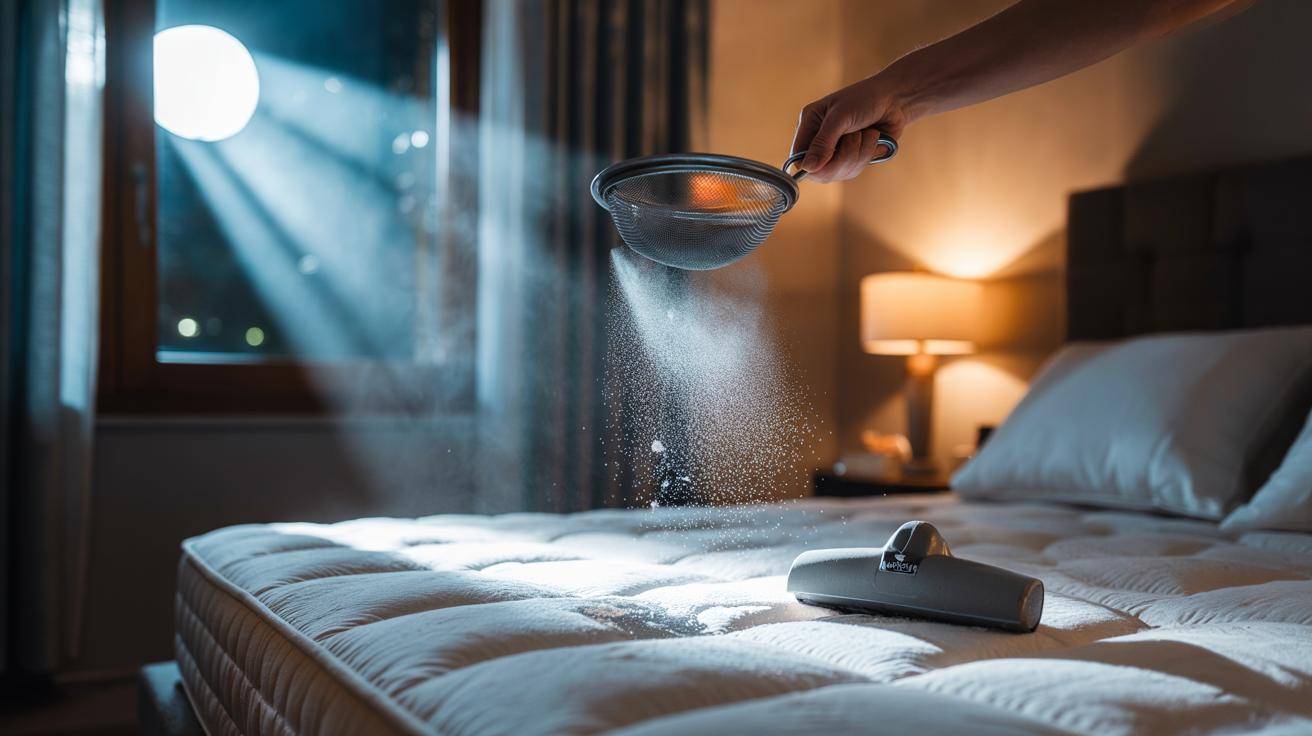
Start by stripping the bed and opening a window. If there are recent biological spills, spot-clean with an enzyme cleaner, allow to dry completely, then proceed. Sprinkle baking soda using a sieve or shaker for an even coat—roughly 100–200g for a double, more for king size. Optional: a teaspoon of ground bicarbonate of soda mixed with a few drops of a skin-safe essential oil in the shaker, but keep fragrance modest to avoid lingering. Massage the powder lightly with a clean, dry hand to settle it into seams and quilting. Leave the powder undisturbed for at least eight hours—overnight is ideal.
In the morning, vacuum with a clean upholstery tool, working slowly in overlapping passes. Vacuuming slowly matters: it lifts embedded granules and the odours they’ve trapped. Rotate or flip the mattress if your model allows, then repeat on the reverse for best results. Finish by airing the room for 10–15 minutes and laundering the mattress protector. Most users report a neutral, “cold-linen” smell that lasts for weeks.
| Odour Type | Amount of Baking Soda | Dwell Time | Extra Tip |
|---|---|---|---|
| General mustiness | 100–200g (double) | 8–12 hours | Ventilate room |
| Body odours | 200–300g | Overnight | Repeat monthly |
| Pet smells | 300g+ | 12 hours | Enzyme pre-clean |
| Smoke | 300g+ | 12–24 hours | Use HEPA vacuum |
Tackling Stubborn Odours and Hidden Moisture
Deep-set smells often ride on trapped damp. Before deodorising, reduce humidity: crack a window, run a dehumidifier, and let the mattress breathe. For pet accidents or sweat hotspots, apply a true enzymatic cleaner on the spot only, blot, and allow to dry fully—then use the baking soda shake. Do not saturate the mattress; wet cores are odour factories. If smoke or perfume has penetrated, plan two cycles: deodorise one night, air and vacuum, then repeat. That layered approach draws out residues from stitching and foam cells.
Sunlight helps indirectly—place the mattress where light warms the cover without overheating the foam. For memory foam, pressure the powder gently with the palm to guide it into the surface pores, then vacuum meticulously. Never mix vinegar and baking soda directly on the mattress; the fizzing reaction creates water and salts that can lodge in the fabric, defeating the “dry clean” principle and potentially leaving a chalky film.
Safety, Allergies, and Eco Credentials
Bicarbonate is non-toxic, fragrance-free, and gentle on most textiles, making it suitable for homes with children and pets. Still, avoid creating dust clouds; those with asthma or allergies should wear a simple mask while shaking and vacuuming. Use a clean upholstery nozzle and empty the vacuum afterwards to prevent re-dispersing fine powder. Check your manufacturer’s care label—some latex and specialty foams caution against abrasion or vigorous brushing. Do not apply baking soda to a wet or newly shampooed mattress; always dry first.
From an environmental standpoint, baking soda is inexpensive, widely available, and avoids the propellants and synthetic fragrances common in aerosols. You’ll typically spend pennies per treatment. Store it in an airtight tin to keep it active, and repurpose any leftover for fridge deodorising or drain freshening. With a monthly light shake and seasonal deep treatment, most mattresses remain neutral, extending the time between heavy cleans and reducing wasteful replacements.
By morning, the “baking soda shake” turns a tired mattress into a neutral canvas, ready for crisp sheets and unperfumed sleep. Its power lies in simple chemistry: adsorption, mild alkalinity, and dryness working together to tame stale compounds at the source. Couple the method with regular airing, a washable protector, and a slow, thorough vacuum for results that last. If your mattress harbours a particularly stubborn story—pets, smoke, or a humid flat—what combination of timing, ventilation, and powder coverage will you try first to reclaim that clean, quiet scent of fresh bedding?
Did you like it?4.6/5 (23)