In a nutshell
- 🦠 Musty shoes start with trapped moisture, slow-drying materials, and bacterial by-products; proper ventilation is essential to curb the musty odour.
- 🧪 Baking soda is mildly alkaline, neutralising acidic odours while it adsorbs molecules and absorbs humidity—reducing smell rather than masking it.
- 📝 Method: dry shoes, remove insoles, sprinkle 1–2 tbsp of baking soda, leave for 8–24 hours, then shake/vacuum; use reusable sachets (sock or coffee filter) for a cleaner application.
- 🧵 Material tips: canvas and synthetics are safe; leather prefers sachets; use caution with suede/nubuck and orthotics; avoid vinegar reactions that drive moisture deeper.
- ♻️ Prevention: prioritise airflow, rotate pairs, choose wool-blend socks; boost heavy-sweat days with cornflour, and consider activated charcoal (careful with light linings).
Musty shoes can gatecrash an otherwise polished day. That stale, damp smell lingers, broadcast by every step, and no amount of perfume sprays truly masks it. The simplest fix often hides in plain sight: baking soda. This humble staple, also known as sodium bicarbonate, tackles the root causes rather than the symptom, making it a quiet hero of domestic problem-solving. It’s cheap. It’s safe. It works. In this guide, we unpack why shoes smell in the first place, how baking soda breaks the cycle, and what to do when you’re dealing with delicate materials or stubborn odours. Your hallway will thank you.
Why Shoes Smell Musty
Mustiness begins with moisture. Sweat, rainy commutes, and gym floors create a microclimate inside your footwear where bacteria and yeasts feast and multiply. Their metabolic by-products are volatile compounds, the unmistakable musty odour you notice when you slip shoes off at the end of a long day. Materials matter too. Dense foams and cushioned insoles trap humidity. Synthetic linings dry slowly. Leather can absorb moisture like a sponge, then release scent over time. Poor air circulation completes the picture. Shoes sealed in cupboards or gym bags stay damp, effectively incubating microorganisms. Ventilation isn’t optional; it’s prevention.
Storage habits accelerate or arrest the process. Leaving trainers by a radiator can warp glues yet still fail to dry the toe box. Night after night, damp persists, and the smell deepens. The fix? Intervene where smell is born. That means managing moisture, altering pH, and reducing the microbial buffet. Step forward: baking soda, a desiccant and odour neutraliser in one simple scoop. It doesn’t perfume; it recalibrates.
How Baking Soda Neutralises Odour
Baking soda is mildly alkaline. Many odour-causing acids from sweat and microbial activity meet this alkali and are neutralised, blunting their punch. The powder’s fine particles increase surface area, so it can adsorb stray molecules while also absorbing residual moisture from insoles and stitching. Odour fades because the chemistry changes, not because a fragrance overwhelms it. That’s important. Neutralised smells don’t rebound when the perfume wears off. For shoes that have suffered repeated damp cycles, the powder also helps reset the micro-environment by making it less hospitable to bacteria.
An added benefit is physical: those microscopic crystals wick humidity out of porous materials, speeding drying without heat. Heat can damage adhesives or shrink leather; baking soda avoids that risk. Think of it as a low-tech, high-precision sponge for smells and damp. Used correctly, it leaves no residue, no sticky film, and no artificial scent. Just a quieter, cleaner baseline for your footwear.
Step-by-Step: The Baking Soda Method
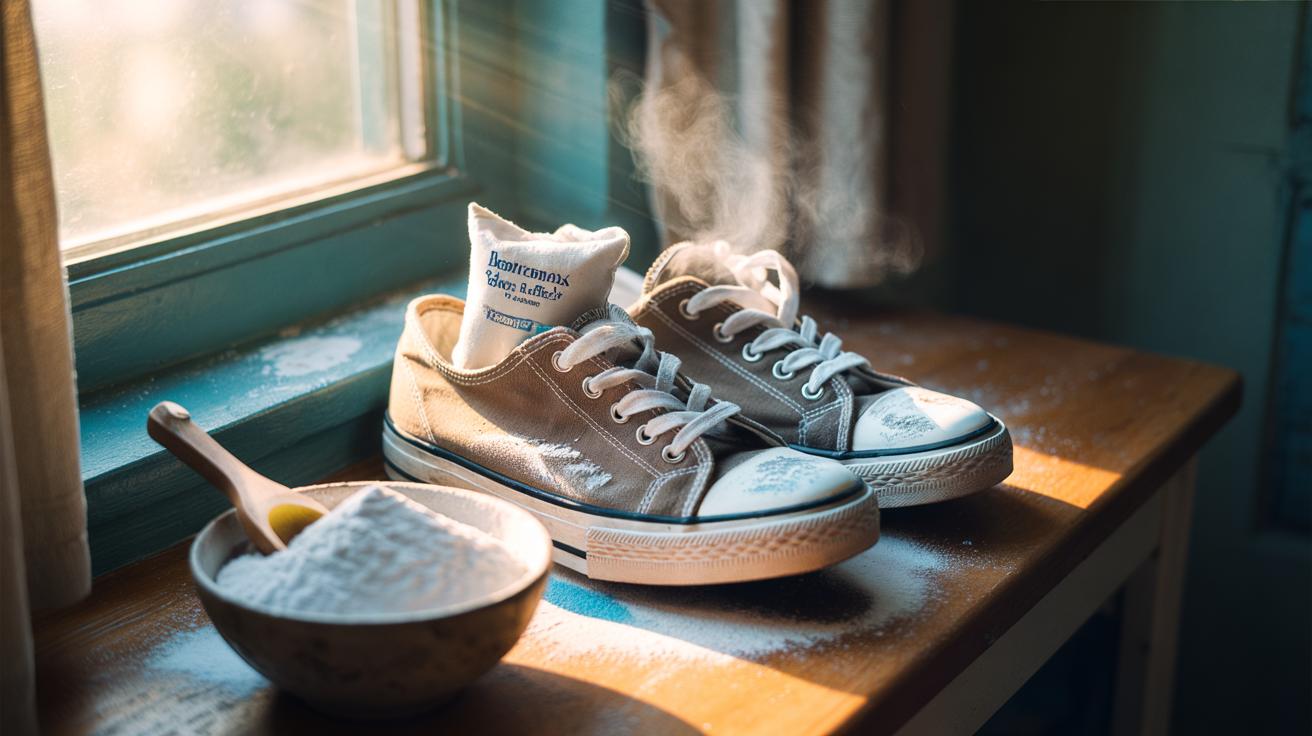
First, dry the shoes. Remove insoles if possible and air them somewhere warm and ventilated, out of direct heat. When they feel merely cool, not damp, shake 1–2 tablespoons of baking soda into each shoe, tilting to coat the toe box and insole. For insoles, sprinkle separately and tap off the excess. Leave for at least 8 hours, ideally overnight. For entrenched odours, give it a full 24 hours. Always test on an inconspicuous spot if your shoes are dyed or delicate. In the morning, tap the powder into a bin, then use a soft brush or handheld vacuum to clear seams.
If you prefer mess-free treatment, make sachets. Fill breathable cotton socks or coffee filters with 2–3 tablespoons of baking soda, tie securely, and tuck one in each shoe. It’s neater and reusable for a few nights. For on-the-go emergencies, a teaspoon shaken under the insole goes a long way. Final step: let the shoes breathe for 30 minutes before wearing. Short sentence. Fresh start.
Smart Variations and When to Avoid
For sweaty gym days, blend baking soda with a teaspoon of cornflour to supercharge moisture control. A pinch of activated charcoal improves adsorption for pungent trainers, though it can stain pale linings. Prefer a hint of scent? Stir in two drops of tea tree or eucalyptus oil into sachets, not directly into shoes; oils can spot-mark leather. Never mix baking soda with vinegar inside the shoe; the fizz drives moisture deeper. If your footwear is suede, nubuck, or heavily dyed, go slowly: use sachets first, and brush nap afterwards. Orthotic insoles and memory foam benefit from sachets rather than loose powder, which can cake in pores.
| Shoe Material | Baking Soda Safety | Tips |
|---|---|---|
| Canvas | Safe | Use loose powder overnight; shake out well. |
| Synthetic Trainers | Safe | Combine with cornflour for heavy sweat days. |
| Leather | Generally safe | Prefer sachets; avoid rubbing into seams. |
| Suede/Nubuck | Caution | Use sachets only; brush nap after treatment. |
| Insoles/Orthotics | Caution | Sachets to prevent caking; air-dry thoroughly. |
If smell persists after two cycles, look for underlying culprits: damp lockers, non-breathable socks, or hidden mildew under insoles. Pair the soda routine with airflow: rotate shoes, dry between wears, and choose wool-blend socks. You’ll break the odour loop, not chase it.
Reviving musty shoes isn’t sorcery. It’s chemistry, airflow, and patience, anchored by a tub of baking soda that costs less than a posh coffee. One evening’s treatment can turn sour trainers into serviceable commuters, while a weekly sachet habit keeps them that way. Prevention is the cheapest deodoriser you’ll ever own. As you tweak the method to your materials and routine, you’ll find the sweet spot where freshness simply lasts. What’s your biggest shoe-odour challenge at home, and which twist on the baking soda trick are you keen to try first?
Did you like it?4.5/5 (27)