In a nutshell
- 🧪 Baking soda (sodium bicarbonate) works via mild alkalinity and surface adsorption, trapping volatile odour molecules instead of masking them.
- 🛋️ Method: thorough vacuum, discreet patch test, fine sprinkle under and on cushions, keep it dry, allow generous contact time, then slow overlapping vacuum passes.
- ⏱️ Dosage and timing: adjust tablespoons and hours to odour type (stale, cooking, smoke, pets); plan repeats across 2–3 cycles rather than heavy one-offs for entrenched smells.
- 🐾 Special cases: it’s not a disinfectant—use an enzyme-based cleaner first for biological spills; manage humidity and empty non-HEPA vacuums outdoors.
- ⚠️ Safety and fabrics: keep treatments dry, avoid vinegar/oils, be gentle on delicate weaves, and skip leather/silk—use specialist care; lighter, regular treatments work best.
It sounds like a hack from a nan’s playbook, yet slipping a thin veil of baking soda beneath sofa cushions can revive a tired living room in a weekend. The humble powder—properly called sodium bicarbonate—has a knack for trapping stubborn odour molecules that lodge in foam, fabric, and wooden frames. Sprinkle, wait, and vacuum: a routine so simple it feels like cheating. What happens in those quiet hours is not perfume, but chemistry. Because the powder neutralises acidity and clings to volatile compounds, it tackles everything from stale smoke to lingering pet smells. Done right, the method is safe for most upholstery and a fraction of the cost of professional cleaning.
Why Baking Soda Works on Stale Sofa Odours
Bicarbonate is slightly alkaline, and this mildness is key. Many household smells arise from acidic compounds; sodium bicarbonate interacts with them, reducing volatility and blunting sharp notes. Its crystalline powder offers significant surface area for adsorption—a physical cling, not absorption into the crystal. It does not mask smells; it traps and neutralises them. The effect is most noticeable on stale, long-set odours where vapours have diffused deep into upholstery foam and fabric. As the air in the sofa slowly moves, molecules meet the powder and bind.
Sofas are complex ecosystems: fibres, foams, interlinings, wooden rails, and hidden cavities. Each layer can harbour odour reservoirs, especially where spilled drinks or pet accidents once soaked in. Baking soda excels because it can be worked into seams and under cushions without wetting. Dry treatment is crucial—water pushes smells deeper and risks mould. The powder also buffers pH, easing sour notes from sweat and cooking. Given time, it calms that “rental flat” aroma that lingers no matter how often you open a window.
A Step-by-Step Method for Cushions and Crevices
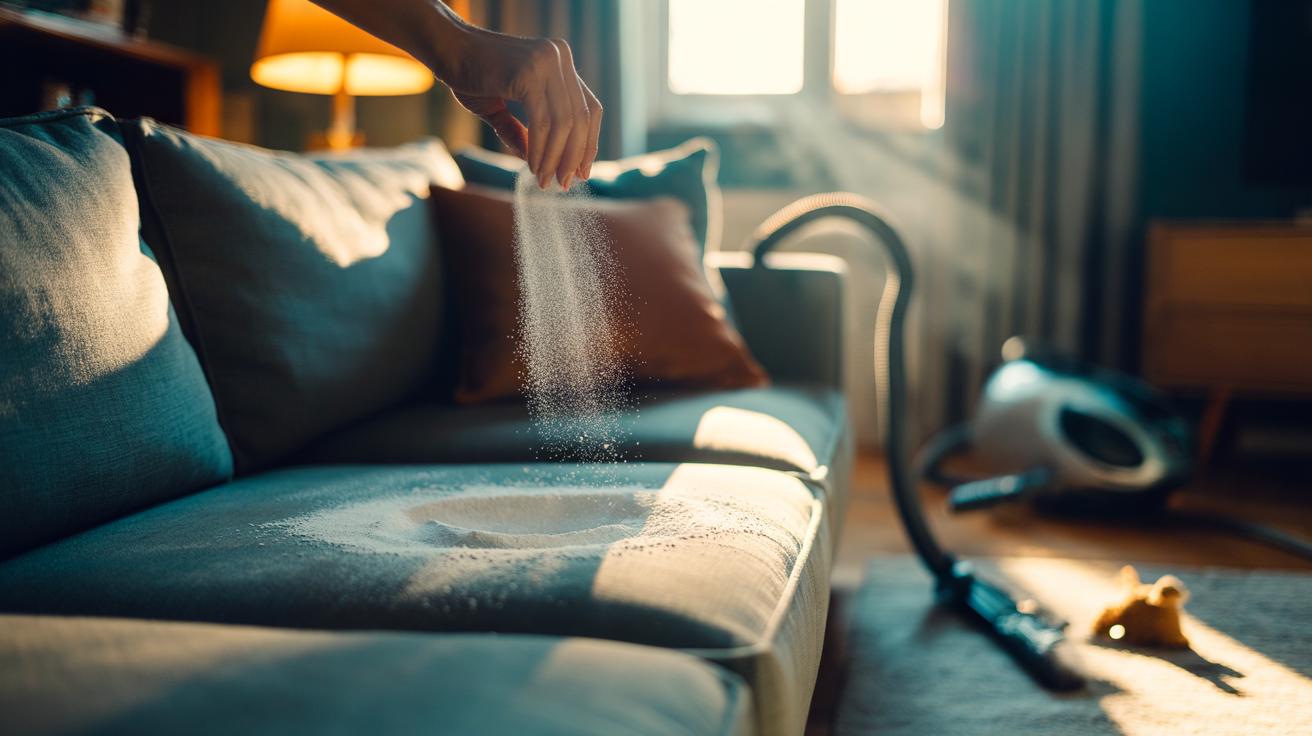
Start with a thorough vacuum using an upholstery tool to remove grit that blocks contact between powder and fabric. Do a discreet patch test to ensure no colour change. Lift each cushion and lightly sprinkle baking soda beneath, paying attention to joints and fabric overlaps where air circulates. On the seat and back, use a fine sieve for even coverage—thin and uniform beats thick and clumpy. Always apply the powder dry; do not mix a paste for foam or fabric. For standard seats, 2–4 tablespoons per cushion are ample; large sectionals may need more.
Gently work the powder with fingertips or a soft brush so it sits on the textile surface and filters into micro-gaps without grinding the fibres. Leave it to act with decent contact time: four hours for light stale smells, overnight for entrenched odours. Crack a window or run gentle ventilation to keep air moving. Finally, vacuum slowly in overlapping passes, then flip cushions and repeat. If odours persist, repeat across two or three cycles rather than dumping excessive powder in one go.
How Much Powder, How Long to Leave It, and When to Repeat
Dosage and timing depend on the source. Light mustiness needs little more than a dusting and a leisurely afternoon. Smoke, curry oils, or pet funk demand longer dwell times so vapours can migrate to the powder. Think in terms of contact hours, not minutes. For weekly maintenance, a brief sprinkle under cushions keeps things fresh. When tackling history—student-house sofas, inherited suites—plan a multi-day approach with repeats. If there is an active source (a damp base, hidden spill, or urine), address it first; bicarbonate can dull the odour but not fix ongoing microbial activity.
| Odour Type | Powder Amount | Contact Time | Repeat Frequency |
|---|---|---|---|
| Light stale/closed-up room | 1–2 tbsp per cushion | 2–4 hours | Monthly |
| Cooking and sweat | 2–4 tbsp per cushion | 6–12 hours | Every 2–3 weeks |
| Smoke residue | 3–5 tbsp per cushion | Overnight to 24 hours | 2–3 cycles |
| Pet odours (not urine) | 3–5 tbsp per cushion | 12–24 hours | Weekly until stable |
Bicarbonate is not a disinfectant. For urine, vomit, or milk spills, use an enzyme-based cleaner first, allow full drying, then apply baking soda to tame any remnant notes. Where humidity is high, run gentle heating or a dehumidifier; dry air accelerates release of trapped volatiles into the powder. If your vacuum lacks a HEPA filter, empty it outdoors to avoid redistributing fine dust.
Safety, Fabrics, and What Not to Do
As pantry staples go, baking soda is benign, but dust can irritate if inhaled. Wear a light mask if you’re sensitive and keep pets and children away during treatment. Never saturate upholstery with water and bicarbonate; wet foam can trap moisture and promote mould. Avoid vigorous scrubbing on delicate weaves, which may fuzz. Leather and suede are better served by specialist cleaners; bicarbonate can leave a faint film on smooth skins. For silk or vintage brocades, consult a pro or limit powder to the underside only.
Skip citrus acids or vinegars on the sofa—fizzing looks satisfying yet pushes residue into fibres and can loosen dyes. Essential oils add fragrance but may stain and lock odours beneath perfume. Use fresh powder from a sealed container; old open boxes absorb kitchen smells and lose potency. Vacuum slowly to pick up fine residue and run a second pass after an hour to capture any dust that resettles. When in doubt, lighter, longer treatments beat heavy-handed one-offs.
Under-cushion baking soda is the quiet hero of home care: frugal, gentle, and effective when given time. It respects the fabric, sidesteps harsh perfumes, and steadily lowers the background odour that lingers after guests have gone and windows have been shut. Pair it with regular vacuuming and a clear eye for hidden moisture, and even a well-loved sofa can smell newly settled. The real trick is consistency—small, regular rituals outpace dramatic deep cleans. Which corner of your home would benefit most from a calm, powder-and-pause refresh this week?
Did you like it?4.4/5 (27)